Ruffed Grouse (Bonasa umbellus): A Complete Guide to North America's Most Exciting Upland Bird
Few birds in North America command as much admiration from hunters, wildlife enthusiasts, and naturalists alike as the ruffed grouse (Bonasa umbellus). Known colloquially as the "king of the upland birds," the ruffed grouse is celebrated for its explosive flushes, unpredictable flight patterns, and its remarkable ability to thrive in some of the continent's most rugged woodland environments. Whether you are a seasoned wingshooter who has spent decades pursuing these elusive birds through dense thickets, or a newcomer to the outdoors just beginning to appreciate the wonders of North American wildlife, the ruffed grouse is a species that never fails to inspire a deep and lasting respect.
Beyond its appeal to hunters, the ruffed grouse occupies an important ecological role as both a prey species and a consumer of forest vegetation, seeds, and insects. It is widely regarded as an indicator species — a creature whose population health reflects the overall vitality of the forest ecosystems it calls home. When ruffed grouse populations are thriving, it is generally a sign that the surrounding woodland habitat is in good condition. For this reason, conservationists and wildlife managers pay close attention to grouse numbers as part of broader forest health assessments.
In this article, we explore the biology, habitat, behavior, hunting traditions, and conservation considerations surrounding the remarkable ruffed grouse, with particular attention to its relevance in the Mid-Atlantic region, including the state of Delaware.
Biological Traits
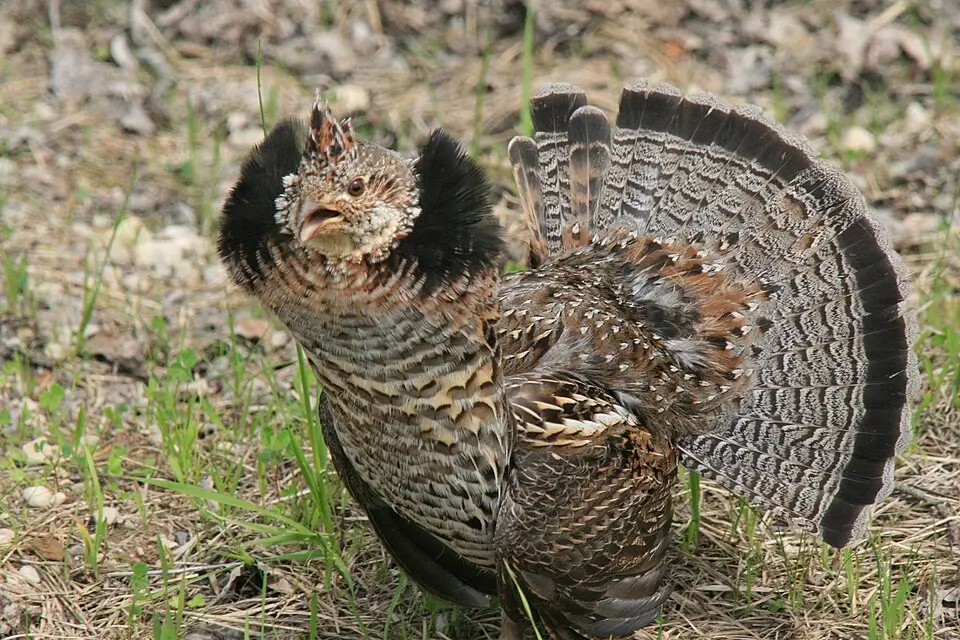
The ruffed grouse belongs to the family Phasianidae, which includes pheasants, turkeys, quail, and other familiar gamebirds. Its scientific name, Bonasa umbellus, is richly descriptive: Bonasa is derived from a Latin word relating to the bison or aurochs, likely referencing the low, rumbling sound that males produce, while umbellus refers to an umbrella-like structure — a nod to the distinctive ruff of dark feathers that adorns the neck of both males and females, though it is most prominently displayed by males during courtship.
In terms of physical appearance, the ruffed grouse is a medium-sized bird with cryptic, intricately patterned plumage that allows it to blend seamlessly into the forest floor. Two primary color morphs exist — a brown (or rufous) phase and a gray phase — and birds can display a range of intermediate colorations. The tail is broad and fan-shaped, typically marked with a distinctive dark terminal band near its tip, which is one of the species' most recognizable features. Males tend to be slightly larger than females, though the two sexes share similar plumage patterns, making field identification between them a challenge without close observation.
One of the most iconic behaviors of the ruffed grouse is drumming, a display performed exclusively by males. During drumming, the male mounts a favored log or elevated surface and beats his wings rapidly in a forward arc, creating a series of low-frequency thumps that start slowly and accelerate into a rapid whirring blur of sound. This resonant drumming can carry surprising distances through dense forest and serves as both a territorial declaration to rival males and an attraction signal to nearby females. Drumming activity peaks in the spring breeding season but can be heard at other times of year as well.
The ruffed grouse is also notable for its annual population cycles, which in northern portions of its range tend to follow a roughly ten-year boom-and-bust pattern, closely linked to the population cycles of key predators and prey. Diet shifts seasonally with the availability of food sources, ranging from insects, berries, and green plant material in warmer months to buds, catkins, and the twigs of woody plants during winter, when food sources are scarce and grouse rely heavily on the nutritional content of dormant vegetation.
Habitat & Range
The ruffed grouse is one of the most widely distributed upland gamebirds in North America, with a range that stretches from Alaska and Canada in the north, southward through much of the United States along the Appalachian Mountain chain and into parts of the Mid-Atlantic and upper South. The species is strongly associated with young, regenerating forests and mixed woodlands that provide a combination of dense understory cover for protection from predators, and a diverse variety of food sources across all seasons.
Aspen (Populus spp.) stands are particularly important to ruffed grouse across much of their northern range, providing critical food and cover resources throughout the year. In the Mid-Atlantic and Appalachian regions, however, grouse make extensive use of mixed hardwood and conifer forests, early successional shrublands, alder thickets, and regenerating clearcuts. The presence of thick, brushy understory vegetation — particularly in areas with a mosaic of young and mature forest — is often the single most important habitat characteristic for sustaining grouse populations.
Delaware, situated in the Mid-Atlantic region of the eastern United States, sits at the southern and eastern edge of the ruffed grouse's natural range. The state borders Maryland to its south and west, Pennsylvania to its north, New Jersey to its northeast, and the Atlantic Ocean to its east. While Delaware's landscape is predominantly low-lying and heavily developed in many areas, portions of the state's northern reaches — where the terrain transitions toward the Piedmont — provide more suitable woodland habitat that can support ruffed grouse. The species' presence in Delaware, though limited compared to the denser populations found in states like Pennsylvania and New York, reflects its remarkable adaptability and wide natural distribution.
Hunting Information
The ruffed grouse holds a special place in the hearts of upland hunters across North America. Pursuing grouse through dense alder runs, regenerating clearcuts, and brushy hillsides is considered by many wingshooters to be among the most challenging and rewarding forms of bird hunting available on the continent. The bird's tendency to hold tight before erupting into sudden, thunderous flight — often dodging through a maze of tree branches and undergrowth before the hunter can mount a shot — demands sharp reflexes, good dog work, and a genuine appreciation for the forest environment.
Traditional grouse hunting is typically conducted with pointing or flushing dogs, with breeds such as the English setter, Brittany, German shorthaired pointer, and Labrador retriever among the most popular choices for this style of hunting. A well-trained grouse dog with a nose for finding birds in thick cover is an invaluable partner on any grouse hunt.
For hunters interested in pursuing ruffed grouse in Delaware, it is important to consult the Delaware Department of Natural Resources and Environmental Control (DNREC), Division of Fish and Wildlife, for the most current and accurate information regarding hunting seasons, licensing requirements, and any applicable regulations. DNREC serves as the official state agency responsible for managing wildlife resources and overseeing hunting activities in Delaware, and their guidance should always be followed to ensure legal and responsible participation in the sport. Specific season dates and license requirements were not available in the source data consulted for this article, and hunters should contact DNREC directly or visit their official website for up-to-date details.
It is also worth noting that given the ruffed grouse's position at the edge of its natural range in Delaware, hunters should approach any grouse hunting opportunities in the state with a conservation-minded perspective, taking care not to overharvest and to support habitat conditions that sustain healthy bird populations.
Conservation
The ruffed grouse is currently listed as a species of least concern from a global perspective, reflecting the breadth of its range and the overall stability of many of its populations. However, like many wildlife species that depend on early successional forest habitats, the ruffed grouse faces meaningful conservation challenges in portions of its range. As forests mature and the amount of young, brushy woodland habitat declines — a process driven by forest succession, land development, and changing land management practices — grouse populations can experience significant local declines.
Active forest management, including timber harvesting, prescribed fire, and deliberate creation of young forest patches, is widely recognized by wildlife biologists and conservation organizations as one of the most effective tools for maintaining and improving ruffed grouse habitat. The Ruffed Grouse Society, a conservation organization dedicated to the species, has long championed the importance of early successional habitat management for the benefit of grouse and the many other wildlife species — including woodcock, deer, and a variety of songbirds — that depend on young forest environments.
Hunters themselves have historically played an important role in ruffed grouse conservation through their financial contributions via license fees and excise taxes on hunting equipment, which fund wildlife management programs across the country. This model of hunter-supported conservation has been a cornerstone of North American wildlife management for over a century and continues to benefit species like the ruffed grouse today.
For residents and hunters in Delaware and across the Mid-Atlantic region, supporting sound forest management practices, participating in citizen science monitoring programs, and engaging with state wildlife agencies like DNREC are all meaningful ways to contribute to the long-term health of ruffed grouse populations and the forest ecosystems they represent.
Conclusion
The ruffed grouse is a bird of remarkable character — equal parts elusive and iconic, deeply tied to the health of North America's forests and to the traditions of upland hunting that have shaped our outdoor heritage. From the drumming logs of northern aspen forests to the brushy hillsides of the Mid-Atlantic, Bonasa umbellus continues to inspire wonder and dedication in all who encounter it. Whether you pursue this magnificent bird with a shotgun and a well-trained dog, or simply pause in the autumn woods to listen for the distant thunder of its drumming wings, the ruffed grouse is a species well worth knowing, protecting, and celebrating.