The Red Fox (Vulpes vulpes): A Comprehensive Guide for Wildlife Enthusiasts and Hunters in Delaware
Few animals capture the imagination quite like the red fox. With its flame-colored coat, bushy tail, and sharp, intelligent eyes, Vulpes vulpes — the red fox — is one of the most recognizable and celebrated wild mammals in the Northern Hemisphere. Celebrated in folklore, studied extensively by biologists, and pursued by hunters and wildlife observers alike, the red fox occupies a unique place in both the natural world and human culture. In a state like Delaware, where diverse landscapes range from coastal marshes to rolling farmlands and wooded corridors, the red fox finds a welcoming home and continues to thrive as a fascinating component of the regional ecosystem.
This article provides an in-depth look at the red fox — its biology, behavior, habitat preferences, and role in the hunting traditions of Delaware and the broader Mid-Atlantic region. Whether you are a seasoned hunter, a wildlife enthusiast, or simply someone who has caught a glimpse of a rust-colored shape darting through a meadow at dawn, there is always more to learn about this remarkable animal.
Biological Traits
The red fox, Vulpes vulpes, holds the distinction of being the largest member of the genus Vulpes and one of the most widely distributed carnivores on Earth. Its scientific name reflects this dual identity — Vulpes is simply the Latin word for fox, repeated to form both the genus and species designation, a naming convention that emphasizes just how quintessentially "fox-like" this animal truly is.
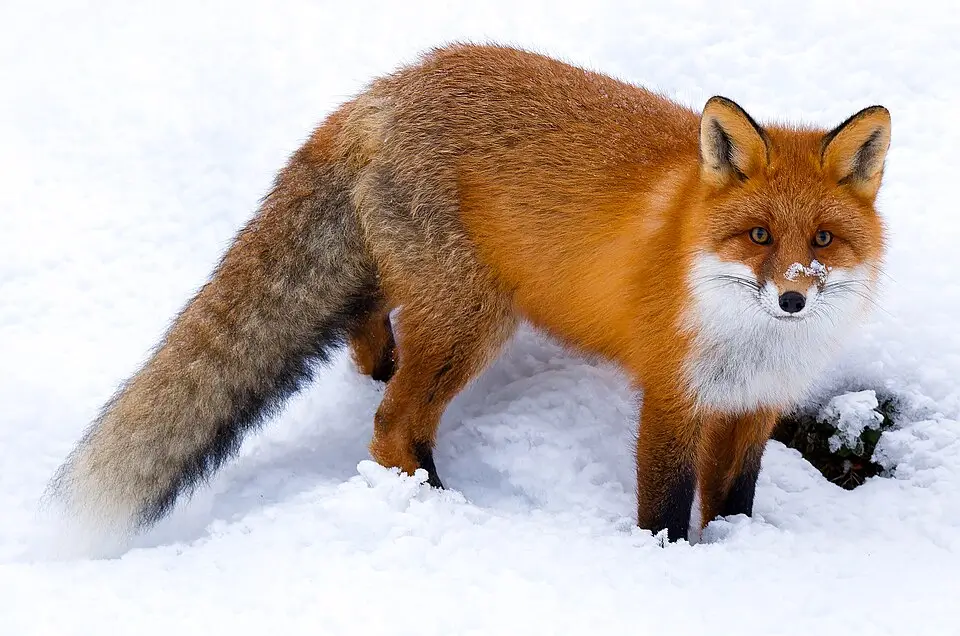
The red fox is instantly recognizable by its vivid reddish-orange fur, which covers most of its back, sides, and the top of its head. The underside of the animal, including the chin, chest, and belly, is typically white or pale gray. The legs and ears are often tinged with black, and the thick, luxurious tail — known as a "brush" — is usually tipped with white. It is worth noting, however, that red foxes display a surprising variety of color morphs. Cross foxes, silver foxes, and other color variations can occur within the same species, even within the same litter, demonstrating the genetic flexibility that has contributed to this species' extraordinary adaptability.
Adults are medium-sized carnivores, generally slender and agile in build, with a pointed muzzle, large triangular ears, and legs well-suited for both quick bursts of speed and enduring trotting over long distances. Their vertical, slit-shaped pupils — similar to those of cats — are an adaptation that enhances low-light vision, making the red fox an effective hunter during the dawn and dusk hours when prey animals are most active.
Red foxes are omnivores with highly flexible diets. They consume a wide range of foods, including small mammals such as mice, voles, and rabbits, as well as birds, insects, earthworms, berries, fruits, and carrion. This dietary versatility is one of the key reasons Vulpes vulpes has been so successful across such a wide range of environments. They are known for their hunting technique called "mousing," in which the fox uses its acute hearing to pinpoint prey moving beneath grass or snow, then leaps high into the air and pounces precisely on the target below — a behavior that is as effective as it is visually striking.
Red foxes are also known for their intelligence and cunning, qualities that have earned them a starring role in mythology and literature around the world. They are capable problem-solvers and can quickly adapt their behavior in response to changing environmental pressures, including human activity. Their vocalizations are diverse, including barks, screams, and a distinctive "gekkering" sound used during social interactions.
Socially, red foxes are generally considered to be relatively solitary outside of the breeding season, though they do form family groups. Breeding typically occurs in winter, and after a gestation period of approximately 52 days, a litter of pups — called kits or cubs — is born in a den. Litter sizes can vary but commonly include several pups. Both parents, along with sometimes older siblings from previous litters, participate in raising the young, bringing food and providing protection until the kits are ready to disperse in the autumn.
Habitat & Range
Vulpes vulpes is one of the most geographically widespread wild mammals on the planet. Its native range spans most of the Northern Hemisphere, including North America, Europe, Asia, and parts of North Africa. The species has also been introduced to Australia, where it has had significant ecological impacts. This extraordinary distribution speaks to the red fox's remarkable adaptability — it is equally at home in arctic tundra, temperate forests, grasslands, mountain ranges, and even suburban and urban environments.
In North America, red foxes are found across virtually the entire continent, from the boreal forests of Canada and Alaska to the deserts of the American Southwest and the agricultural lowlands of the Eastern Seaboard. In the Mid-Atlantic region, including Delaware, the red fox is a well-established and thriving resident.
Delaware's landscape, though modest in geographic size, offers a mosaic of habitats that are ideal for red foxes. The state includes coastal marshes, wooded stream corridors, agricultural fields, hedgerows, suburban greenways, and open meadows — exactly the kind of mixed, edge-rich environment where red foxes excel. The transition zones between forests and open land, commonly called "edge habitat," are particularly favored by this species, as they provide both cover for denning and refuge and open areas where hunting is productive.
Red foxes are often encountered near human settlements in Delaware. Far from being purely a wilderness species, Vulpes vulpes has demonstrated a remarkable capacity to coexist with human land use, and in many parts of the Mid-Atlantic, fox sightings in suburban neighborhoods and farmsteads are quite common. This adaptability has allowed red fox populations to remain robust even as landscapes have changed significantly over the past century.
Hunting Information
Red fox hunting has a rich and storied history in the United States and particularly in the Mid-Atlantic and South Atlantic regions where Delaware is situated. For generations, hunters have pursued red foxes both for the challenge they present and for the tradition and culture associated with the chase. Fox hunting — whether conducted with hounds in the classic English-inspired tradition or through modern calling and stalking methods — remains a celebrated activity in many parts of the eastern United States.
The red fox is a wary and cunning quarry. Its sharp senses of hearing and smell, combined with its intelligence and agility, make it a genuinely challenging animal to pursue. Hunters in Delaware and surrounding states have developed a range of techniques over the years, including hunting with trained hounds, electronic and mouth-blown predator calls, and still-hunting from concealed positions near known travel corridors or dens.
For hunters seeking to pursue red fox in Delaware, the relevant regulatory authority is the Delaware Department of Natural Resources and Environmental Control (DNREC), specifically its Division of Fish and Wildlife. DNREC oversees the management of all wildlife resources in the state and establishes the rules, seasons, and licensing requirements governing hunting activities. Prospective hunters are strongly encouraged to consult the official DNREC website and the current Delaware hunting regulations for the most up-to-date and accurate information regarding season dates, licensing requirements, and any applicable bag limits or special provisions for red fox. Regulations can change from year to year, and staying current with official guidance is both a legal responsibility and a hallmark of ethical sportsmanship.
Delaware's small geographic footprint does not diminish its hunting heritage. The state's agricultural landscape — with its open fields, fence rows, and woodlot edges — provides productive habitat for red foxes and rewarding hunting opportunities for those who take the time to scout and learn the land.
Conservation
The red fox (Vulpes vulpes) is currently classified as a species of "Least Concern" by the International Union for Conservation of Nature (IUCN), reflecting its stable and widespread global population. The species has demonstrated a remarkable capacity to persist and even flourish in the face of significant human-caused landscape changes, making it one of the more resilient wild carnivores in North America and beyond.
Responsible wildlife management, as practiced by agencies like Delaware's DNREC Division of Fish and Wildlife, plays an important role in maintaining healthy and balanced red fox populations in the state. By setting science-based hunting seasons and regulations, wildlife managers help ensure that harvest levels remain sustainable and that fox populations continue to fulfill their ecological role as mid-level predators.
Red foxes provide meaningful ecological services within the ecosystems they inhabit. As predators of small rodents, they help regulate populations of mice and voles, which can cause significant agricultural damage when left unchecked. They also serve as prey for larger predators in certain ecosystems, contributing to the food web in important ways.
Wildlife enthusiasts and hunters alike can contribute to red fox conservation by reporting observations to state wildlife agencies, supporting habitat conservation initiatives, and practicing ethical hunting standards. In Delaware, organizations focused on land conservation and wildlife stewardship provide important resources and advocacy for maintaining the diverse habitats on which species like the red fox depend.
The red fox's enduring success is a testament to the resilience and adaptability of nature — and a reminder of how much richness the natural world still holds, even in one of the smallest states in the nation.