The Raccoon: North America's Clever and Adaptable Masked Bandit
Few animals capture the imagination quite like the raccoon. With its distinctive black facial mask, ringed tail, and remarkably dexterous front paws, the raccoon (Procyon lotor) is one of North America's most recognizable and beloved wild mammals. Whether glimpsed rummaging through a backyard at dusk or spotted along a woodland stream, raccoons have become a familiar presence across the continent — and nowhere is that more true than in the Mid-Atlantic region, where states like Delaware offer ideal habitat for these resourceful creatures.
The raccoon's reputation as a clever, adaptable survivor is well earned. Over thousands of years, this medium-sized mammal has expanded its range dramatically, colonizing not just wild forests and wetlands but also suburban neighborhoods, urban parks, and agricultural landscapes. It has even established populations in parts of Europe and Japan, where it was introduced during the 20th century. Yet for all its familiarity, the raccoon remains a fascinating subject of study — a species that blends intelligence, physical adaptability, and ecological importance in ways that continue to impress wildlife biologists and outdoor enthusiasts alike.
In Delaware, the raccoon is part of the broader wildlife community overseen by the Division of Fish and Wildlife under DNREC (the Department of Natural Resources and Environmental Control), which manages hunting and conservation programs throughout the First State. Understanding the raccoon — its biology, its behavior, and its place in the ecosystem — helps hunters, naturalists, and outdoor lovers appreciate just how remarkable this animal truly is.
Biological Traits
The raccoon's scientific name, Procyon lotor, offers a subtle clue to one of its most distinctive behaviors. Lotor is derived from the Latin word for "washer," a reference to the raccoon's well-known habit of manipulating and seemingly "washing" its food near water sources. While scientists have debated whether this behavior is truly about cleaning food or simply reflects the animal's highly sensitive front paws — which become even more tactile when wet — there is no doubt that raccoons possess an extraordinary sense of touch that sets them apart from most other North American mammals.
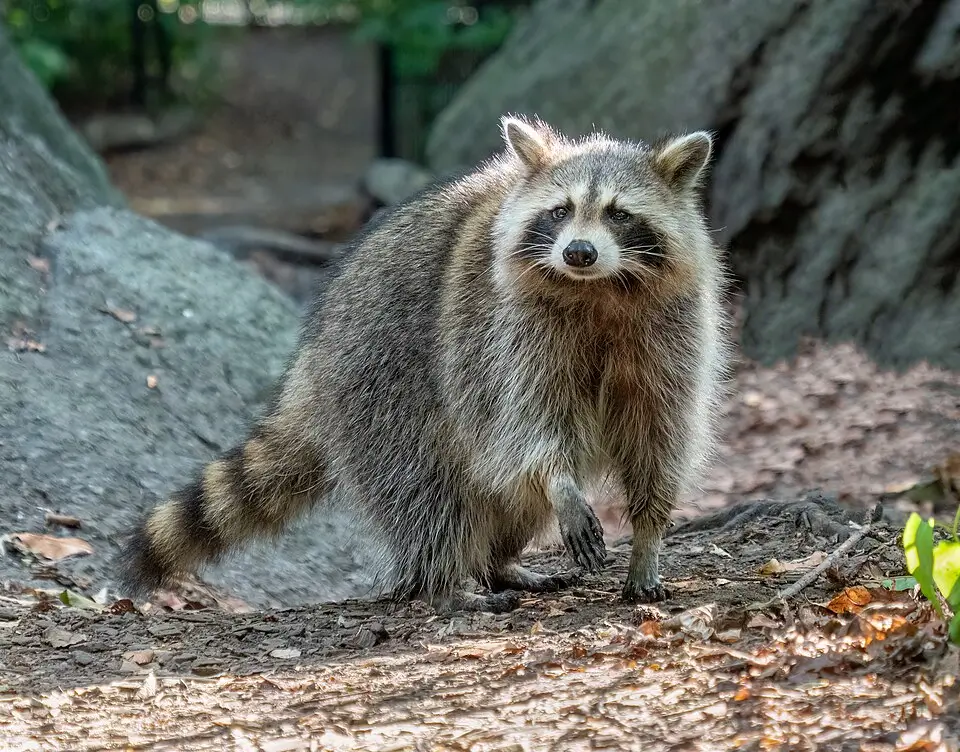
Raccoons are members of the family Procyonidae, a group that also includes coatis, ringtails, and olingos. They are medium-sized omnivores, typically weighing between 8 and 20 pounds in the wild, though exceptionally well-fed individuals in suburban or agricultural areas can grow considerably larger. Their body length generally ranges from about 16 to 28 inches, with a bushy, ringed tail adding another 8 to 12 inches. Males tend to be noticeably larger than females, a characteristic common among many carnivoran species.
The raccoon's coat is thick and grizzled gray-brown in color, providing excellent insulation during cold months. That dense underfur, combined with a layer of guard hairs, made raccoon pelts highly prized historically by trappers and traders across North America. The iconic black facial mask — running across the eyes and cheeks against a lighter background — is believed to help reduce glare and improve the animal's vision in low-light conditions, much like the eye black used by athletes.
One of the raccoon's most remarkable features is its brain. Relative to its body size, raccoons possess a surprisingly large cerebral cortex, which correlates with their well-documented problem-solving ability. Scientific studies have shown that raccoons can remember solutions to complex tasks for up to three years. They are capable of opening latches, jars, and containers — a trait that anyone who has tried to secure a garbage bin against a determined raccoon will readily confirm.
Raccoons are primarily nocturnal, spending daylight hours denning in hollow trees, rock crevices, brush piles, or even abandoned buildings. They do not hibernate in the true sense, but in colder climates they may enter periods of torpor during harsh winter weather, relying on fat reserves built up through intensive fall feeding. Their diet is famously omnivorous and opportunistic — fruits, nuts, corn, insects, crayfish, frogs, fish, bird eggs, small mammals, and carrion are all fair game depending on the season and what is available.
Raccoons are generally solitary animals, though females raise their young — called kits — in family groups. Mating typically occurs in late winter, and after a gestation period of approximately 63 days, females give birth to litters of two to five kits. The young are born with their eyes closed and remain dependent on their mother for several months, learning critical survival skills before dispersing in fall or the following spring.
Habitat & Range
The raccoon is native to North America, with a natural range stretching from southern Canada through the continental United States and into Central America. Within the United States, raccoons are found in virtually every state, thriving in an impressive variety of environments. Their preferred habitats include mixed and deciduous forests, especially those near water — rivers, streams, marshes, ponds, and coastal wetlands provide the aquatic food sources that raccoons depend on heavily.
Delaware, despite being the second-smallest state in the nation, offers a surprising diversity of raccoon habitat. The state's geography encompasses wooded uplands in the northern Piedmont region, extensive coastal plain forests in the central portion of the state, and rich tidal marshes and wetlands along Delaware Bay and the Atlantic coast. These varied environments provide raccoons with abundant food, cover, and denning opportunities year-round.
The Mid-Atlantic region as a whole — where Delaware sits at the ecological crossroads between northern deciduous forests and southern coastal plain systems — is particularly productive raccoon country. Agricultural lands, which cover a significant portion of Delaware's landscape, also benefit raccoons by providing reliable access to crops such as corn. The intersection of farmland, forest edge, and wetland creates prime habitat where raccoon populations can thrive.
Beyond their native range, raccoons have proven remarkably adept at living alongside human development. Suburban and urban environments, far from being hostile to raccoons, often support dense populations. The combination of accessible food sources, reduced predator pressure, and abundant denning sites in human-modified landscapes has allowed raccoons to become one of the most urbanized wild mammals on the continent.
Hunting Information
Raccoon hunting is a time-honored tradition across much of North America, and the Mid-Atlantic region is no exception. In Delaware, hunting and trapping activities — including those targeting raccoons — are regulated and overseen by DNREC's Division of Fish and Wildlife, which works to ensure that harvest levels remain sustainable and that wildlife populations remain healthy and robust.
Hunters interested in pursuing raccoons in Delaware should consult the most current regulations published by DNREC's Division of Fish and Wildlife, as specific season dates, licensing requirements, bag limits, and legal methods of take are subject to change from year to year. The Division manages wildlife resources across Delaware's diverse landscape and provides updated regulatory information to ensure that hunters can participate legally and responsibly.
Raccoon hunting has deep cultural roots in American outdoor tradition. Hunting raccoons at night with hounds is perhaps the most classic method — packs of trained coonhounds trail a raccoon by scent through the darkness, eventually treeing their quarry while hunters follow on foot. This style of hunting, often called "coon hunting" or "treeing," is as much about the experience of listening to hounds work in the night air as it is about the harvest itself.
Trapping is another traditional and effective method of raccoon harvest, with a variety of trap styles used throughout the country. Raccoon fur, while less commercially dominant than in previous centuries, still holds value in certain markets, and many trappers pursue raccoons as part of a broader furbearer trapping season.
Raccoon meat, while not as widely consumed today as in earlier eras of American history, has a long culinary tradition, particularly in the rural South and Midwest. It is considered a dark, richly flavored meat that benefits from slow cooking methods.
Conservation
From a conservation standpoint, the raccoon is one of North America's great wildlife success stories. Unlike many species that have suffered dramatic population declines due to habitat loss, over-harvest, or disease, the raccoon has proven remarkably resilient. Its population across the continent remains robust, and in many areas it is more abundant today than at any point in recorded history.
This success is due in large part to the raccoon's extraordinary adaptability — its generalist diet, its tolerance for a wide range of habitats including human-modified landscapes, and its reproductive capacity all contribute to population stability. Wildlife management agencies like Delaware's Division of Fish and Wildlife monitor raccoon populations and adjust hunting and trapping seasons accordingly to maintain sustainable harvest levels.
It is worth noting that raccoons, like many wildlife species, can serve as vectors for certain diseases, including rabies and canine distemper. Wildlife managers pay close attention to the health of raccoon populations, and responsible hunters and outdoor enthusiasts are encouraged to exercise standard precautions when handling raccoons or other wild animals.
Raccoons also play an important ecological role as omnivores and mid-level predators. They help control insect and small vertebrate populations, disperse seeds, and serve as prey for larger predators such as coyotes, bobcats, and great horned owls. Their presence contributes to the ecological complexity and health of the landscapes they inhabit — including Delaware's forests, wetlands, and coastal ecosystems.
For hunters, trappers, naturalists, and wildlife watchers alike, the raccoon represents one of the most engaging and enduring symbols of North American wildlife. Intelligent, adaptable, and undeniably charismatic, Procyon lotor has earned its place as a fixture of the continent's natural heritage — and in the fields, forests, and marshes of Delaware, it continues to thrive.