Northern Pintail (Anas acuta): An Elegant Waterfowl of North America
Few ducks command as much admiration among waterfowlers and wildlife enthusiasts alike as the Northern pintail (Anas acuta). Sleek, swift, and unmistakably beautiful, this species stands apart from other dabbling ducks with a combination of graceful physical features, impressive migratory endurance, and a widespread continental presence that makes it a celebrated figure across North American skies. From the sprawling prairie potholes of the Canadian interior to the tidal marshes of the Atlantic Coast, the Northern pintail is a symbol of open water and wild places.
In Delaware, a state nestled between the Mid-Atlantic and South Atlantic regions of the United States, the Northern pintail plays an important role in the seasonal rhythm of waterfowl migration. As birds funnel southward through the Atlantic Flyway each autumn, Delaware's marshes, wetlands, and coastal waterways offer productive staging and wintering habitat for these birds. The Delaware Department of Natural Resources and Environmental Control (DNREC), through its Division of Fish and Wildlife, oversees the responsible management of migratory waterfowl in the state, working in accordance with federal frameworks to ensure sustainable hunting and conservation practices.
Whether you are a seasoned duck hunter looking to learn more about one of the most sought-after species in the Eastern Flyway, or simply a wildlife enthusiast drawn to the elegance of migratory birds, the Northern pintail offers a compelling story of nature, adaptation, and stewardship.
Biological Traits
The Northern pintail is widely regarded as one of the most visually striking members of the family Anatidae, the broad family that includes all ducks, geese, and swans. The species belongs to the genus Anas, which groups together many of the world's most familiar dabbling ducks, including the Mallard (Anas platyrhynchos) and the Green-winged Teal (Anas crecca).
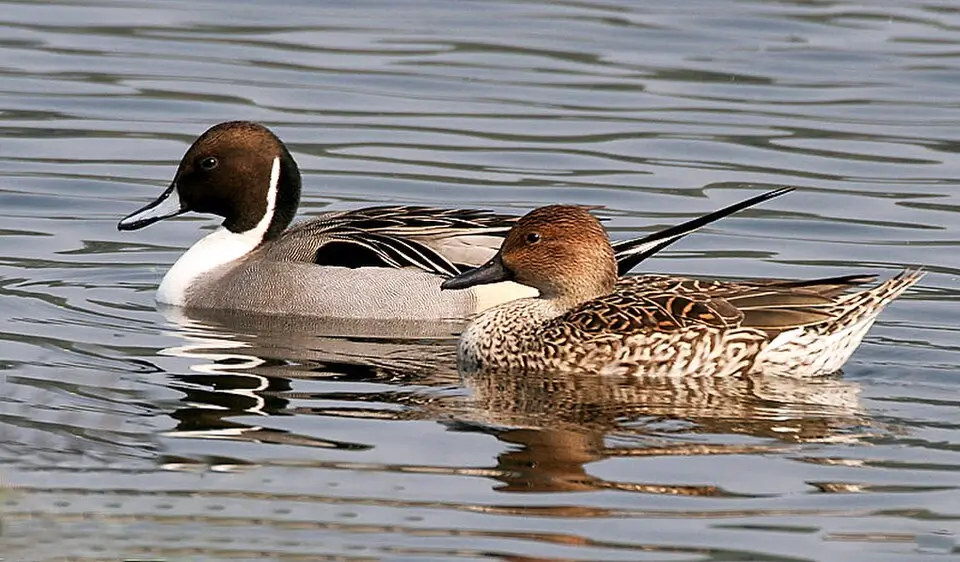
The breeding male, or drake, is perhaps one of the most easily recognizable ducks in North America. He sports a rich chocolate-brown head that contrasts sharply with a clean white breast and a long white stripe extending up each side of the neck. The body is finely vermiculated gray, and the tail — the species' namesake feature — extends into a long, elegant black spike that can add several inches to the bird's overall length. During flight, the drake's pointed wings and slim silhouette give it an aerodynamic profile that sets it apart from stockier waterfowl species.
The hen, by contrast, is dressed in more subdued plumage — mottled brown tones that provide excellent camouflage during nesting season. She shares the slim body shape and pointed tail of her male counterpart, though her tail feathers are far less exaggerated. Both sexes display a characteristic bronze-green speculum on the wing, edged in white, which is visible in flight and serves as a helpful field identification mark.
Pintails are dabbling ducks, meaning they feed primarily by tipping forward in shallow water to reach submerged aquatic vegetation, seeds, and invertebrates rather than diving beneath the surface. Their long neck is a significant advantage in this feeding strategy, allowing them to reach deeper than many other dabbling species. During winter months and migration, pintails often feed heavily in agricultural fields, gleaning leftover grain from harvested rice, corn, and wheat fields — a behavioral adaptation that has helped the species thrive across a variety of landscapes.
Northern pintails are also known for their impressive speed in flight. They are among the fastest ducks in North America, capable of reaching speeds that make them a challenging quarry for hunters and a marvel to observe as they wheel and bank across open water. Their calls are relatively quiet and understated compared to other ducks — drakes produce a soft, flute-like whistle, while hens give a low, raspy quack.
Habitat & Range
The Northern pintail enjoys one of the broadest breeding and wintering ranges of any duck species in the world. Breeding populations span across the northern reaches of North America, from Alaska through much of Canada and into portions of the northern contiguous United States. The species also breeds extensively across northern Europe and Asia, making it truly a bird of global significance.
In North America, the heart of pintail breeding country lies in the Prairie Pothole Region — a vast landscape of wetlands and grasslands stretching across the northern Great Plains of the United States and Canada. This region, shaped by ancient glacial activity, provides the shallow wetland habitat that pintails favor for nesting. Unlike many ducks, pintails often nest in open grassland or agricultural fields at some distance from water, with females leading their broods overland to suitable wetland areas after hatching.
As summer gives way to autumn, pintails begin one of waterfowl migration's earliest movements, often departing breeding grounds well before other species. They funnel through major flyways — the Pacific, Central, Mississippi, and Atlantic — to reach wintering grounds that include the Central Valley of California, the Gulf Coast of Louisiana and Texas, the Caribbean, and the coastal marshes and estuaries of the Atlantic Seaboard.
For Delaware, situated along the Atlantic Flyway, this migration is a seasonal spectacle. The state's diverse landscape — encompassing tidal marshes, freshwater impoundments, agricultural fields, and coastal bays — provides a range of habitats suitable for pintails during their southward journey and winter residency. Delaware Bay, one of the most ecologically significant estuaries on the Eastern Seaboard, and the network of wetlands managed by state and federal agencies provide critical resting and feeding areas for migrating pintails and other waterfowl.
Hunting Information
The Northern pintail is considered a premier game bird among North American waterfowlers. Its speed, wariness, and striking appearance make it a highly prized species, and the tradition of pintail hunting is woven deeply into the culture of duck hunting across the continent.
In Delaware, waterfowl hunting is managed and regulated by the DNREC Division of Fish and Wildlife, which works in coordination with the U.S. Fish and Wildlife Service to establish seasons, bag limits, and licensing requirements in compliance with federal migratory bird treaties and management frameworks. Hunters pursuing Northern pintails in Delaware are encouraged to consult the most current waterfowl regulations published by DNREC, as season dates, bag limits, and any special provisions for pintails can be updated on an annual basis in response to population surveys and habitat assessments.
Because pintail populations have historically fluctuated in response to drought conditions on the breeding grounds, federal and state managers sometimes impose more conservative bag limits for this species compared to other ducks. This careful, science-based approach to management reflects the commitment of agencies like DNREC's Division of Fish and Wildlife to sustaining healthy waterfowl populations for future generations of hunters and wildlife enthusiasts alike.
For those planning to hunt in Delaware, it is important to obtain all required licenses and permits through the DNREC system and to stay informed about any late-breaking regulatory changes before heading to the marsh. Hunting methods for pintails typically include decoy spreads set in open water or flooded agricultural fields, often combined with calling — though pintails respond to calling less readily than species like Mallards. Pass shooting along flight corridors and field hunting over harvested grain are also productive tactics.
The Northern pintail's preference for open water and its tendency to decoy to spread layouts that incorporate a mix of species make it a natural target for waterfowlers already pursuing Mallards, Black Ducks, and Teal in Delaware's productive coastal marshes and wetland areas.
Conservation
The conservation status of the Northern pintail reflects both the species' resilience and the challenges it faces in a rapidly changing landscape. Pintail populations are sensitive to conditions on the Prairie Pothole breeding grounds, particularly the availability of shallow wetlands during the spring nesting period. Drought cycles, wetland drainage for agriculture, and grassland habitat loss have historically contributed to population fluctuations that managers closely monitor each year.
Conservation organizations, state wildlife agencies, federal programs, and private landowners have invested heavily in preserving and restoring wetland habitats critical to pintails and other migratory waterfowl. Programs that support wetland easements, waterfowl production areas, and habitat restoration on private farmland have proven valuable tools in maintaining the landscape connections that migratory birds depend upon from breeding grounds to wintering areas.
In Delaware, the DNREC Division of Parks and Recreation and the Division of Fish and Wildlife work together to manage state-owned natural areas that provide critical habitat for migrating and wintering waterfowl. Coastal wetlands, which are increasingly recognized for their role in climate resilience and biodiversity conservation, receive particular attention as part of Delaware's broader environmental management strategy.
Waterfowl hunters themselves have long been among the most active and financially committed supporters of wetland conservation in North America. Through the purchase of Federal Duck Stamps — a requirement for all waterfowl hunters — and through contributions to nonprofit conservation organizations, hunters channel significant resources toward the habitat protection that species like the Northern pintail depend upon for their long-term survival.
The future of the Northern pintail is, ultimately, tied to the health of North America's wetland ecosystems. With thoughtful management, continued habitat investment, and an engaged community of hunters, birders, and conservationists, this iconic species will continue to grace the skies and marshes of Delaware and beyond for generations to come.
Conclusion
The Northern pintail is far more than a game bird or a check on a birder's life list. It is a symbol of the interconnected web of wetland habitats that stretches from Arctic tundra to Gulf Coast marsh, and a reminder of the vital role that responsible wildlife management plays in sustaining the natural world. In Delaware, where the rhythms of the Atlantic Flyway bring pintails through tidal creeks and coastal bays each autumn and winter, this elegant duck occupies a special place in the state's outdoor heritage.
Whether you encounter a drake pintail banking over a decoy spread in the early morning light or observe a flock wheeling against a winter sky over Delaware Bay, the Northern pintail delivers an experience that speaks to the enduring value of wild places and the birds that depend on them.