The Northern Bobwhite: America's Beloved Quail
A Complete Guide to Colinus virginianus
Few sounds in the American countryside are as instantly recognizable — or as warmly welcomed — as the clear, whistled call of the Northern bobwhite. "Bob-WHITE! Bob-WHITE!" rings out across fields, forest edges, and brushy meadows, announcing the presence of one of North America's most iconic and beloved game birds. For generations of hunters, wildlife enthusiasts, and naturalists alike, the Northern bobwhite (Colinus virginianus) has held a special place in the cultural and ecological fabric of the eastern and central United States.
Known simply as "bobwhite" or "quail" throughout much of its range, this small but spirited bird has been a cornerstone of upland bird hunting traditions for well over a century. Its sudden, explosive flush from dense cover, its rapid and unpredictable flight, and the rich reward of a well-pointed covey have made it the quarry of choice for countless wingshooters. Beyond the hunting tradition, the Northern bobwhite is also a vital component of healthy grassland and shrubland ecosystems, playing an important role in seed dispersal, insect control, and as prey for a variety of raptors and mammalian predators.
In states like Delaware — situated in the heart of the Mid-Atlantic region — the bobwhite occupies a storied and meaningful place in the outdoor heritage of the First State. Delaware's diverse mix of agricultural lands, managed grasslands, and woodland edges provides pockets of suitable habitat where this cherished bird continues to make its home. Understanding the biology, habitat needs, and conservation status of the Northern bobwhite is essential for anyone who values this remarkable species, whether as a hunter, a birder, or simply a lover of the natural world.
Biological Traits
The Northern bobwhite is a member of the family Odontophoridae — the New World quails — and is the only native quail species found across much of the eastern United States. Its scientific name, Colinus virginianus, reflects its long historical association with the Virginia region, where early naturalists first formally described the species.
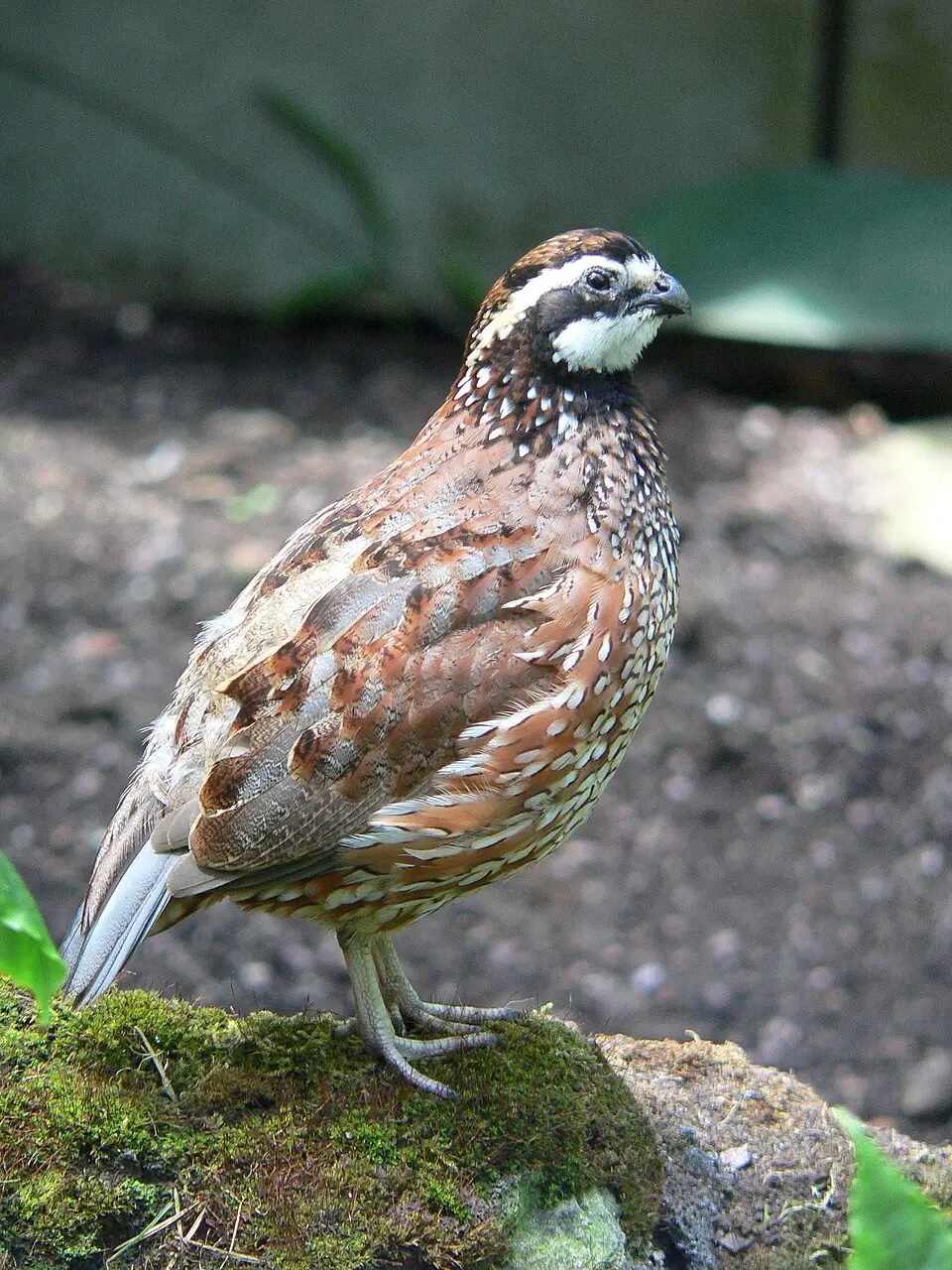
The bobwhite is a compact, rotund bird with a short tail and rounded wings — a body plan perfectly adapted for life in dense, low vegetation. Males are strikingly patterned, featuring a bold white supercilium (eyebrow stripe) and white throat, set against a rich chestnut and black patterned body. The chest is adorned with intricate streaks and scalloping in shades of rufous, black, and buff. Females share a similar overall pattern but replace the male's white facial markings with buffy or tawny tones, providing excellent camouflage among dried grasses and leaf litter.
One of the Northern bobwhite's most remarkable biological traits is its strong social structure. Outside of the breeding season, bobwhites gather in groups known as coveys, typically composed of a dozen or more birds. These coveys serve a critical survival function: birds roost together in a tight circular formation at night, with their tails pointed inward and heads facing outward. This arrangement provides warmth during cold nights and allows the group to detect and flush rapidly from predators approaching from any direction.
The breeding season brings significant changes in social dynamics. Males become highly vocal, proclaiming their presence with the famous "bob-WHITE" call — a behavior primarily aimed at attracting mates and defending territory. Northern bobwhites are notably flexible in their mating system. While monogamous pairings occur, polygamy and polyandry have also been documented, and males in many populations take an active role in incubating eggs and brooding chicks — a relatively unusual trait among game birds.
Nests are typically constructed on the ground, hidden among grasses or low vegetation. The female lays a clutch of roughly a dozen eggs, and both parents may participate in incubation duties. The chicks are precocial — meaning they hatch fully covered in down and are capable of moving and feeding themselves within a very short time after hatching. This rapid development is a critical adaptation, helping young birds escape predation as quickly as possible.
Bobwhites are omnivorous, with their diet shifting with the seasons. During warmer months, insects make up a substantial portion of their food intake, providing essential protein for growth and reproduction. As the seasons change and insect availability declines, the birds shift toward seeds — including those of wild grasses, legumes, agricultural crops, and a wide variety of forbs. This adaptability in diet is one of the traits that has historically allowed the species to thrive in agricultural landscapes where food resources fluctuate throughout the year.
Habitat & Range
The Northern bobwhite's range spans a broad swath of North America, from the eastern seaboard westward through the Great Plains and south through Mexico and into parts of Central America. Within the eastern United States, the species historically occurred in virtually every state east of the Rocky Mountains, making it one of the most widespread upland game birds on the continent.
The bobwhite is fundamentally a bird of early successional habitats — meaning it thrives in areas characterized by a mix of open ground, dense grassy cover, shrubby vegetation, and brushy edges. Classic bobwhite habitat often includes agricultural fields bordered by hedgerows, brushy fence lines, native warm-season grasslands, pine savannas, and burned or disturbed areas that support a diversity of grasses, forbs, and low shrubs.
Critically, bobwhites require habitat diversity at a relatively small scale. They need open areas for foraging and movement, dense grass for nesting and escape cover, brushy shrubs for loafing and thermal cover, and wooded edges for additional protection. The interspersion of these habitat elements within a small home range — typically less than a few hundred acres — is what defines truly productive bobwhite country.
In Delaware and the broader Mid-Atlantic region, bobwhite habitat is found primarily in the state's agricultural landscapes, particularly on the Delmarva Peninsula. Delaware's combination of flat terrain, crop fields, fallow areas, and managed grasslands can provide suitable conditions for bobwhites where the right habitat elements are present and maintained. The state's position in the Mid-Atlantic places it near the northern edge of the bobwhite's core range, meaning that harsh winters and reduced habitat connectivity can pose additional challenges for local populations.
Hunting Information
The Northern bobwhite has earned its reputation as one of the premier upland game birds in North America. Covey hunting — whether with pointing dogs, flushing dogs, or by walking up birds without canine assistance — is a deeply ingrained tradition across the bobwhite's range. The explosive flush of a covey, the rapid twisting flight through brush and briars, and the challenge of marking down scattered singles have made bobwhite hunting an art form practiced and refined over many generations.
In Delaware, hunting opportunities and regulations are managed by the Delaware Department of Natural Resources and Environmental Control (DNREC), specifically through the Division of Fish and Wildlife. Hunters interested in pursuing Northern bobwhite in Delaware are encouraged to consult the current official hunting regulations provided by DNREC directly, as season dates, bag limits, and licensing requirements are subject to change and must be verified through official state channels before heading afield.
As with all upland hunting, ethical and responsible practices are essential when pursuing bobwhites. Leaving a portion of each covey undisturbed — a practice known as "covey management" — helps ensure that enough birds survive to maintain social cohesion, successfully overwinter, and contribute to the following year's breeding population. Responsible hunters understand that the long-term health of bobwhite populations depends on both habitat quality and careful harvest management.
Dog work remains one of the most cherished aspects of bobwhite hunting culture. Pointing breeds such as the English Pointer, English Setter, and Brittany have been closely associated with bobwhite hunting for generations, and many hunters consider the relationship between hunter, dog, and bird to be the true heart of the quail hunting experience.
Conservation
The Northern bobwhite faces significant conservation challenges across much of its range. While the species was once extraordinarily abundant throughout the eastern and central United States, populations have experienced long-term declines over the past several decades in many parts of the country. These declines are widely attributed to large-scale changes in land use and land management practices — including the conversion of early successional habitats to row crops, the removal of hedgerows and brushy field borders, the suppression of fire in fire-adapted ecosystems, and the intensification of agricultural practices that reduce the diversity and availability of food and cover.
Conservation efforts for the Northern bobwhite are active and ongoing at both the national and state level. Organizations such as the National Bobwhite Conservation Initiative (NBCI) and the National Bobwhite and Grassland Bird Initiative work to coordinate habitat restoration and management efforts across the species' range. Key conservation strategies include the restoration of native warm-season grasses, the reintroduction of prescribed fire to maintain open habitats, the establishment and maintenance of brushy cover along field edges, and the creation of habitat corridors that connect isolated patches of suitable land.
In Delaware and other Mid-Atlantic states, landowner incentive programs administered through agencies like the USDA Natural Resources Conservation Service (NRCS) provide financial and technical assistance to private landowners interested in creating or enhancing bobwhite habitat on their properties. These programs recognize that a significant portion of the best bobwhite habitat exists on privately owned agricultural land, making voluntary landowner participation essential to the species' recovery.
The Northern bobwhite's cultural importance to hunters, outdoor enthusiasts, and rural communities adds an important human dimension to conservation efforts. Hunting license revenues and excise taxes on firearms and ammunition — collected under the Federal Aid in Wildlife Restoration Act (commonly known as the Pittman-Robertson Act) — provide substantial funding for wildlife management and habitat work across the country, directly supporting bobwhite research and restoration projects.
The future of the Northern bobwhite depends on a continued commitment to habitat management, thoughtful harvest practices, and broad public support for conservation initiatives. With dedicated effort from hunters, landowners, wildlife agencies, and conservation organizations working together, the clear, ringing call of "Bob-WHITE!" can continue to echo across the fields and hedgerows of Delaware and the rest of the eastern United States for generations to come.