The Mourning Dove: America's Most Beloved Game Bird
A Comprehensive Guide to Zenaida macroura
Few birds are as deeply woven into the fabric of American outdoor life as the mourning dove. Known scientifically as Zenaida macroura, this graceful, soft-featured bird is simultaneously one of the most recognizable songbirds in North America and one of the most popular game birds on the continent. Whether you are a seasoned hunter walking fields at dawn, a backyard birder who finds comfort in the bird's gentle cooing from a telephone wire, or simply someone who appreciates the quiet elegance of wildlife, the mourning dove has likely touched your life in some meaningful way.
From the rolling farmlands of the Midwest to the coastal marshes of the Mid-Atlantic, the mourning dove is a constant and reassuring presence across the American landscape. In Delaware, a state nestled comfortably in the Mid-Atlantic and South Atlantic regions of the United States, mourning doves are a familiar sight throughout the year. The state's rich agricultural heritage, diverse land cover, and position along the Atlantic Flyway make it an ideal environment for this adaptable and resilient species.
This article takes a comprehensive look at the mourning dove — its biology, behavior, habitat preferences, role in hunting culture, and the ongoing conservation efforts that help ensure its continued abundance for generations of wildlife enthusiasts to come.
Biological Traits
The mourning dove is a member of the family Columbidae, the larger family that includes all pigeons and doves. Zenaida macroura is the only member of the genus Zenaida that is native and widespread across most of mainland North America, making it a truly distinctive and ecologically significant species.
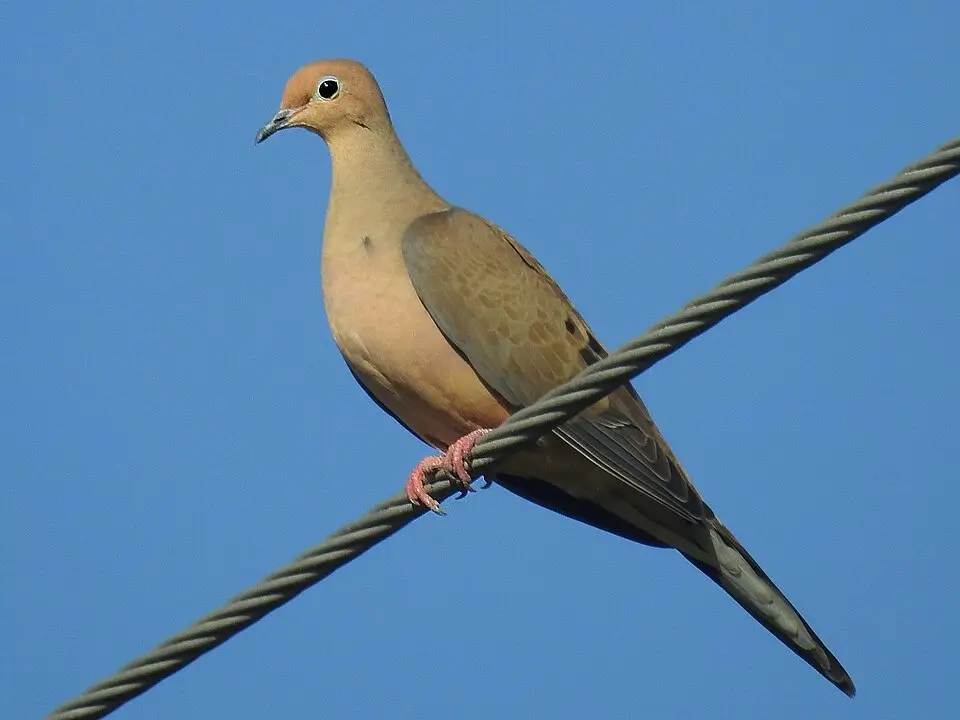
Physically, the mourning dove is an elegant bird. It has a slender, streamlined body, a small rounded head, and a notably long, tapered tail that distinguishes it immediately from its pigeon relatives. The plumage is soft and muted in tone — generally a warm buffy-brown or grayish-tan across the back and wings, with a pale, peachy-rose wash on the breast. Upon closer inspection, one notices the subtle iridescence on the neck, as well as distinctive black spots on the wings. The facial skin around the eye often shows a pale blue or turquoise tone that adds a quiet but striking detail to an otherwise understated bird.
Both sexes appear similar in coloration, though males tend to show slightly more vivid iridescence on the neck and a more distinctly pinkish breast. The bill is slender and slightly downcurved, well-suited for picking up seeds from the ground.
One of the most recognizable features of the mourning dove is its voice. The bird produces a soft, mournful cooing call — typically rendered as a low, echoing ooo-woo-woo-woo — that gives the species its common name. This melancholy, gentle sound is a hallmark of quiet mornings in rural and suburban settings alike and is often one of the first bird calls people learn to identify.
The mourning dove is also known for its impressive flight capabilities. When startled, it launches into the air with a distinctive whistling sound produced by its wings — a trait caused by the shape of its primary feathers. In open flight, it can reach speeds that challenge even experienced wingshooters, making it a formidable quarry in the field.
Like all members of the Columbidae family, mourning doves possess a unique biological trait: they are among the few bird species capable of drinking water by sucking it up continuously, rather than tilting their heads back to swallow. This adaptation allows them to hydrate quickly and efficiently, which is especially useful in warmer months and drier environments.
Mourning doves are also prolific breeders. They typically produce multiple broods throughout a single breeding season, with nesting activity that can begin as early as late winter and continue well into early fall in many parts of their range. Nests are simple, loosely constructed platforms of twigs, usually placed in trees, shrubs, or on man-made structures. Clutch size is almost universally two eggs, and both parents share incubation duties. The young, called squabs, hatch within about two weeks and are fed a protein-rich secretion known as "crop milk" — another trait unique to the pigeon and dove family. Squabs grow remarkably fast and typically fledge within a few weeks of hatching.
Habitat & Range
The mourning dove is one of the most widely distributed bird species in North America. Its range extends from southern Canada through the entirety of the continental United States and into Central America and parts of the Caribbean. This expansive range speaks to the species' tremendous adaptability and ecological flexibility.
Mourning doves thrive in open and semi-open environments. They are commonly associated with agricultural fields, grasslands, open woodlands, forest edges, roadsides, and suburban gardens. They have a notable affinity for areas where the ground is open and seeds are readily accessible. Grain fields, weed-filled meadows, and recently harvested cropland are among their favorite foraging areas.
Unlike many wildlife species that have struggled in the face of expanding human development, mourning doves have adapted well to human-altered landscapes. Suburban neighborhoods, city parks, and farmsteads often support dense populations of these birds, particularly where bird feeders, open lawns, or food plots are present.
Delaware's landscape is particularly well-suited to mourning doves. The state's geography — bordered by Maryland to the south and west, Pennsylvania to the north, New Jersey to the northeast, and the Atlantic Ocean to the east — encompasses a variety of land types including agricultural plains, forested uplands, wetland edges, and suburban corridors. All of these habitat types can support healthy dove populations. The Delmarva Peninsula, on which much of Delaware sits, also places the state squarely within important migratory corridors that doves use as they move between northern breeding grounds and southern wintering areas.
Hunting Information
The mourning dove holds the distinction of being the most hunted migratory game bird in the United States. Millions of dove hunters take to fields across the country each season, making dove hunting a foundational piece of American hunting culture. The sport is particularly popular in the South and Mid-Atlantic, where agricultural landscapes provide outstanding habitat and large concentrations of birds.
Dove hunting is typically a social and accessible pursuit. It often involves hunters positioned around food sources — harvested grain fields, sunflower plots, or water sources — waiting for birds to fly in range. The speed and unpredictable flight pattern of the mourning dove makes it a challenging target that is respected by wingshooters of all experience levels.
In Delaware, the Division of Fish and Wildlife under the Delaware Department of Natural Resources and Environmental Control (DNREC) oversees hunting regulations, including those that apply to migratory game birds such as the mourning dove. Because mourning doves are a federally managed migratory species, their hunting seasons and bag limits are coordinated between the U.S. Fish and Wildlife Service and individual state wildlife agencies.
Hunters in Delaware are encouraged to consult the most current DNREC Division of Fish and Wildlife regulations and guidance directly, as season dates, bag limits, and licensing requirements are subject to change on an annual basis and must reflect the most up-to-date federal and state decisions. Always verify current rules through official DNREC channels before heading afield.
Conservation
Despite being hunted in large numbers, the mourning dove remains one of the most abundant bird species in North America, a testament to both its reproductive capability and the effectiveness of science-based wildlife management. Population monitoring is conducted regularly, and hunting seasons are carefully calibrated to ensure that harvest levels remain sustainable.
The mourning dove's ability to raise multiple broods per season gives it a significant biological advantage over many other game bird species. This reproductive resilience, combined with its adaptability to a wide range of habitats, positions the species well for long-term sustainability.
Conservation-minded hunters and wildlife managers alike recognize the importance of maintaining quality habitat for mourning doves. Practices such as maintaining field edges, planting native grasses and wildflowers, managing grain crops with wildlife in mind, and providing clean water sources all contribute meaningfully to dove population health. These habitat management practices also benefit a wide array of other wildlife species, making dove habitat work a broadly positive contribution to ecosystem health.
Organizations dedicated to upland bird and migratory bird conservation have increasingly recognized the mourning dove as a flagship species — one whose health serves as an indicator of broader grassland and agricultural ecosystem conditions. Supporting habitat conservation initiatives, following ethical hunting practices, and staying informed about population trends are all ways that hunters and wildlife enthusiasts can contribute to the long-term stewardship of this beloved bird.
In Delaware, DNREC's Division of Fish and Wildlife works to manage the state's wildlife resources responsibly, balancing the interests of hunters, wildlife watchers, and conservationists in service of healthy, thriving populations for future generations.
Conclusion
The mourning dove is more than just a game bird. It is a symbol of the American countryside — a quiet, graceful presence that connects people to the natural world in deeply personal ways. Whether you hear its mournful call drifting across a misty morning field, watch it glide overhead with remarkable speed on a warm September day, or simply observe it pecking seeds beneath a backyard feeder, the mourning dove offers something for everyone who values the outdoors.
For hunters and wildlife enthusiasts in Delaware and across the Mid-Atlantic, this bird represents both a cherished tradition and a shared responsibility. By supporting sound wildlife management, respecting regulations, and investing in habitat conservation, we ensure that Zenaida macroura remains a defining feature of the American landscape for many years to come.