The Mallard: North America's Most Iconic Waterfowl
A Complete Guide to Anas platyrhynchos for Wildlife Enthusiasts and Hunters in Delaware and Beyond
Few birds are as instantly recognizable or as deeply woven into the fabric of North American outdoor culture as the Mallard (Anas platyrhynchos). From the misty marshes of the Delaware coast to the prairie potholes of the Great Plains, this hardy, adaptable duck has captured the imagination of birdwatchers, wildlife photographers, and waterfowl hunters for generations. Whether you have spotted a gleaming green-headed drake paddling across a local pond or heard the familiar quack echoing across a wetland at dawn, you have almost certainly encountered this remarkable species.
The Mallard is widely considered the most abundant and widely distributed duck in the Northern Hemisphere. It is the ancestor of nearly all domestic duck breeds, a testament to its long and intertwined relationship with human civilization. Yet despite its familiarity, the Mallard remains a bird of extraordinary biological complexity, ecological importance, and cultural significance. For residents of Delaware and visitors to the Mid-Atlantic region, the Mallard represents one of the premier wildlife experiences the First State has to offer — both in the field and on the water.
This article explores the Mallard in depth, covering its biological traits, natural habitat, range, its role in Delaware's outdoor heritage, and the conservation principles that help sustain healthy populations for future generations.
Biological Traits
The Mallard is a member of the family Anatidae, the large and diverse group that includes all ducks, geese, and swans. Within this family, it belongs to the genus Anas, a group commonly referred to as dabbling ducks — birds that feed primarily at or near the water's surface rather than diving deeply beneath it.
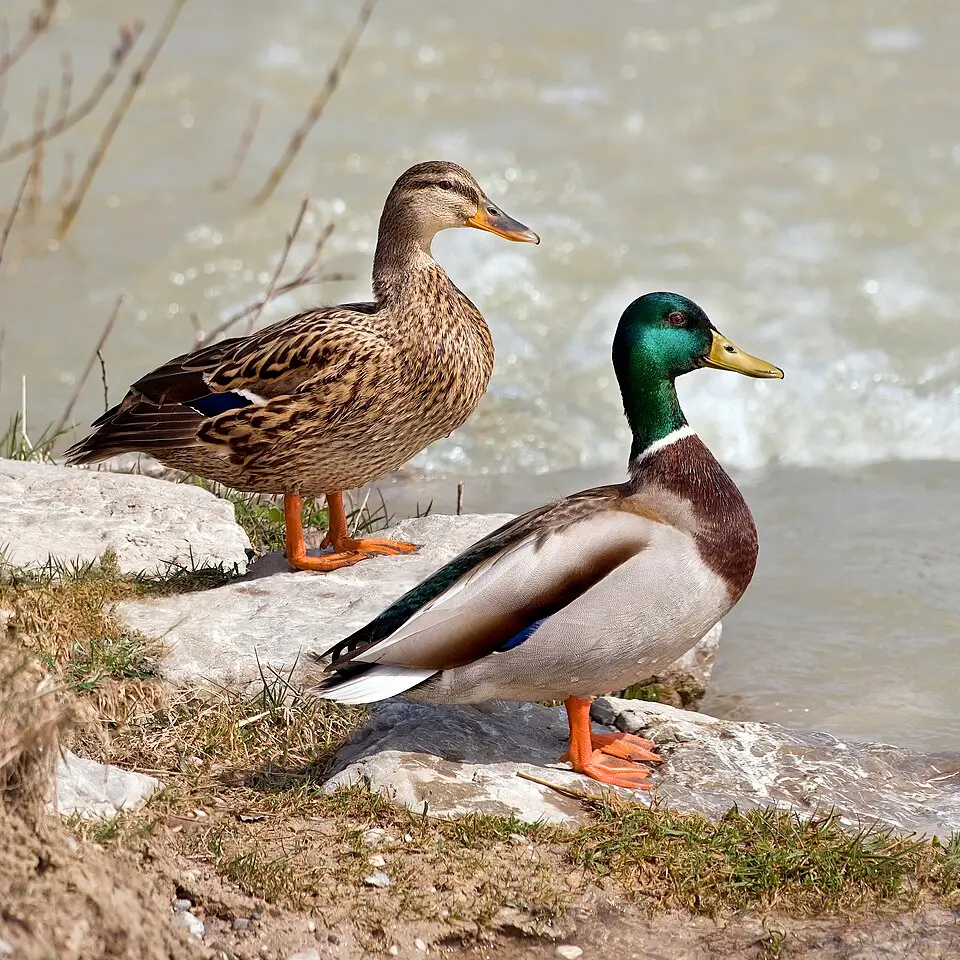
One of the Mallard's most celebrated features is its striking sexual dimorphism, meaning that males and females look markedly different from one another. The male, or drake, is renowned for his iridescent emerald-green head, which shimmers brilliantly in sunlight. This vivid plumage is complemented by a white neck ring, a chestnut-brown breast, gray flanks, a pale belly, and a distinctive black-and-white tail that curls upward — the famous "drake curl." The bill of the male is typically a bright yellow-orange, adding yet another splash of color to an already eye-catching bird.
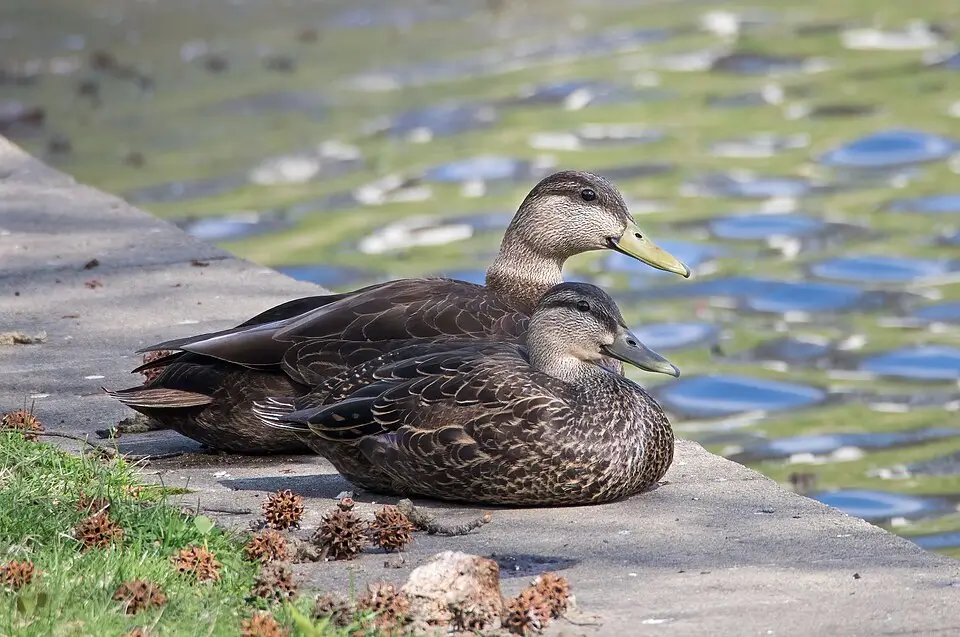
The female, or hen, presents a much more subdued appearance, featuring mottled brown plumage that provides exceptional camouflage while she incubates her eggs. Her bill tends toward orange with dark markings. Both sexes share a distinctive blue-purple speculum — a patch of iridescent feathers on the wing — bordered by white bars, which is particularly visible in flight and serves as a reliable field identification mark.
Mallards are medium to large dabbling ducks. They are robust birds with broad, flat bills perfectly designed for filter-feeding on aquatic vegetation, invertebrates, seeds, and small aquatic organisms. Like all dabbling ducks, they feed by tipping forward in shallow water — a behavior known colloquially as "dabbling" or "tipping up" — to reach submerged vegetation and invertebrates on the bottom. They are equally comfortable foraging on land, where they will graze on grasses, grains, and agricultural crops.
The Mallard is a highly vocal species. The classic loud, descending quack is produced almost exclusively by the female, and it is this sound that most people associate with ducks in general. Males, by contrast, produce a softer, raspier call. During courtship, males engage in elaborate display behaviors, including head pumping, wing flapping, and short pursuit flights, all designed to attract the attention of females.
Mallards are seasonally monogamous, typically forming pair bonds during the winter and early spring. Nests are constructed by the hen, usually on the ground and concealed among dense vegetation near water. A typical clutch consists of several pale greenish-buff eggs, which the hen incubates alone. Ducklings are precocial, meaning they hatch fully feathered and capable of walking and swimming within hours of emerging from the egg. The hen leads her brood to water shortly after hatching and tends to them attentively until they are capable of sustained flight.
Mallards undergo a fascinating molt cycle. After breeding season, drakes enter what is known as "eclipse plumage," during which they temporarily lose their vivid green heads and take on a mottled brown appearance similar to females. This cryptic plumage coincides with a period of flightlessness as wing feathers are shed and replaced. By autumn, drakes regain their full breeding colors, just in time for the migration season.
Habitat & Range
The Mallard's success as a species is due in no small part to its extraordinary habitat flexibility. While it thrives in classic wetland environments — marshes, swamps, ponds, rivers, and lakes — it is equally at home in urban parks, suburban retention ponds, flooded agricultural fields, and coastal estuaries. Few ducks can match the Mallard's ability to exploit such a wide variety of aquatic and semi-aquatic environments.
The species enjoys one of the broadest distributions of any duck in the world. In North America, Mallards breed across an enormous range stretching from Alaska and Canada south through much of the continental United States. They are migratory across much of this range, moving southward and toward the coasts as temperatures drop and northern wetlands freeze in autumn, then returning north in spring to breeding grounds.
Delaware, situated in the Mid-Atlantic region along the Atlantic Flyway — one of North America's major migratory corridors — is perfectly positioned to receive significant concentrations of Mallards during the autumn and winter months. The state's diverse landscape, which includes tidal marshes along Delaware Bay, freshwater wetlands, agricultural fields, and coastal waterways, provides ideal staging and wintering habitat for this species. Delaware borders the Atlantic Ocean to the east and enjoys a relatively mild Mid-Atlantic climate, making it an attractive stopover and wintering destination for waterfowl migrating along the Atlantic coast.
During winter, Mallards in Delaware can be found in a wide variety of settings — from quiet backwater ponds to expansive tidal marshes, and from flooded cornfields to the sheltered coves of Delaware Bay. Their adaptability means that even casual observers in suburban or urban settings may encounter Mallards year-round, as some resident populations remain in place throughout the year rather than migrating.
Hunting Information
The Mallard holds a place of supreme importance in North American waterfowl hunting tradition. It is widely regarded as the most sought-after puddle duck by waterfowl hunters, prized both for the challenge it presents and for its excellent table qualities. Mallard hunting is steeped in rich tradition, from the careful placement of decoys on misty autumn mornings to the artful use of duck calls designed to mimic the hen's distinctive quack.
Delaware's location along the Atlantic Flyway makes the state a meaningful destination for waterfowl hunters. The Delaware Department of Natural Resources and Environmental Control (DNREC) Division of Fish and Wildlife is the primary regulatory authority overseeing hunting in the state. Hunters seeking to pursue Mallards and other waterfowl in Delaware should consult the DNREC directly for the most current and accurate information regarding season dates, bag limits, licensing requirements, and any applicable regulations.
Waterfowl hunting in the United States is also regulated at the federal level through the U.S. Fish and Wildlife Service, which sets frameworks for season lengths and bag limits in coordination with individual states. All waterfowl hunters in the United States are required to purchase a Federal Duck Stamp in addition to any applicable state licenses and permits. The Federal Duck Stamp program is one of the most successful conservation funding mechanisms in American history, with proceeds directed toward the acquisition and protection of wetland habitat.
Hunters pursuing Mallards typically employ a combination of decoys, blinds, and calls. The use of non-toxic shot is federally mandated for all waterfowl hunting in the United States, a regulation that has contributed significantly to the health of waterfowl populations and wetland ecosystems. For those new to waterfowl hunting in Delaware or looking to update their knowledge of current regulations, reaching out to DNREC's Division of Fish and Wildlife is always the recommended first step.
Conservation
The Mallard's conservation status is currently one of relative stability compared to many other waterfowl species, a reflection of its adaptability and the effectiveness of modern wildlife management programs. However, this does not mean that Mallards face no challenges. Wetland loss and degradation remain the primary long-term threats to waterfowl populations broadly, as wetlands continue to be converted for agricultural and urban development across North America.
Conservation organizations, government agencies, and private landowners have collaborated for decades to protect, restore, and enhance wetland habitats critical to Mallards and dozens of other species. Programs such as the North American Waterfowl Management Plan represent landmark international conservation agreements designed to sustain waterfowl populations through coordinated habitat conservation across the United States, Canada, and Mexico.
In Delaware, the DNREC plays an active role in managing wildlife habitat, enforcing hunting regulations, and promoting conservation-minded outdoor recreation. The state's coastal wetlands, tidal marshes, and inland waterways represent valuable ecological resources that support not only Mallards but an entire community of migratory and resident wildlife.
For hunters, birders, and wildlife enthusiasts alike, supporting wetland conservation efforts — whether through the purchase of Duck Stamps, participation in habitat restoration projects, or responsible stewardship of natural areas — is one of the most meaningful contributions an individual can make to the long-term health of Mallard populations and the ecosystems they inhabit.
The Mallard's story is ultimately one of resilience and adaptability. It is a bird that has thrived alongside human civilization while remaining a vital symbol of wild, open wetlands. In Delaware and across North America, protecting the habitats this species depends upon ensures that future generations will continue to enjoy the sight of a gleaming green-headed drake lifting from a morning marsh.