The Groundhog: North America's Celebrated Burrowing Marmot
A Complete Guide to Marmota monax for Wildlife Enthusiasts and Hunters in Delaware and Beyond
Few animals in North America enjoy the cultural prominence of the groundhog. Known scientifically as Marmota monax, this stocky, burrowing mammal has captured human imagination for centuries — most famously as the star of Groundhog Day, the beloved February tradition in which the animal's behavior is said to predict the coming of spring. But beyond folklore and festivity, the groundhog is a fascinating creature in its own right: a skilled excavator, a surprisingly agile climber, a true hibernator, and an important member of the ecosystems it inhabits across much of North America.
In states like Delaware, where the Mid-Atlantic landscape blends open farmland, hardwood forest edges, and rolling meadows, the groundhog is a common and familiar presence. Whether you encounter one sitting upright at the edge of a soybean field, or spot its characteristic burrow entrance along a fence line, the groundhog is a symbol of the region's rich wildlife heritage. For hunters, wildlife watchers, and outdoor enthusiasts alike, understanding this animal more deeply adds a new dimension of appreciation to time spent in the field.
This article explores the full story of the groundhog — its biology, behavior, habitat, ecological role, and its relationship with hunters and wildlife managers in Delaware and across its range.
Biological Traits
The groundhog, Marmota monax, belongs to the family Sciuridae — the squirrel family — and is the largest member of the marmot genus found in the eastern United States. It is closely related to other marmots found across North America, including the yellow-bellied marmot of the western mountains, but the groundhog is uniquely adapted to the lowland, forested, and agricultural landscapes of the East.
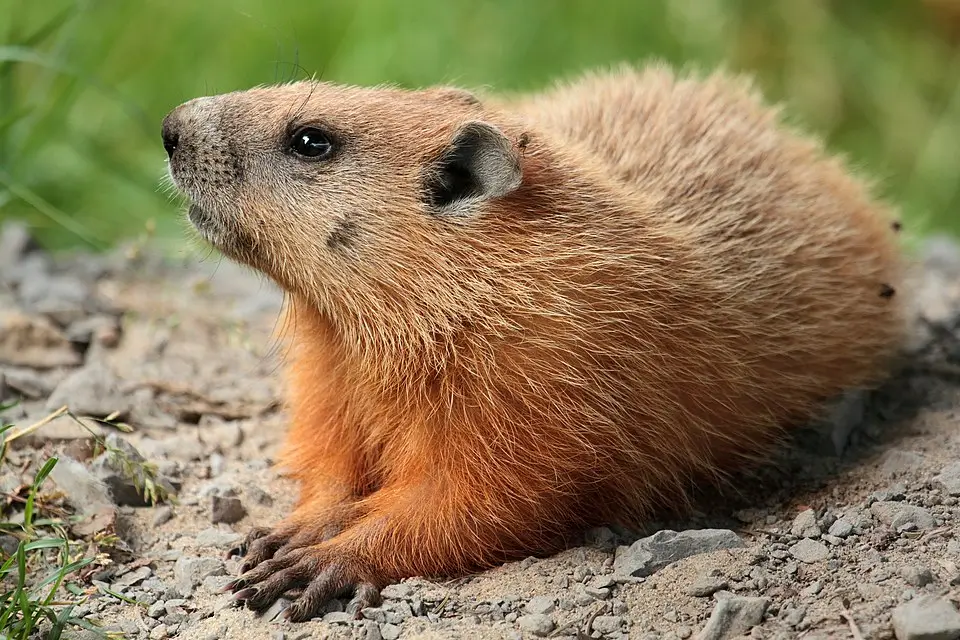
Physically, the groundhog is a robust and muscular animal. Adults are covered in coarse, grizzled brown fur, with a darker face, short ears, and a relatively bushy tail compared to some of its more slender squirrel relatives. Their front legs are powerful and equipped with strong, curved claws — perfectly designed tools for the extensive digging that defines much of their daily life. Their incisors, like those of all rodents, grow continuously throughout their lives and are kept sharp through regular use.
One of the most remarkable biological traits of the groundhog is its capacity for true hibernation. Unlike animals that simply sleep more deeply in winter, the groundhog undergoes a profound physiological transformation when cold weather arrives. Its body temperature drops dramatically, its heart rate slows to just a few beats per minute, and its metabolic activity decreases to a fraction of its normal level. This allows the animal to survive entirely on fat reserves accumulated during the warmer months of summer and autumn. Groundhogs typically enter hibernation in late autumn and emerge in late winter or early spring — a biological event that forms the basis of the Groundhog Day tradition.
During the active months, groundhogs are primarily herbivores. They feed on a wide variety of plant materials including grasses, clovers, wild fruits, and agricultural crops such as soybeans, corn, and garden vegetables. This diet makes them an animal that farmers and gardeners have long regarded with a mixture of amusement and frustration. They are capable of consuming impressive quantities of vegetation in a single feeding session, building up the fat stores necessary to survive the long winter ahead.
Groundhogs are generally solitary animals outside of the breeding season. Mating occurs in early spring, shortly after the animals emerge from hibernation, and females give birth to litters of young — typically ranging from two to six offspring — after a gestation period of approximately one month. The young are born blind and hairless, but develop quickly. By midsummer, juvenile groundhogs are independent and begin establishing their own territories and digging their own burrow systems.
The burrows themselves are engineering marvels in miniature. A typical groundhog burrow can extend many feet underground and includes separate chambers for nesting and for waste. These burrow systems serve multiple purposes: they provide shelter from predators such as foxes, coyotes, and hawks; they offer a safe place to raise young; and they serve as the hibernation den during the winter months. Importantly, abandoned groundhog burrows become valuable real estate for many other wildlife species, including rabbits, foxes, skunks, and various reptiles and amphibians. This makes the groundhog a genuine ecosystem engineer, whose digging activities create habitat for a wide range of other animals.
Habitat & Range
The groundhog's scientific name, Marmota monax, reflects its broad adaptability across a wide range of North American environments. The species ranges from the southeastern United States northward through the Mid-Atlantic and New England states, across the Great Lakes region, and into Canada, reaching as far north as Alaska. This extensive range speaks to the groundhog's ecological flexibility and resilience.
Within its range, the groundhog favors habitat that combines open areas for foraging — such as meadows, pastures, fields, and forest clearings — with nearby woodland edges or brushy cover for escape and denning. Ecotones, or transitional zones between different habitat types, are particularly favored. This preference makes the Mid-Atlantic states, including Delaware, ideal groundhog country. Delaware's agricultural landscape, with its patchwork of crop fields, woodlots, hedgerows, and stream corridors, provides exactly the kind of varied terrain that groundhogs thrive in.
In Delaware specifically, the groundhog is widely distributed across the state. From the rolling farmlands of New Castle County in the north to the flatter, more coastal landscapes of Sussex County in the south, groundhogs can be found wherever suitable burrow sites and forage are available. They are commonly seen along roadsides, in suburban yards and gardens, and at the edges of woodlands and open fields throughout the state.
The groundhog's ability to adapt to human-modified landscapes has actually benefited the species in many areas. Agricultural expansion and the clearing of dense forests have, in some regions, increased the availability of the open habitat and edge environments that groundhogs prefer. As a result, the species remains abundant across much of its range despite centuries of human land-use change.
Hunting Information
The groundhog holds a respected place in the traditions of small game hunting across the Mid-Atlantic and beyond. Groundhog hunting, sometimes called "whistle pig" hunting — a reference to the animal's sharp alarm whistle — is a popular warm-weather pursuit that attracts hunters who appreciate the challenge of spot-and-stalk or long-range shooting on open agricultural land.
In Delaware, hunting activities are overseen by the Delaware Department of Natural Resources and Environmental Control (DNREC), specifically through its Division of Fish and Wildlife. The DNREC manages hunting regulations, licensing requirements, and season structures for all huntable species in the state, and hunters are always encouraged to consult the most current official DNREC regulations before heading afield.
Because specific season dates and licensing requirements for groundhog hunting in Delaware were not available in the source data consulted for this article, prospective hunters should visit the official DNREC website or contact the Division of Fish and Wildlife directly for the most accurate and up-to-date regulatory information. Regulations can change from year to year, and it is the responsibility of every hunter to ensure they are in full compliance with current state law.
Groundhog hunting is commonly practiced with rimfire and centerfire rifles, with shots often taken at medium to long range across open fields. This style of hunting demands careful marksmanship and a thorough understanding of ballistics, making it an excellent way for hunters to sharpen their shooting skills. Many hunters also find that the warm-weather timing of groundhog season — typically during summer months when other hunting opportunities are limited — makes it a welcome way to stay active and engaged in the outdoors between more traditional hunting seasons.
Permission from landowners is, of course, an essential and courteous first step before hunting on private agricultural land. Many farmers welcome responsible groundhog hunters, as reducing local groundhog populations can help minimize crop damage and prevent livestock injuries from burrow holes in pastures.
Conservation
The groundhog is currently listed as a species of least concern by wildlife conservation authorities, reflecting its robust and widespread populations across North America. Its adaptability to a variety of habitats, including human-modified landscapes, has allowed the species to maintain stable numbers even as other wildlife species have faced pressure from habitat loss and other challenges.
From a conservation perspective, the groundhog plays several important ecological roles. As noted earlier, the burrow systems that groundhogs excavate provide critical shelter for numerous other wildlife species. Their feeding activities can influence local plant communities. And as prey animals, groundhogs contribute to the food webs that support larger predators including foxes, coyotes, hawks, and eagles.
In Delaware, the DNREC's Division of Fish and Wildlife works to ensure the sustainable management of all wildlife species, including the groundhog, balancing the interests of hunters, farmers, and the broader ecosystem. Responsible hunting, guided by science-based regulations, is a key tool in this management effort.
Wildlife enthusiasts and hunters alike can contribute to groundhog conservation simply by appreciating and respecting the animal and the habitats it depends upon. Landowners who maintain hedgerows, field edges, and woodland borders are providing valuable habitat not just for groundhogs, but for the full community of wildlife that depends on these landscape features.
Conclusion
The groundhog is far more than a weather-predicting celebrity. It is a resilient, ecologically important, and behaviorally fascinating mammal that enriches the natural landscapes of Delaware and the broader Mid-Atlantic region. Whether you encounter a groundhog sitting sentinel at the edge of a cornfield, marvel at the depth of its burrow system, or challenge yourself with the patience and precision that groundhog hunting demands, this remarkable animal deserves our attention, respect, and appreciation.
For hunters planning to pursue groundhogs in Delaware, connecting with the DNREC's Division of Fish and Wildlife is the essential first step toward a safe, legal, and rewarding experience in the field.