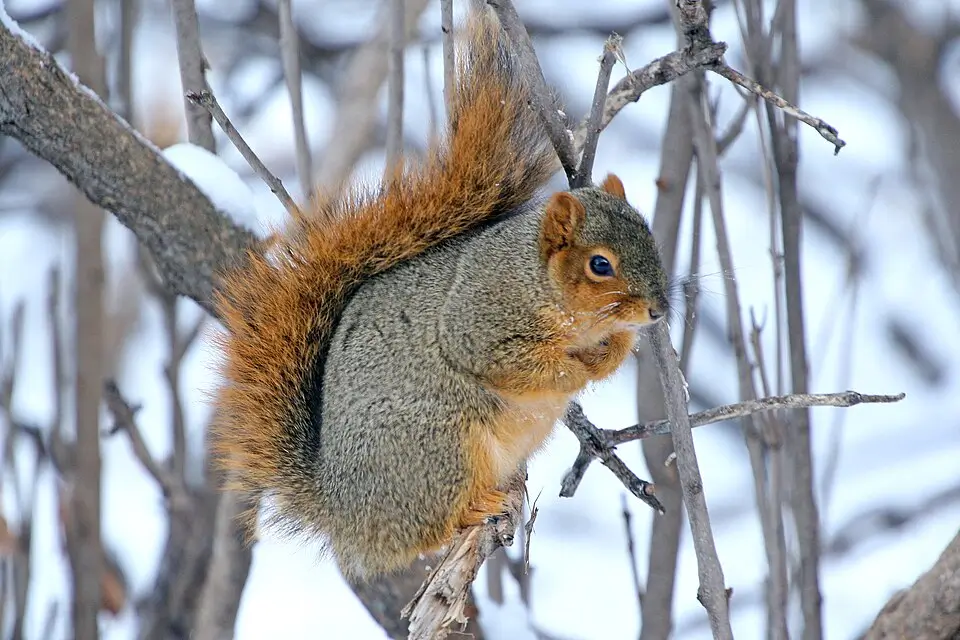
Fox Squirrel (Sciurus niger): A Complete Guide for Wildlife Enthusiasts and Hunters
Few animals embody the spirit of North American woodlands quite like the fox squirrel. Bold, curious, and remarkably adaptable, the fox squirrel (Sciurus niger) is the largest tree squirrel native to North America, commanding attention wherever it roams. Whether you spot one bounding across an open forest floor, perched high in an old-growth oak, or foraging along the edge of a farm field, the fox squirrel is a creature that manages to be both familiar and endlessly fascinating.
For wildlife watchers, naturalists, and hunters alike, the fox squirrel occupies a special place in the outdoor tradition of the eastern and central United States. In states like Delaware — a compact but ecologically diverse Mid-Atlantic state bordered by Maryland, Pennsylvania, New Jersey, and the Atlantic Ocean — the fox squirrel represents an important part of the region's natural heritage. Understanding this animal's biology, behavior, habitat preferences, and conservation status is essential for anyone who appreciates the outdoors and the rich biodiversity that places like Delaware work hard to protect.
This guide takes a comprehensive look at the fox squirrel, drawing on established biological knowledge to give hunters, hikers, and wildlife enthusiasts everything they need to know about one of North America's most impressive small mammals.
Biological Traits
The fox squirrel (Sciurus niger) belongs to the family Sciuridae, the large and diverse family of rodents that includes all squirrels, chipmunks, marmots, and prairie dogs. Within this family, fox squirrels are classified in the genus Sciurus, which they share with their close relative the eastern gray squirrel (Sciurus carolinensis).
What immediately sets the fox squirrel apart from other tree squirrels is its size. As the largest tree squirrel in North America, fox squirrels are noticeably bigger and heavier than the gray squirrels most people encounter in suburban parks and backyards. Their body length typically ranges from around 17 to 27 inches from nose to tail tip, and their weight can range from roughly 1.5 to 2.5 pounds, though some individuals may exceed this range depending on geographic location and seasonal food availability.
One of the most striking characteristics of the fox squirrel is the remarkable variation in its coat coloration. Unlike many wildlife species that display relatively uniform coloring, fox squirrels come in a wide spectrum of color morphs. In the eastern and Mid-Atlantic portions of their range, individuals commonly display a grizzled orange-brown or rusty-buff coat on their upperparts, with a distinctly orange or rust-colored belly — a coloration pattern that some say resembles the coat of a red fox, which is likely where the common name originates. In other parts of their range, particularly in the southeastern United States, fox squirrels can appear nearly black with white patches on the nose and ears. This geographic variation in coat color makes the fox squirrel one of the most visually diverse mammals in North America.
Fox squirrels are diurnal animals, meaning they are active during daylight hours. They tend to be most active in the early morning and late afternoon, which is a behavioral pattern well known to experienced squirrel hunters. Unlike their gray squirrel cousins, fox squirrels are generally described as more deliberate and less frenetic in their movements — they are often observed moving at a slower, more methodical pace along the ground or through tree branches, making them somewhat easier to observe in the field.
Their diet is broadly omnivorous, though plant matter forms the core of their nutrition. Fox squirrels are highly skilled foragers and consume a wide variety of foods depending on the season and what is locally available. Acorns, hickory nuts, walnuts, and other hard mast are staple foods in the fall and winter months. They are also known to consume berries, fungi, corn, seeds, insects, and occasionally bird eggs. Like other members of the Sciurus genus, fox squirrels are scatter hoarders — they bury food items individually across a wide area to create dispersed caches that they return to during leaner periods. This behavior plays an important ecological role in forest regeneration, as many of the buried seeds are never recovered and go on to germinate into new trees.
Fox squirrels typically nest in tree cavities or construct large leaf nests, called dreys, high in the branches of mature trees. They may use both types of nest structures throughout the year, with tree cavities generally preferred in winter for their superior insulation. Breeding can occur twice annually, with litters typically containing two to four young. The young are born blind and hairless, entirely dependent on their mother for the first several months of life before gradually developing independence.
Habitat & Range
The fox squirrel has a broad native range that spans much of the central and eastern United States, extending from the Great Plains states eastward through the Midwest and into the Atlantic coastal states, and from the Great Lakes region southward through the Deep South. Some populations also exist in parts of Canada, and introduced populations have been established in certain western states.
In terms of habitat preferences, the fox squirrel is generally associated with open, park-like woodlands rather than the dense, closed-canopy forests preferred by the eastern gray squirrel. Fox squirrels thrive in areas where mature hardwood trees — especially oaks, hickories, and walnuts — are interspersed with open ground, forest edges, and sunny clearings. Pine-oak savannas, open bottomland forests, farm woodlots, pecan groves, and forest edges adjacent to agricultural fields all represent prime fox squirrel habitat.
This preference for open, edge-heavy habitats means that the fox squirrel is actually well-suited to a landscape shaped by human land use — at least in moderate conditions. Farm country with scattered woodlots, orchards, hedgerows, and field edges can provide excellent habitat. However, the species is sensitive to the complete removal of mature trees and to intensive forest management practices that eliminate the large, old trees with cavities they depend on for nesting.
In Delaware, the mix of agricultural land, coastal plain forests, and tidal wetlands creates a mosaic of habitats across the state. Delaware's position in the Mid-Atlantic region, bordered by Maryland to the south and west and Pennsylvania to the north, places it squarely within the broader range where fox squirrel populations exist in the eastern United States. The state's Div. of Fish and Wildlife, operating under the Delaware Department of Natural Resources and Environmental Control (DNREC), oversees wildlife management efforts across the state, including monitoring of squirrel populations.
Hunting Information
Squirrel hunting has a long and celebrated tradition in the eastern United States, and the fox squirrel has historically been a prized game animal for hunters who appreciate both the challenge and the table quality this species offers. Hunting fox squirrels is often regarded as an excellent way for new hunters to develop woodsmanship skills — learning to read the forest, move quietly, and identify sign — while also providing experienced hunters with an enjoyable and accessible pursuit.
Fox squirrels, given their tendency to move more slowly and deliberately than gray squirrels, can sometimes be easier to approach and observe in the field, though their keen senses still make them a worthy quarry. Traditional methods include still-hunting along forest edges in the early morning, watching feeding areas near mast-producing trees, or still-sitting at the base of a large hardwood and waiting patiently for activity.
For hunters interested in pursuing fox squirrels in Delaware, it is important to consult the most current regulations provided by Delaware's DNREC Division of Fish and Wildlife. Hunting regulations — including season dates, bag limits, and license requirements — are subject to change from year to year, and the official DNREC publications are the authoritative source for up-to-date legal requirements. Hunters should always verify current rules before heading afield to ensure full compliance with state law and to support responsible wildlife management.
Conservation
The conservation status of the fox squirrel varies considerably across its range, reflecting the species' sensitivity to specific habitat conditions. While the species as a whole is not considered globally threatened, certain subspecies and regional populations have experienced significant declines and are listed as species of concern at the state or federal level.
The Delmarva fox squirrel (Sciurus niger cinereus), a subspecies native to the Delmarva Peninsula — which includes portions of Delaware, Maryland, and Virginia — was listed under the U.S. Endangered Species Act for several decades following dramatic population declines attributed primarily to habitat loss and forest fragmentation. Conservation efforts, including habitat restoration, protection of mature forest tracts, and reintroduction programs, led to a recovery of the Delmarva fox squirrel population, and the subspecies was delisted from the Endangered Species Act in 2015 — a genuine success story for wildlife conservation in the Mid-Atlantic region.
This conservation history underscores how important responsible land management and proactive wildlife stewardship are to maintaining healthy fox squirrel populations. Preserving large tracts of mature hardwood forest, maintaining open woodland structure through thoughtful management, and protecting nesting trees are all practices that benefit the fox squirrel and the broader suite of wildlife species that share its habitat.
In Delaware, wildlife management is guided by DNREC's Division of Fish and Wildlife, which works to balance conservation priorities with public recreational opportunities including hunting. Supporting these management efforts — whether through purchasing hunting licenses, participating in wildlife surveys, or advocating for habitat conservation — is one of the most direct ways that outdoor enthusiasts can contribute to the long-term health of species like the fox squirrel.
Conclusion
The fox squirrel is a remarkable animal — large, adaptable, and ecologically significant, with a natural history that intersects in meaningful ways with the human landscape of the eastern United States. From the open woodlots of Delaware's agricultural countryside to the pine-oak forests of the coastal plain, the fox squirrel remains a living symbol of healthy, well-managed wild spaces. Whether you encounter one while hiking, watching wildlife, or hunting, taking a moment to appreciate this impressive native squirrel is always time well spent.