Cottontail Rabbit: A Complete Guide for Wildlife Enthusiasts and Hunters in Delaware
Few animals are as deeply woven into the fabric of American outdoor culture as the cottontail rabbit. Bounding through meadows, brushy field edges, and suburban backyards alike, the cottontail is one of the most recognizable and beloved small game animals across North America. Whether you are a seasoned hunter pursuing a cherished tradition, a naturalist eager to observe wildlife in its natural setting, or simply a curious outdoor enthusiast, the cottontail rabbit offers something worth appreciating. In the Mid-Atlantic state of Delaware — a compact but ecologically rich state bordered by Maryland, Pennsylvania, New Jersey, and the Atlantic Ocean — the cottontail rabbit is a familiar and important part of the local wildlife landscape.
This guide explores the biology, habitat, hunting traditions, and conservation status of the cottontail rabbit, with a particular focus on what makes this species such an enduring symbol of North American wildlife. Whether you are heading into Delaware's fields and forests or simply want to learn more about this remarkable animal, read on for a thorough look at one of the continent's most iconic small game species.
Biological Traits
The cottontail rabbit belongs to the genus Sylvilagus, a group of New World rabbits in the family Leporidae. The genus Sylvilagus encompasses more than a dozen recognized species, making it one of the most diverse rabbit genera in the world. The most commonly encountered species across the eastern United States — and the one most relevant to Delaware hunters and wildlife watchers — is the Eastern cottontail (Sylvilagus floridanus), though other species within the genus occupy different regions of North America.
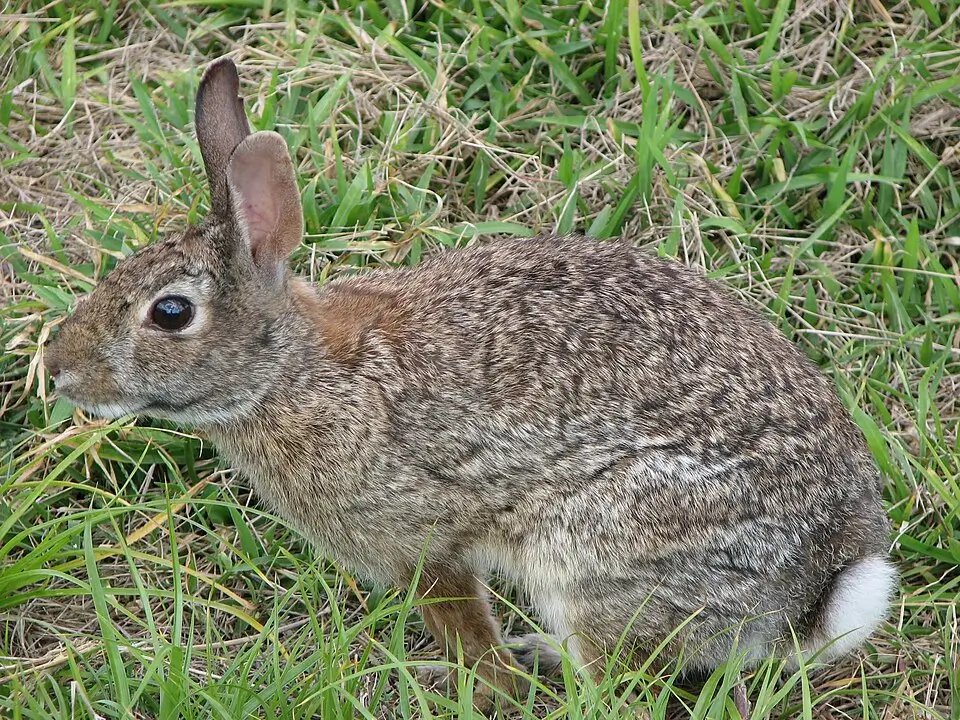
The name "cottontail" is instantly recognizable to anyone who has spent time outdoors in North America. It refers to the animal's distinctive short, fluffy tail, which is white on the underside and resembles a small tuft of cotton. When a cottontail bolts away from a perceived threat, that bright white tail flashes and bobs conspicuously — a characteristic sight that hunters and wildlife observers know well.
Cottontail rabbits are medium-sized lagomorphs, compact and well-built for their role as both herbivores and prey animals. Their hind legs are notably powerful, allowing them to sprint quickly and execute sharp, zigzagging turns to evade predators. Their large, upright ears serve double duty: they help the animal detect the faintest sounds of approaching danger, and they assist in regulating body temperature by allowing excess heat to dissipate through blood vessels near the skin's surface.
The eyes of the cottontail are positioned on the sides of the head, providing a nearly panoramic field of vision that helps detect threats from almost any direction. Their fur typically ranges from brown to grayish-brown on the back and sides, with a paler or whitish underside, providing effective camouflage against the leaf litter, tall grass, and brushy cover where they spend much of their time.
Cottontails are well known for their remarkable reproductive capacity. They are prolific breeders, capable of producing multiple litters per year under favorable conditions. Females, known as does, create shallow nests lined with fur and plant material to raise their young, called kittens. Newborn kittens are born blind and helpless but develop rapidly, becoming independent in a matter of weeks. This high reproductive rate is a key adaptation that helps cottontail populations withstand significant predation pressure from the many animals — hawks, owls, foxes, coyotes, bobcats, and others — that depend on rabbits as a food source.
As herbivores, cottontails feed on a wide variety of plant material. During warmer months, they consume grasses, clovers, wildflowers, garden vegetables, and leafy plants. In winter, they shift their diet to woody vegetation, gnawing on the bark and twigs of shrubs and young trees. Like other lagomorphs, cottontails practice cecotrophy — the consumption of certain soft fecal pellets directly from the anus — which allows them to extract maximum nutrition from their plant-based diet.
Habitat & Range
The genus Sylvilagus has an extraordinarily broad range, with member species found across much of North, Central, and South America. The Eastern cottontail, the species most associated with the Mid-Atlantic region, thrives in a mosaic of habitat types that include open fields, meadows, brushy thickets, woodland edges, hedgerows, farmland, and even suburban and semi-urban green spaces. Cottontails are classic "edge species," meaning they favor the transitional zones between open areas and denser cover, where food resources and protective cover are both easily accessible.
Delaware, despite being the second-smallest state in the United States, offers a surprisingly diverse range of habitats suitable for cottontail rabbits. The state's geography includes coastal plain areas, upland forests, agricultural fields, wetland margins, and suburban greenways — all of which can support healthy cottontail populations. Delaware's position in the Mid-Atlantic region, with its relatively mild climate and productive agricultural lands, makes it well-suited habitat for Eastern cottontails throughout the year.
Cottontails do not dig their own burrows as a rule, instead relying on dense ground cover — briars, brush piles, tall grass, and thickets — for shelter and escape cover. They may, however, use abandoned burrows dug by other animals such as woodchucks for temporary refuge. This dependence on dense, low-growing cover means that habitat management practices — maintaining brushy field edges, hedgerows, and briar patches — are critically important for supporting robust cottontail populations.
Hunting Information
Small game hunting, and rabbit hunting in particular, holds a long and cherished place in American outdoor tradition. For generations, hunters have pursued cottontail rabbits with beagles, walking up fields and thickets on crisp autumn and winter mornings. It is a style of hunting that is accessible to beginners and rewarding for experienced sportsmen alike, requiring minimal specialized equipment while offering genuine skill and enjoyment.
In Delaware, hunting is regulated and overseen by the Delaware Department of Natural Resources and Environmental Control (DNREC), specifically through its Division of Fish and Wildlife. DNREC plays a central role in managing the state's wildlife resources, including small game species like the cottontail rabbit, and works to ensure that hunting traditions can continue sustainably into the future.
For the most current and accurate information regarding cottontail rabbit hunting seasons, bag limits, licensing requirements, and any applicable regulations in Delaware, hunters are strongly encouraged to consult the official DNREC Division of Fish and Wildlife resources directly. Regulations can change from season to season, and confirming the latest information with the official state agency is always the best practice before heading afield. The DNREC website provides official guidance for all hunting activities within the state.
Cottontail rabbit hunting is typically pursued with shotguns loaded with small shot sizes, though some hunters enjoy the added challenge of pursuing rabbits with small-caliber rifles or even traditional archery equipment where permitted. The use of trained beagles to push rabbits out of dense cover and circle them back toward waiting hunters is one of the most beloved and time-honored methods of rabbit hunting in the eastern United States.
Rabbit meat is considered excellent table fare — mild, lean, and versatile in the kitchen. From hearty stews and braises to pan-fried preparations, cottontail rabbit has long been a valued source of wild game protein for American families, connecting hunting to a broader tradition of living off the land.
Conservation
The cottontail rabbit occupies an essential position in nearly every ecosystem it inhabits. As a primary consumer of plant material and a prolific prey species, it serves as a critical link in food chains that support hawks, owls, foxes, coyotes, bobcats, weasels, and numerous other predators. Healthy cottontail populations are often considered a reliable indicator of a productive and well-functioning local ecosystem.
Conservation efforts for cottontail rabbits typically focus on habitat management, as loss and degradation of suitable cover is one of the primary challenges facing rabbit populations in many areas. The trend toward tidier, manicured landscapes — whether agricultural or suburban — can reduce the brushy, edge-heavy habitats that cottontails need to thrive. Conservation programs that encourage the maintenance of hedgerows, brush piles, native grassy strips, and briar patches on both public and private lands can have meaningful positive impacts on local rabbit populations.
In Delaware, DNREC's Division of Fish and Wildlife works broadly to manage and protect wildlife species and habitats across the state. Conservation and habitat management programs supported by hunting license fees and federal excise taxes collected through programs like the Federal Aid in Wildlife Restoration Act (commonly known as the Pittman-Robertson Act) contribute directly to wildlife management efforts that benefit species like the cottontail rabbit.
Hunters themselves play a meaningful role in cottontail conservation. Through license purchases, participation in regulated seasons, and active engagement with habitat improvement projects, hunters contribute both financially and practically to the long-term health of rabbit populations and the habitats they depend upon. The relationship between regulated hunting and wildlife conservation is well-established, and the cottontail rabbit is a prime example of a species that benefits from thoughtful, science-based wildlife management.
Conclusion
The cottontail rabbit — a member of the diverse and fascinating genus Sylvilagus — is far more than just a common backyard visitor. It is a keystone prey species, an important game animal, and a symbol of the North American outdoors that has captured the imagination of hunters, naturalists, and wildlife enthusiasts for centuries. In Delaware, where the Mid-Atlantic landscape supports rich and varied wildlife communities, the cottontail rabbit remains a valued part of the natural heritage.
Whether you are drawn to the cottontail through the lens of hunting, wildlife observation, or conservation, understanding and appreciating this remarkable animal enriches the outdoor experience. The next time you catch a glimpse of that distinctive white tail flashing through the brush, take a moment to appreciate the biology, resilience, and ecological importance of one of North America's most enduring wild neighbors.