The Common Pheasant: A Celebrated Game Bird with a Rich Heritage
Few birds capture the imagination of hunters and wildlife enthusiasts quite like the Common pheasant (Phasianus colchicus). With its striking plumage, explosive flush, and centuries-long association with upland hunting traditions, this iconic bird has cemented its place as one of the most recognized and pursued game birds in the world. Whether you encounter it strutting through a golden field of cut corn, bursting from a hedgerow in a blur of iridescent color, or calling from the edge of a woodland thicket on a crisp autumn morning, the Common pheasant is a creature that commands attention and respect.
Originally native to Asia, the Common pheasant has been introduced to virtually every corner of the globe where suitable habitat and climate allow. From the rolling farmlands of the British countryside — where pheasant shooting is deeply woven into cultural tradition — to the plains of the American Midwest and the fields of the Mid-Atlantic states, this adaptable and resilient bird has thrived wherever it has been given a foothold. Its presence enriches landscapes ecologically and culturally, providing sport, table fare, and a connection to the natural world that spans generations.
In this article, we explore the Common pheasant in depth — its biology, its preferred habitats, its role in hunting culture, and the conservation efforts that help ensure healthy populations for future generations to enjoy.
Biological Traits
The Common pheasant (Phasianus colchicus) belongs to the family Phasianidae, a large and diverse family of birds that includes turkeys, quail, partridges, and peacocks. The genus name Phasianus is derived from the Phasis River in the ancient region of Colchis — present-day western Georgia — where the Greeks are said to have first encountered this remarkable bird. The species name colchicus similarly references that ancient homeland.
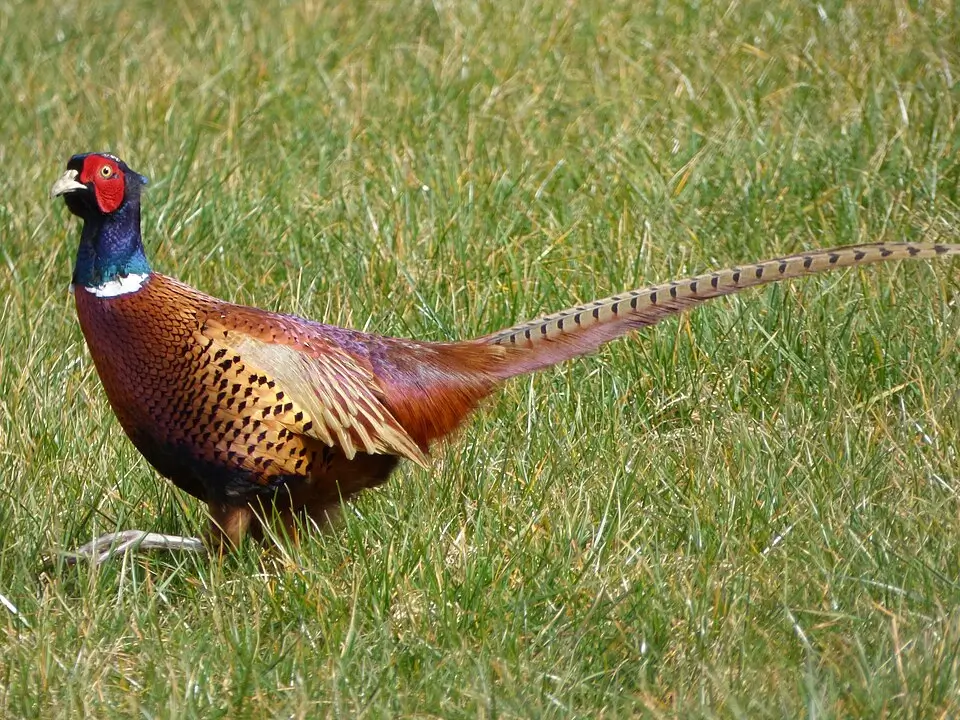
One of the most immediately striking features of the Common pheasant is its dramatic sexual dimorphism — the pronounced visual difference between males and females. Male pheasants, known as cocks or roosters, are among the most visually spectacular birds in the world. They display a rich tapestry of colors including deep iridescent copper, bronze, and chestnut body plumage, a dark green head with distinctive red facial wattles, and often a white ring around the neck — a feature so common it has earned many birds the informal name "ring-necked pheasant." Their long, elegantly barred tail feathers can account for a significant portion of their total length and serve as both a display feature and a reliable identification marker in the field.
Female pheasants, known as hens, adopt a far more subdued palette of mottled brown, tan, and buff tones. This cryptic coloration is not accidental — it serves as essential camouflage during nesting season, allowing the hen to blend seamlessly into her surroundings while incubating eggs and raising chicks. Though less visually dramatic than the cock, the hen is no less important to the species' success, and her understated beauty has its own quiet elegance.
Common pheasants are ground-dwelling birds, spending the majority of their lives foraging, nesting, and resting at or near ground level. However, they are capable of strong, fast flight when flushed, launching themselves explosively into the air with powerful wingbeats and a characteristic loud cackling call that alerts every hunter within earshot. This burst of speed and noise is one of the defining moments of upland bird hunting.
Their diet is omnivorous and highly adaptable, consisting of seeds, grains, berries, insects, worms, and various plant materials depending on the season. This dietary flexibility is a key factor in their successful establishment across a wide range of environments.
Breeding behavior in Common pheasants is polygynous, meaning a single dominant cock will mate with multiple hens during the spring breeding season. Cocks establish territories and engage in elaborate displays and occasional combat to secure access to females. Hens typically lay clutches of around 8 to 15 eggs in well-concealed ground nests, incubating them for approximately 23 to 26 days. The chicks are precocial — meaning they are mobile and capable of foraging almost immediately after hatching — a critical survival adaptation for a ground-nesting species.
Habitat & Range
The Common pheasant is native to a broad swath of Asia, ranging from the Caucasus region westward through Central Asia to China, Korea, and the Russian Far East. It inhabits a variety of landscapes in its native range, including forest edges, river valleys, grasslands, and agricultural areas. This habitat generalism has made it exceptionally well-suited for introduction and naturalization across the globe.
In North America, the Common pheasant — widely known as the ring-necked pheasant — was successfully introduced in the late 19th century and quickly established wild populations across much of the continent. The birds thrive in agricultural landscapes that offer a mosaic of food, cover, and nesting opportunities. They are particularly associated with grain-farming regions, where crop fields, fence lines, brushy draws, wetland edges, and grassland patches provide the varied structure they need throughout the year.
In the Mid-Atlantic region, including the state of Delaware, pheasants find a landscape that blends agricultural tradition with natural diversity. Delaware, situated at the crossroads of the Mid-Atlantic and South Atlantic regions, features a mix of farmland, woodlots, marshes, and open fields that can provide suitable pheasant habitat. The state's borders with Maryland, Pennsylvania, and New Jersey place it within a broader regional context where pheasant populations and hunting heritage have deep roots. The combination of agricultural fields — particularly those producing corn and soybeans — along with hedgerows, grassy margins, and brushy cover areas can offer the kind of edge habitat that pheasants consistently favor.
Pheasants are resilient birds but are sensitive to habitat quality and weather extremes. Severe winters with heavy snow cover can challenge their ability to find food, and the loss of hedgerows, grassland buffers, and brushy cover to intensive farming practices has impacted populations in some areas. Their preference for edge habitat — the transitional zones between different cover types — makes landscape diversity a critical factor in their long-term well-being.
Hunting Information
The Common pheasant holds a revered place in hunting tradition across the world, and for good reason. Pursuing roosters over pointing or flushing dogs through frosty fields of standing corn or dense brush is one of the great upland hunting experiences available anywhere. The combination of challenging terrain, the athleticism of well-trained bird dogs, the explosive flush, and the demanding shot make pheasant hunting a pursuit that rewards skill, preparation, and patience.
In the United States, pheasant hunting is regulated at the state level, and hunters are required to comply with applicable licensing and season requirements established by their state's wildlife management agency. In Delaware, hunting regulations and licensing are overseen by the Delaware Department of Natural Resources and Environmental Control (DNREC), specifically through its Division of Fish and Wildlife. Hunters interested in pursuing pheasant in Delaware should consult the DNREC Division of Fish and Wildlife directly for current and accurate information regarding season dates, bag limits, licensing requirements, and any applicable special regulations.
While the source data available for this article does not include specific season dates or license details for Delaware pheasant hunting, it is well-established that upland bird hunting regulations can change from year to year based on population assessments and wildlife management priorities. Checking with the DNREC before each season is always the best practice for any hunter seeking accurate, up-to-date information.
Pheasant hunters typically pursue roosters — adult male birds — as regulations in many jurisdictions are designed to protect hens and support sustainable breeding populations. Hunting is most productive in areas offering a variety of cover types, and late-morning to midday hunts often prove effective as birds move from feeding areas to loafing cover. Blockers positioned at the ends of cover strips while other hunters and dogs work through can dramatically improve success rates when birds are pushed to run ahead of the line.
Conservation
The conservation of Common pheasant populations is closely tied to the health of agricultural landscapes and the preservation of diverse habitat types. While the species is not considered globally threatened — indeed, it is one of the most abundant game birds on the planet — local and regional populations can fluctuate significantly based on habitat quality, land use practices, weather patterns, and predator pressure.
Across the United States, conservation organizations, state wildlife agencies, and private landowners have partnered on numerous habitat enhancement initiatives that benefit pheasants and a wide range of other wildlife species. Programs that encourage the planting of native grasses, the establishment of field borders and buffer strips, and the maintenance of brushy cover and wetland edges have demonstrated meaningful positive impacts on upland bird populations.
Hunters themselves play a vital role in pheasant conservation. License and permit fees, as well as excise taxes on firearms and ammunition collected through the Federal Aid in Wildlife Restoration Act (commonly known as the Pittman-Robertson Act), generate substantial funding for wildlife management and habitat restoration programs. Pheasant hunters are, in a very real sense, among the most active and committed advocates for the land and habitat that sustains the birds they pursue.
In Delaware, the DNREC's Division of Fish and Wildlife works to manage wildlife populations and habitats across the state, contributing to the broader fabric of conservation efforts that support species like the Common pheasant in the Mid-Atlantic region.
The story of the Common pheasant is, in many ways, a story of adaptability — a bird that has traveled far from its ancient origins along the rivers of the Caucasus to become a beloved fixture of hunting traditions worldwide. With thoughtful management and continued dedication to habitat conservation, the Common pheasant will remain a vital and celebrated part of the outdoor heritage for generations to come.