Canada Goose (Branta canadensis): A Complete Guide for Wildlife Enthusiasts and Hunters in Delaware
Few sights are as iconic in North American wildlife as a skein of Canada geese cutting across a steel-gray autumn sky, their resonant honking echoing across marshes, fields, and waterways. The Canada goose (Branta canadensis) is one of the most recognizable and widely distributed waterfowl species on the continent, a bird that has captured the imagination of naturalists, wildlife photographers, and hunters alike for generations. In Delaware — a state nestled in the heart of the Mid-Atlantic region — the Canada goose holds a particularly special place in the natural and cultural landscape, as the state's diverse geography provides outstanding habitat for both migratory and resident populations of this remarkable bird.
Whether you're a seasoned waterfowl hunter looking to pursue these birds across Delaware's tidal marshes and agricultural fields, a wildlife enthusiast hoping to understand more about the species, or simply someone who has wondered about those large, boldly marked geese that seem to be everywhere from city parks to rural ponds, this guide offers a thorough look at the biology, behavior, range, and significance of Branta canadensis.
Biological Traits
The Canada goose is a large waterfowl species belonging to the family Anatidae, the same broad family that includes ducks, swans, and other geese. Its scientific name, Branta canadensis, places it within the genus Branta, which encompasses the so-called "black geese" — a group distinguished by their characteristically dark plumage on the head and neck.
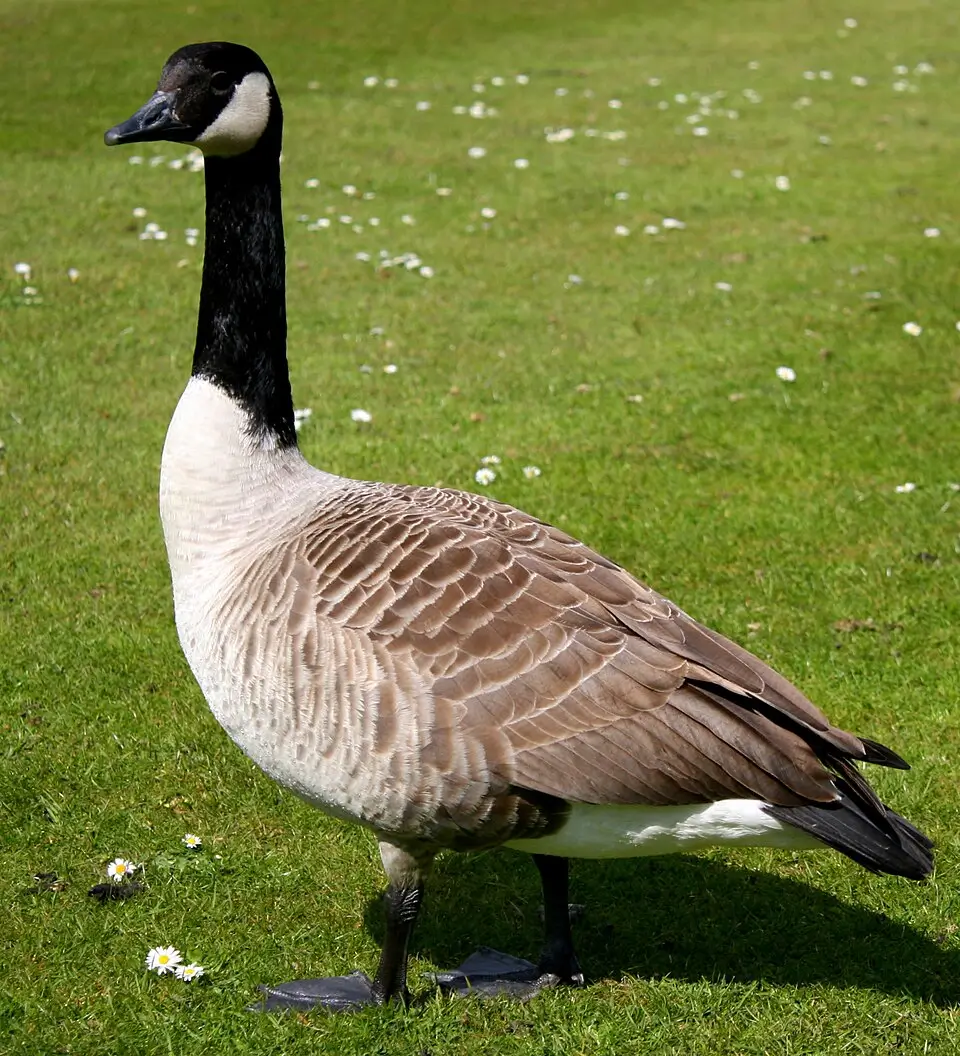
One of the most immediately recognizable features of the Canada goose is its bold, contrasting coloration. Adults display a distinctive black head and long neck, punctuated by a prominent white chinstrap patch that extends from cheek to cheek beneath the bill. The body is typically brown to tan on the back and wings, with a lighter, often cream-colored breast and belly. The tail and rump are black, and the undertail coverts are white, creating a clean, elegant appearance that makes the bird easy to identify even at a distance.
Canada geese are notably large birds. They are among the largest waterfowl in North America, with adults capable of reaching impressive sizes. Their wingspan is broad and powerful, enabling the long-distance migrations that have made the species famous throughout the continent. Males, known as ganders, are typically larger than females, though the two sexes are otherwise similar in plumage — a trait known as monomorphic coloration.
These birds are well known for their strong pair bonds. Canada geese are monogamous, often mating for life, and they demonstrate remarkable fidelity to their breeding territories and wintering grounds. Their social structure is built around family units, and it is common to observe family groups traveling and foraging together well into the fall and winter months. The goslings, which hatch covered in yellow-green down, grow rapidly and are capable of flight within a couple of months of hatching.
The vocalizations of Canada geese are among their most distinctive traits. The classic, resonant honking call is a defining sound of North American wetlands and is used for a variety of communicative purposes, including maintaining contact within flocks, signaling alarm, and coordinating flight. Different calls convey different messages, and experienced observers can often interpret the mood and intent of a flock simply by listening carefully.
Canada geese are primarily herbivores, feeding on a wide variety of grasses, sedges, aquatic vegetation, grains, and agricultural crops. Their broad diet makes them highly adaptable, capable of thriving in a range of environments from pristine wetlands to suburban golf courses and city parks. This dietary flexibility is one reason the species has expanded so dramatically in range and population over the past several decades.
Habitat & Range
The Canada goose has one of the most extensive ranges of any waterfowl species in the world. Native to North America, the species breeds across a vast swath of the continent, from the Arctic tundra of northern Canada and Alaska southward through much of the continental United States. During winter months, populations shift southward, occupying coastal marshes, inland wetlands, agricultural areas, reservoirs, and even urban and suburban green spaces across the southern and mid-latitude regions of the United States and into northern Mexico.
In Delaware, the Canada goose finds a particularly welcoming environment. Delaware sits at the intersection of the Mid-Atlantic and South Atlantic regions of the United States, bordered by Maryland to the south and west, Pennsylvania to the north, New Jersey to the northeast, and the Atlantic Ocean to the east. This geographic position places the state squarely within one of the most important waterfowl migration corridors in North America — the Atlantic Flyway.
Delaware's landscape offers a mosaic of habitats ideal for Canada geese throughout the year. The state's extensive tidal wetlands, coastal marshes, freshwater ponds, rivers, and estuaries along Delaware Bay provide critical feeding and resting habitat for migratory birds. Meanwhile, the state's agricultural fields — many of which are harvested in autumn, leaving behind waste grain — offer outstanding foraging opportunities for geese moving through or wintering in the region.
Importantly, Delaware also hosts resident populations of Canada geese that remain in the state year-round rather than undertaking traditional long-distance migrations. These resident birds, which have become established in many parts of the eastern United States over the past several decades, are often found in suburban and urban settings as well as in rural areas, taking advantage of manicured lawns, parks, golf courses, and other open green spaces alongside more natural habitats.
Hunting Information
The Canada goose is one of the most popular and sought-after waterfowl species among hunters throughout the United States, and Delaware is no exception. The state's position along the Atlantic Flyway means that hunters have opportunities to pursue both migratory Canada geese and resident birds, offering a rich and varied hunting experience across the fall and winter seasons.
In Delaware, hunting is overseen by the Division of Fish and Wildlife, which operates under the Department of Natural Resources and Environmental Control (DNREC). The DNREC's Division of Fish and Wildlife is the primary regulatory body responsible for setting and enforcing hunting seasons, bag limits, licensing requirements, and other regulations related to waterfowl hunting in the state.
Prospective Canada goose hunters in Delaware are encouraged to contact the DNREC Division of Fish and Wildlife directly or visit their official resources for the most current and accurate information on season dates, bag limits, license and permit requirements, and any special regulations that may apply to specific zones or populations of Canada geese. Regulations for migratory waterfowl like the Canada goose are established through a cooperative framework between individual states and the U.S. Fish and Wildlife Service under the authority of the Migratory Bird Treaty Act, and season structures can vary from year to year based on population surveys and management objectives.
Hunting Canada geese in Delaware typically involves a combination of effective calling, realistic decoy spreads, and intimate knowledge of the birds' local movements and feeding patterns. Hunters often set up in agricultural fields where geese are known to feed, in flooded timber or wetland areas, or along the shores of ponds, rivers, and tidal marshes. Pass shooting along flight corridors and field hunting over decoys are both productive methods employed by Delaware hunters pursuing these birds.
The Canada goose provides not only an exciting hunting experience but also an excellent table fare. Properly prepared goose meat is dark, rich, and flavorful, prized by hunters who value wild game as a source of wholesome, sustainably harvested food.
Conservation
The conservation story of the Canada goose is one of the most notable success stories in North American wildlife management. In the early to mid-twentieth century, populations of Canada geese had declined significantly in many parts of their range due to unregulated hunting, habitat loss, and other pressures. Concerted conservation efforts — including the establishment of wildlife refuges, regulated hunting seasons, habitat restoration programs, and international agreements such as the Migratory Bird Treaty Act — helped populations recover dramatically over the following decades.
Today, Canada goose populations across North America are robust and, in many areas, thriving. The species serves as a compelling example of what thoughtful wildlife management, cooperative international agreements, and dedicated conservation investment can achieve. Hunters have played a significant role in this conservation success, both through the funding generated by hunting licenses and federal duck stamps — which support habitat acquisition and restoration — and through their participation in population monitoring and management programs.
In Delaware, the DNREC Division of Fish and Wildlife continues to play an active role in managing Canada goose populations to ensure their long-term health and sustainability while balancing the interests of hunters, wildlife enthusiasts, and the broader public. The Atlantic Flyway, of which Delaware is a key part, remains one of the most important corridors for migratory waterfowl in the world, and the conservation of wetland habitats along this flyway is a priority for state and federal wildlife agencies alike.
The Canada goose, with its bold markings, resonant call, and impressive adaptability, stands as a symbol of the resilience of North American wildlife and the ongoing importance of thoughtful, science-based conservation and management. Whether observed in flight against an autumn sky, feeding in a misty Delaware cornfield, or carefully approached by a waterfowl hunter on a cold winter morning, Branta canadensis remains one of the most compelling and beloved wildlife species in the region.