White-Tailed Deer (Odocoileus virginianus): A Complete Guide to North America's Most Iconic Deer
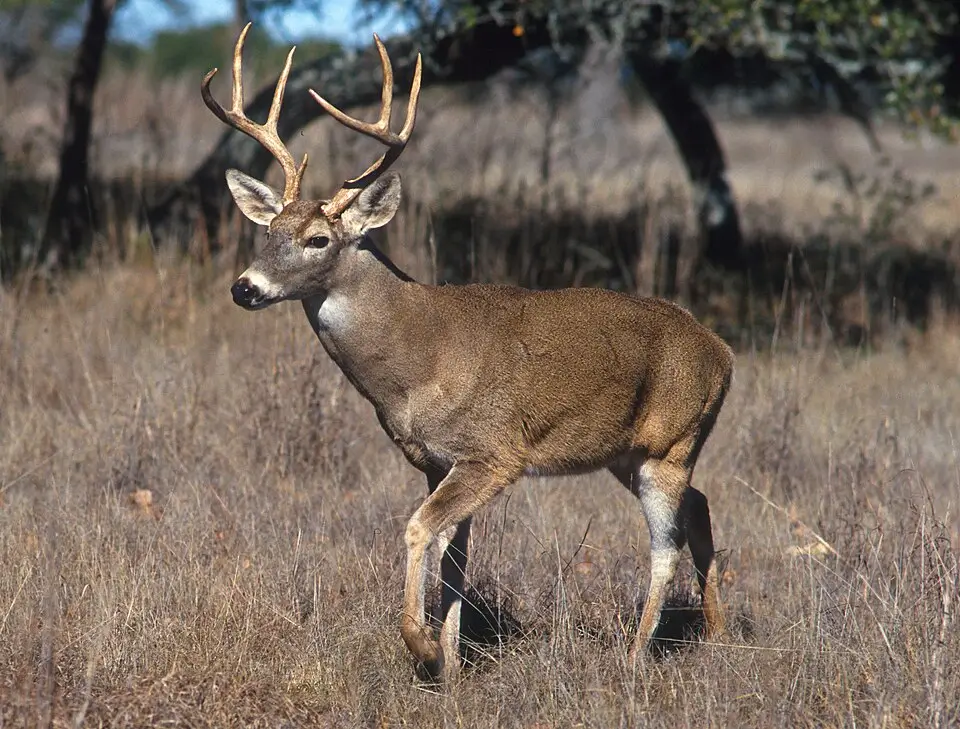
Few animals capture the spirit of the North American wilderness quite like the white-tailed deer. Graceful, alert, and remarkably adaptable, the white-tailed deer (Odocoileus virginianus) is one of the most widely recognized and beloved wildlife species on the continent. Whether glimpsed at the forest's edge at dawn, bounding across an open meadow, or standing motionless in a thicket with its signature tail raised like a white flag, this animal has earned a permanent place in the hearts of hunters, wildlife enthusiasts, and naturalists alike.
The white-tailed deer holds a unique distinction in the world of North American wildlife: it is simultaneously the most hunted big-game animal in the United States and one of the most studied and admired wild mammals on the continent. Its range stretches from the dense boreal forests of southern Canada all the way to the tropical lowlands of South America, making it one of the most geographically widespread deer species in the world. This remarkable range speaks to an extraordinary capacity for adaptation — an animal that can thrive in swamplands and mountain forests, in agricultural fields and suburban backyards, in desert scrub and river bottomlands.
For hunters, the white-tailed deer represents the ultimate pursuit. It combines sharp senses, elusive behavior, and impressive athleticism into a quarry that consistently challenges even the most experienced sportsmen and sportswomen. For conservationists, it serves as a flagship species whose population health reflects the broader condition of the habitats it calls home. And for wildlife observers, it offers an endlessly fascinating window into the dynamics of nature — from the drama of the autumn rut to the tender arrival of spotted fawns in spring.
This article explores the biology, habitat, hunting traditions, and conservation story of this remarkable animal.
Biological Traits
The white-tailed deer belongs to the family Cervidae, the deer family, and is classified under the genus Odocoileus, which also includes the mule deer (Odocoileus hemionus). The species name virginianus refers to Virginia, where the species was first formally described by European naturalists.
One of the white-tailed deer's most recognizable features is, of course, its namesake tail. The underside of the tail is bright white, and when a deer senses danger, it raises this tail — a behavior known as "flagging" — which serves as a visual alarm signal to other nearby deer. The coat itself changes seasonally: a reddish-brown in summer and a grayer, thicker coat in winter, providing both camouflage and insulation appropriate to the season.
White-tailed deer are members of the order Artiodactyla, the even-toed ungulates, and like all deer, they are ruminants. This means they have a multi-chambered stomach that allows them to digest a wide variety of plant material through a process of fermentation. Their diet is highly varied and opportunistic, including grasses, forbs, leaves, twigs, agricultural crops, acorns, and fruit, depending on the season and what is locally available.
Bucks — male white-tailed deer — grow antlers annually, a process driven by photoperiod (changing day length) and hormonal cycles. Antlers begin growing in spring under a layer of velvet, which is a soft tissue rich in blood vessels that nourishes the growing bone. As autumn approaches and daylight shortens, testosterone levels rise, the velvet dries up and is shed, and the hardened antlers are fully formed in time for the breeding season, known as the rut. After the rut, antlers are cast off and the cycle begins again the following spring.
Does — female deer — are typically smaller than bucks and do not grow antlers under normal circumstances. They are capable of producing one to three fawns per year, with twins being common in areas where food resources are plentiful. Fawns are born with a distinctive spotted coat that provides camouflage during their vulnerable early weeks of life. They are largely odorless at birth, a biological adaptation that helps conceal them from predators while their mothers forage nearby.
The rut is one of the most dramatic periods in the white-tailed deer calendar. Bucks become highly active, scraping trees, making rubs on saplings, and engaging in sparring matches with other males to establish dominance and breeding rights. During peak rut, bucks may cover enormous distances in search of receptive does, abandoning much of their usual caution. This period is also one of the most exciting and productive times of year for deer hunters.
White-tailed deer possess exceptional senses that make them formidable quarry. Their sense of smell is estimated to be many times more powerful than that of humans. Their large, mobile ears can detect the faintest sounds from multiple directions simultaneously. Their eyes are positioned on the sides of their heads, giving them a wide field of vision that helps detect movement and approaching predators. These sensory capabilities, combined with their speed — white-tailed deer can run at speeds of up to approximately 30 miles per hour and are capable leapers — make them remarkably difficult to approach undetected.
Habitat & Range
The white-tailed deer is one of the most geographically widespread deer species in the world. Its range encompasses virtually all of the contiguous United States, much of southern Canada, and extends through Mexico, Central America, and into South America as far as Bolivia and northeastern Brazil. This extraordinary range includes a staggering diversity of habitat types.
In the United States, white-tailed deer are found in virtually every state. They thrive particularly well in the mixed agricultural and forested landscapes of the Midwest, Southeast, and Northeast, where the combination of food resources and protective cover creates ideal conditions. They are also found in the Great Plains, the mountain forests of the West, the swamps of the Gulf Coast, and the brushlands of Texas — one of the most celebrated deer-hunting states in the country.
The species is generally associated with edge habitat — the transitional zones between forest and open land, such as where woodlots meet crop fields or meadows meet thickets. These transitional zones offer the combination of food availability and nearby protective cover that white-tailed deer prefer. However, the species has proven highly adaptable and can be found in habitats ranging from dense forests to semi-arid scrublands to suburban neighborhoods.
White-tailed deer do not typically undertake long migrations. They are largely sedentary animals with defined home ranges, though these home ranges expand during the rut and may shift seasonally in response to food availability and weather conditions.
Hunting Information
The white-tailed deer is the most popular big-game animal in North America, and deer hunting is deeply woven into the outdoor culture of the United States and Canada. Millions of hunters take to the field each fall in pursuit of white-tailed deer, making it not just a recreational tradition but also a significant contributor to conservation funding through license sales, tags, and excise taxes on hunting equipment.
Hunters pursue white-tailed deer using a variety of methods, including stand hunting from tree stands or ground blinds, still-hunting (slowly and quietly moving through the woods), and spot-and-stalk hunting. Bowhunting and muzzleloader hunting seasons often precede general firearms seasons, providing hunters with additional opportunities and unique challenges.
Because hunting regulations — including season dates, bag limits, and licensing requirements — vary significantly by state and territory, hunters are always encouraged to consult the official wildlife management agency of the state or region in which they plan to hunt. Regulations are updated annually and are designed to maintain healthy, sustainable deer populations while providing quality hunting opportunities.
Note: Specific season dates and licensing requirements for Alaska were not available in the source data consulted for this article. Hunters interested in white-tailed deer hunting in Alaska or any other specific state should contact that state's fish and wildlife agency directly for current and accurate regulatory information.
Conservation
The conservation story of the white-tailed deer is one of North America's great wildlife success stories. In the late 19th and early 20th centuries, unregulated market hunting and widespread habitat destruction had reduced white-tailed deer populations to critically low levels across much of their range. In some areas, the species was locally extirpated.
The recovery of the white-tailed deer over the 20th century is largely a testament to the North American Model of Wildlife Conservation — a system in which wildlife is managed as a public trust resource, funded significantly through hunting license revenues and excise taxes on sporting equipment through the Federal Aid in Wildlife Restoration Act (Pittman-Robertson Act of 1937). Through regulated hunting seasons, habitat restoration efforts, and reintroduction programs, white-tailed deer populations rebounded dramatically.
Today, the white-tailed deer is not considered a species of conservation concern and is listed as a species of Least Concern by the International Union for Conservation of Nature (IUCN). Its populations are robust across much of its range, and in many areas, careful management is required to keep deer numbers in balance with available habitat and surrounding ecosystems.
The white-tailed deer continues to serve as a cornerstone species in conservation planning. It provides food for predators such as wolves, mountain lions, and coyotes, and supports a vast hunting tradition that funds wildlife management programs far beyond deer alone. In this way, the white-tailed deer remains not just an icon of the American outdoors, but a living symbol of what thoughtful, science-based conservation can achieve.