The Walrus: An Iconic Arctic Giant of Alaska's Coastal Waters
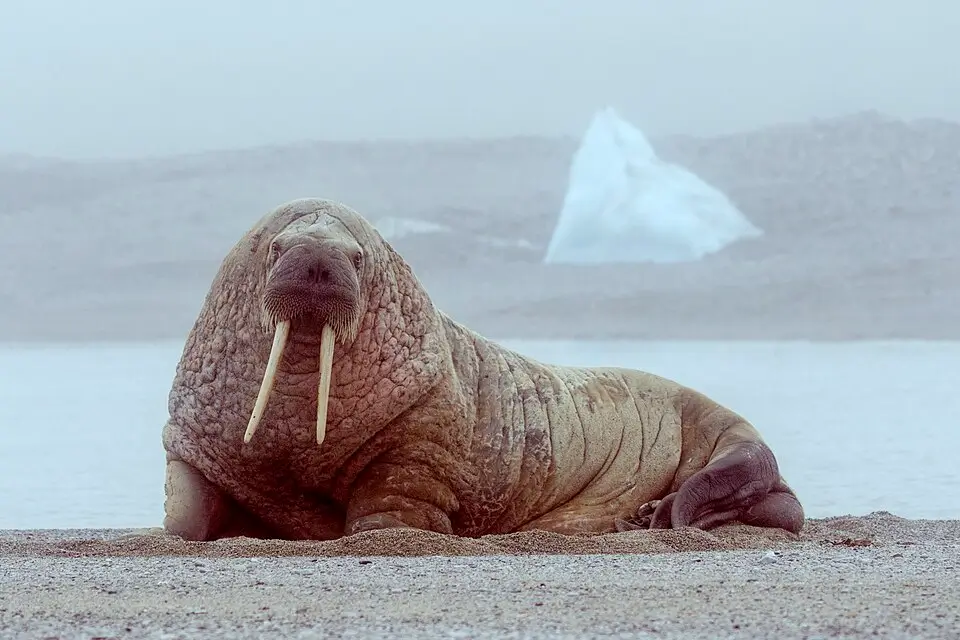
Few animals capture the rugged, untamed spirit of the Arctic quite like the walrus. With its unmistakable ivory tusks, whiskered face, and massive bulk, the walrus (Odobenus rosmarus) stands as one of the most recognizable marine mammals on Earth. These extraordinary creatures have inhabited the icy waters of the Northern Hemisphere for millions of years, carving out a remarkable existence in one of the planet's most demanding environments. For the people of Alaska — particularly Alaska Native communities who have lived alongside walruses for thousands of years — these animals represent far more than a wildlife spectacle. They are a cornerstone of cultural identity, subsistence living, and ecological balance in the Arctic world.
Alaska, the northernmost and westernmost state in the United States, provides some of the most critical habitat for walruses in North America. Bordered by the Bering Sea and the Arctic Ocean, Alaska's coastlines and surrounding waters serve as vital feeding grounds, haul-out sites, and migratory corridors for walrus populations. Understanding this species — its biology, behavior, habitat needs, and the traditions surrounding its harvest — offers a window into one of the most fascinating chapters of wildlife and human culture in the American wilderness.
Biological Traits
The walrus (Odobenus rosmarus) belongs to the family Odobenidae, making it the sole living member of that family and placing it within the broader order Carnivora. Its scientific name, Odobenus rosmarus, is derived from Greek and Latin roots roughly translating to "tooth-walking sea horse" — a nod to the animal's famous practice of using its tusks to help haul itself onto ice floes and rocky shores.
Walruses are among the largest pinnipeds in the world, a group that also includes seals and sea lions. Adult males, known as bulls, are substantially larger than females, known as cows — a classic example of sexual dimorphism in the animal kingdom. Bulls can reach impressive sizes, with thick, wrinkled skin that appears almost prehistoric in texture. Their skin, often pinkish-brown in color, can shift to a pale, almost white hue when they are cold, as blood retreats from the skin's surface to conserve core body heat. Conversely, when walruses are warm and basking, the skin flushes a deeper reddish tone as blood flow increases near the surface.
Perhaps the most iconic feature of the walrus is its tusks, which are elongated upper canine teeth present in both males and females. These formidable ivory structures can grow to impressive lengths and serve a variety of purposes: asserting dominance among bulls during competition for mates, assisting in hauling out onto ice or land, and potentially as tools for creating breathing holes in ice. The tusks are also social signals — larger tusks generally convey greater status within walrus hierarchies.
Another remarkable adaptation is the walrus's set of vibrissae, or whiskers. These highly sensitive facial bristles, which can number in the hundreds, are known as mystacial pads and function as sophisticated sensory organs. Walruses use them to detect and identify prey along the murky seafloor, enabling precise and efficient foraging even in low-visibility conditions. Their primary diet consists largely of benthic invertebrates — clams, mussels, worms, snails, and other bottom-dwelling creatures — which they locate using these sensitive whiskers and suction to extract from their shells with remarkable efficiency.
Walruses are also known for their thick layer of blubber, which can account for a significant portion of their body weight. This insulating fat layer is essential for survival in frigid Arctic waters, helping maintain body temperature even during extended periods in near-freezing seas. Their blubber also serves as an energy reserve during migrations and periods when food may be less accessible.
Socially, walruses are gregarious animals. They congregate in large groups, sometimes numbering in the thousands, on preferred haul-out sites — beaches, rocky shores, and ice floes where they rest, socialize, and thermoregulate. These gatherings are a dramatic sight, with animals piling together in dense, noisy masses, communicating through a variety of vocalizations including bellows, grunts, and the distinctive bell-like sounds produced by bulls using air sacs in their throats.
Reproduction in walruses follows a seasonal rhythm tied to the Arctic environment. Breeding typically occurs in winter, and after a gestation period of roughly fifteen to sixteen months — including a period of delayed implantation — cows give birth to a single calf. Mother-calf bonds are notably strong, with calves nursing for an extended period and remaining close to their mothers for several years. This slow reproductive rate means walrus populations recover gradually from any significant declines.
Habitat & Range
The walrus is distributed across the Arctic and sub-Arctic regions of the Northern Hemisphere, with two primary subspecies recognized: the Pacific walrus (Odobenus rosmarus divergens) and the Atlantic walrus (Odobenus rosmarus rosmarus). Alaska is home to the Pacific walrus, which ranges across the Bering Sea, the Chukchi Sea, and portions of the Arctic Ocean.
Alaska's geographic position makes it central to the walrus's annual cycle. The Bering Sea, which separates Alaska from Russia, is one of the most productive marine ecosystems on the planet and provides the rich benthic feeding grounds that walruses depend upon. During winter and spring, walruses are commonly found in association with sea ice in the Bering Sea, using ice floes as resting platforms between foraging dives. As seasons change and sea ice retreats northward into the Chukchi Sea, walruses follow — a migratory movement that has defined Arctic life for millennia.
Haul-out sites along Alaska's coastline, particularly in remote areas of western and northern Alaska, are critically important gathering spots. Coastal communities in this region, such as those on St. Lawrence Island, the Seward Peninsula, and other coastal areas of western Alaska, have historically coexisted with walruses along these same shores.
The relationship between walruses and sea ice is profound. Ice floes provide resting habitat above deep feeding waters, and as climate patterns continue to shift, changes in sea ice extent and timing have notable implications for walrus behavior and distribution. In recent years, scientists and indigenous observers alike have noted walruses congregating in larger numbers on coastal beaches when sea ice is less accessible — a behavioral adaptation that underscores the species' resilience, while also highlighting the importance of continued attention to Arctic environmental conditions.
Hunting Information
The walrus holds a unique and deeply significant place in the hunting traditions of Alaska Native peoples. For coastal communities across western and northern Alaska — including Yup'ik, Cup'ik, Inupiaq, and other indigenous groups — walrus hunting is far more than a subsistence activity. It is a living cultural practice, a connection to ancestral knowledge, and an essential source of nutrition, materials, and community cohesion.
Under federal law, specifically the Marine Mammal Protection Act (MMPA), the harvest of walruses in the United States is restricted to Alaska Natives who reside in coastal areas and who hunt walruses for subsistence purposes or for the creation of authentic native articles of handicraft and clothing. This legal framework recognizes the unique cultural and nutritional dependence that Alaska Native communities have on marine mammals, including the walrus.
Because the regulatory framework governing walrus hunting is administered at the federal level through the U.S. Fish and Wildlife Service, rather than through standard state hunting licenses and seasons, walrus hunting does not fall under the same structure as typical Alaska state game regulations. Non-Native hunters are not permitted to harvest walruses. Those who are Alaska Natives and wish to engage in walrus subsistence hunting should consult directly with the U.S. Fish and Wildlife Service and relevant co-management bodies, such as the Eskimo Walrus Commission, for the most current and accurate guidance on harvest practices, reporting requirements, and community-based management.
The traditional methods of walrus hunting, passed down through generations, reflect an intimate understanding of walrus behavior, Arctic conditions, and the rhythms of the sea. Hunters travel by boat and, historically, by skin boat known as an umiak, approaching walruses carefully and respectfully in keeping with cultural protocols that emphasize gratitude and stewardship.
Conservation
The walrus is currently listed under the Marine Mammal Protection Act, which provides a foundational layer of federal protection for the species in U.S. waters. The Pacific walrus has been a subject of ongoing scientific review, particularly in the context of changing Arctic sea ice conditions, which affect habitat availability and the energy costs associated with foraging and resting.
Conservation efforts for the walrus involve a collaborative approach that includes federal agencies, scientific researchers, and — critically — Alaska Native communities whose generations of traditional ecological knowledge provide invaluable insights into walrus population dynamics and behavior. Co-management structures, including the Eskimo Walrus Commission, serve as important forums where indigenous communities and government agencies work together to ensure that walrus populations remain healthy and that subsistence traditions can continue.
The walrus's future, like that of many Arctic species, is closely tied to the broader health of the Arctic ecosystem. Continued investment in monitoring, research, and the preservation of both biological and cultural knowledge surrounding this remarkable animal will be essential to ensuring that future generations — both human and walrus — can thrive along Alaska's magnificent Arctic coastlines.