Snowshoe Hare (Lepus americanus): A Complete Guide to North America's Seasonal Shapeshifter
Few animals in the North American wilderness capture the imagination quite like the snowshoe hare. Known scientifically as Lepus americanus, this remarkable lagomorph is one of the most recognizable and ecologically significant small mammals on the continent. Whether you are a seasoned hunter, a wildlife enthusiast, or simply a curious naturalist, the snowshoe hare offers a fascinating window into the dynamics of predator-prey relationships, seasonal adaptation, and the rhythms of the boreal forest ecosystem.
Named for its distinctively large hind feet — which function much like natural snowshoes, distributing the animal's weight across the surface of deep snow — the snowshoe hare is perfectly engineered for life in cold, snowy environments. Its ability to move swiftly and efficiently across winter landscapes gives it a critical survival advantage over many of its predators. Coupled with one of the most dramatic seasonal camouflage transformations in the animal kingdom, the snowshoe hare stands as a true marvel of evolutionary adaptation.
From the dense spruce forests of Alaska to the mixed woodlands of Appalachia, the snowshoe hare plays a foundational role in the food web, supporting a wide variety of predators including the Canada lynx, great horned owl, red fox, coyote, and many others. Understanding this species — its biology, behavior, habitat preferences, and population dynamics — is essential for hunters, wildlife managers, and conservationists alike.
Biological Traits
The snowshoe hare (Lepus americanus) belongs to the family Leporidae, the same taxonomic family that includes rabbits and other hares. While the terms "rabbit" and "hare" are sometimes used interchangeably in casual conversation, they represent distinct groups with meaningful biological differences. Hares, including the snowshoe hare, are generally larger than rabbits, are born fully furred with open eyes (a condition known as precocial), and tend to rely on speed and agility rather than burrowing to escape predators.
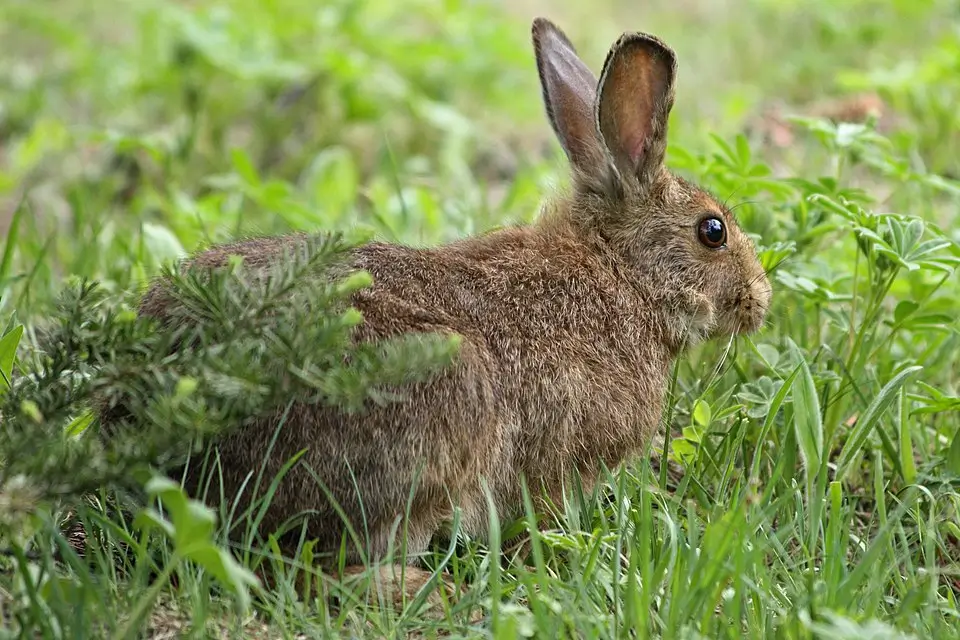
One of the most celebrated biological traits of the snowshoe hare is its seasonal color change, a process known as molting. During the warmer months of spring and summer, the snowshoe hare sports a brown or tawny coat that blends seamlessly with the forest floor, leaf litter, and undergrowth. As daylight hours shorten in autumn, hormonal changes triggered by photoperiod — the relative length of day and night — initiate a molt into a brilliant white winter coat. This white plumage provides exceptional camouflage against the snow, making the hare extremely difficult for predators to spot. In spring, the process reverses, and the hare transitions back to its brown summer coat. This cycle of seasonal camouflage is one of the most visually striking adaptations found in any North American mammal.
The large hind feet that give the snowshoe hare its common name are another defining biological feature. These oversized feet are equipped with stiff, spreading hairs that increase their surface area, effectively acting as built-in snowshoes. This adaptation allows the hare to run across the surface of packed or powdery snow without sinking, giving it a decisive mobility advantage during winter months when prey animals that lack such adaptations may flounder.
Snowshoe hares are herbivores, and their diet shifts with the seasons. During spring and summer, they consume a wide variety of green vegetation, including grasses, forbs, and the leaves of various shrubs. In winter, when green vegetation is unavailable, they shift to browsing on the twigs, buds, and bark of woody plants such as willows, aspens, and birches.
One of the most fascinating and well-documented aspects of snowshoe hare biology is their population cycle. Snowshoe hare populations undergo dramatic boom-and-bust cycles approximately every eight to eleven years. During peak population years, hare numbers can reach extraordinarily high densities, only to crash sharply in subsequent years. These cycles have a cascading effect throughout the ecosystem, influencing the population sizes of nearly every predator that depends on the hare as a food source. The relationship between the snowshoe hare and the Canada lynx is perhaps the most famous example of a predator-prey cycle in ecological literature, and it has been studied extensively by wildlife biologists for well over a century.
Snowshoe hares are primarily crepuscular and nocturnal, meaning they are most active during the hours around dawn and dusk, as well as throughout the night. During daylight hours, they tend to rest in sheltered spots known as "forms" — simple depressions in the vegetation or snow where they crouch motionless, relying on their camouflage for protection. They are solitary animals for the most part, though they may share overlapping home ranges. Breeding typically occurs from early spring through late summer, and females (called does) can produce multiple litters per season, with litter sizes generally ranging from one to eight young (called leverets). This high reproductive rate helps snowshoe hare populations recover rapidly following population crashes.
Habitat & Range
The snowshoe hare is broadly distributed across North America, occupying a range that stretches from the boreal forests of Alaska and Canada southward through the Rocky Mountains, the Great Lakes region, and the northern Appalachian Mountains. The species is closely associated with dense coniferous and mixed forests, particularly those characterized by abundant understory cover in the form of shrubs, young trees, and brush piles that provide both food and shelter.
In Alaska, the snowshoe hare is a cornerstone species of the boreal ecosystem. Vast stretches of spruce-birch forest and willow thickets provide ideal habitat, offering the combination of dense protective cover and abundant browse that the species requires. The hare's large geographic range reflects its adaptability to a variety of northern forest types, though it consistently favors areas with thick vegetative cover close to the ground.
Riparian areas — the zones along streams, rivers, and wetland margins — are particularly important habitats for snowshoe hares, as these zones often support dense growth of willows and alders, which are among the hare's preferred winter browse species. Edge habitats, where forest transitions to shrubby openings, are also heavily used, as they provide access to both protective cover and open foraging areas.
Elevation plays a role in the distribution of snowshoe hares in mountainous regions. In the Rocky Mountains and other elevated terrain, the species may range from valley bottoms to subalpine zones, following the distribution of suitable forest and shrub cover.
Hunting Information
The snowshoe hare is a popular and widely pursued small game species across its range in North America, valued both for the sporting challenge it presents and for its appeal as table fare. Hunting snowshoe hares is a time-honored tradition in many northern communities, particularly in Alaska and Canada, where the species has long served as an important source of sustenance for indigenous peoples and rural residents alike.
Hunting snowshoe hares can be an accessible and rewarding pursuit for hunters of all experience levels. Because of the hare's reliance on thick cover, close-range hunting with small-caliber firearms or shotguns is a common approach. Many hunters use beagles or other hounds to flush and chase hares, taking advantage of the hare's tendency to circle back through familiar territory when pursued — a behavior that can bring a running hare back past a stationary hunter waiting on a well-chosen trail or opening.
Still hunting and tracking are also effective methods, particularly in fresh snow when hare tracks are easy to follow. The hare's white winter coat, while an excellent defense against aerial and terrestrial predators, can actually make the animal visible against darker backgrounds such as exposed tree trunks or brushy areas — a detail that experienced hunters learn to exploit.
Because hunting regulations for snowshoe hares in Alaska and other jurisdictions are subject to change, it is essential for all hunters to consult the most current regulations published by their state or territorial wildlife management agency before heading into the field. Licensing requirements, season dates, bag limits, and legal methods of take may vary by region and management unit, and staying current with these regulations is both a legal obligation and an expression of responsible sportsmanship.
Conservation
The snowshoe hare is currently not considered a species of conservation concern across most of its range. Its broad distribution, high reproductive rate, and adaptability to a variety of boreal and northern forest habitats contribute to its overall population stability. However, the species' dramatic natural population cycles mean that local populations can experience significant short-term declines, which in turn affect the predators that depend upon them.
Habitat quality is the most important long-term factor in maintaining healthy snowshoe hare populations. Preservation and sustainable management of the boreal and mixed forests that the species calls home — including the maintenance of dense understory cover and healthy riparian corridors — are essential to supporting hare populations over the long term. Forest management practices that retain structural diversity in woodland habitats, including areas of young forest regeneration and shrubby cover, generally benefit snowshoe hare populations.
Climate change presents an emerging challenge for the snowshoe hare, particularly with respect to the timing of its seasonal molt. Research has suggested that as winters become shorter and snowfall becomes less predictable, hares that are still wearing their white winter coats against a snow-free landscape may face increased predation risk — a phenomenon sometimes referred to as a "mismatch" between coat color and background conditions. Wildlife biologists are actively studying this issue and its potential long-term implications for hare populations.
Responsible and regulated hunting, supported by sound wildlife management principles, plays an important role in the conservation of snowshoe hares and the ecosystems they inhabit. Hunters who pursue snowshoe hares contribute to conservation funding through the purchase of licenses and the federal excise taxes on sporting equipment established under the Federal Aid in Wildlife Restoration Act (Pittman-Robertson Act), revenue that supports habitat conservation and wildlife research across North America.
The snowshoe hare is a species that rewards attention and respect — an animal whose cycles of abundance and scarcity remind us of the profound interconnectedness of wild ecosystems. Whether encountered on a winter hunting trip or observed on a quiet morning in the boreal forest, the snowshoe hare is a symbol of resilience, adaptation, and the enduring vitality of North America's wild places.