Ruffed Grouse (Bonasa umbellus): A Comprehensive Guide to North America's Most Celebrated Upland Bird
Few birds capture the imagination of upland hunters and wildlife enthusiasts quite like the ruffed grouse. Known scientifically as Bonasa umbellus, the ruffed grouse is widely regarded as one of North America's most iconic and sought-after game birds. From the dense hardwood forests of the Appalachian Mountains to the birch and aspen stands of the boreal north, this remarkable bird has earned a devoted following among hunters, birdwatchers, and naturalists alike.
The ruffed grouse is not simply a target of opportunity — it is a symbol of wild, forested landscapes. Its explosive flush from the forest floor, the thunderous drumming of a displaying male, and its remarkable ability to thrive in dense woodland cover make it a species that commands genuine respect. For those fortunate enough to spend time in grouse country, the pursuit of Bonasa umbellus represents one of the most rewarding outdoor experiences North America has to offer.
Whether you are a seasoned upland hunter with decades of experience walking grouse covers, a birder hoping to catch a glimpse of a displaying male, or simply someone curious about the rich biodiversity of North American forests, the ruffed grouse deserves your attention. This article explores the biology, habitat, hunting traditions, and conservation status of this extraordinary bird.
Biological Traits
The ruffed grouse belongs to the family Phasianidae — the same broad family that includes pheasants, turkeys, and other grouse species — and is the sole member of the genus Bonasa in North America. The species name umbellus is derived from the Latin word for "umbrella" or "shade," a likely reference to the distinctive neck ruff that gives the bird its common name.
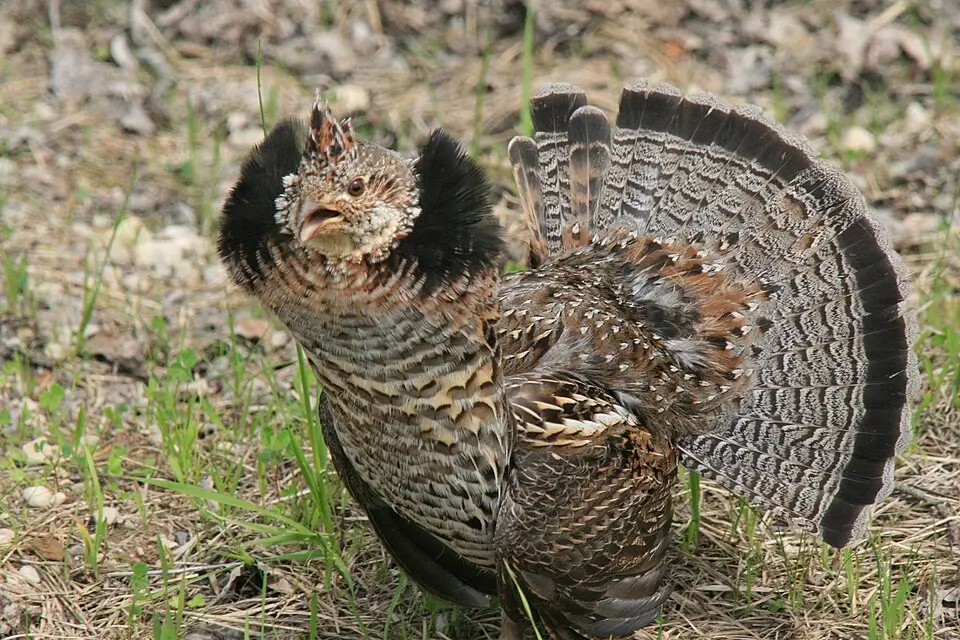
One of the most visually distinctive features of the ruffed grouse is the dark, iridescent ruff of feathers found on either side of the neck. In males, this ruff is prominently fanned out during courtship displays, creating a striking visual impression. The bird also features a fan-shaped tail with a characteristic dark subterminal band, which is particularly visible when the tail is spread during display or flushing.
Ruffed grouse come in two primary color phases — gray and brown (sometimes called red) — which can occur within the same population and are not necessarily tied to geographic location, though some regional tendencies exist. Gray-phase birds tend to predominate in the northern parts of the range, while brown-phase birds are more common in the southern Appalachians. This color variation serves as effective camouflage against the forest floor, where fallen leaves, bark, and dappled light create a complex visual environment.
The drumming behavior of male ruffed grouse is one of the most remarkable phenomena in North American birdlife. Males select a particular log, rock, or elevated surface — known as a drumming log — and beat their wings rapidly in a series of accelerating thumps that creates a distinctive, low-frequency booming sound. This drumming carries surprisingly far through the forest and serves both to attract females and to establish territorial boundaries with rival males. Drumming can be heard primarily in spring but may also occur during fall.
Ruffed grouse are well adapted to cold climates. During winter, they develop comb-like projections on their toes called pectinations, which function essentially as snowshoes to help the birds walk across snow-covered surfaces. They are also known to dive into deep, fluffy snow to create insulating roost cavities, where temperatures can be significantly warmer than the ambient air.
The diet of ruffed grouse shifts considerably with the seasons. During summer and early fall, the birds consume a wide variety of insects, berries, seeds, and green vegetation. As winter approaches and food sources become scarce, they rely heavily on buds and catkins — particularly from aspen, birch, and other deciduous trees — which provide critical nutrition during the coldest months.
Habitat & Range
The ruffed grouse is a bird of deciduous and mixed forests, and its range spans much of the forested regions of North America. The species is found from the Appalachian Mountains in the east, across the Great Lakes states and into the upper Midwest, through Canada's boreal forest belt, and into portions of the Pacific Northwest and Alaska.
Across this vast range, the ruffed grouse demonstrates a clear preference for young, regenerating forest with dense understory cover. Aspen stands are particularly important, as aspen provides both food — in the form of buds, catkins, and leaves — and structural habitat in the form of dense thicket growth. In areas where aspen is abundant, ruffed grouse populations tend to be especially robust.
The species thrives in habitat that features a mosaic of different forest ages and types — a mix of dense young growth for cover and nesting, mature forest for drumming logs and winter food sources, and forest edges that provide travel corridors and a diversity of food plants. Forest disturbance, whether from natural processes like wind events and fire or from human activities like timber harvesting, can actually benefit ruffed grouse by creating the young, dense forest structure they require.
In Alaska, ruffed grouse occupy the state's forested interior and southcentral regions, where appropriate woodland habitat exists. The boreal forest of interior Alaska, characterized by its mix of spruce, birch, and aspen, provides suitable conditions for the species at the northwestern edge of its continental range.
Nesting typically takes place on the ground at the base of a tree, stump, or log, where the hen lays a clutch of eggs in a shallow depression lined with leaves and feathers. Chicks are precocial — meaning they are mobile and capable of feeding themselves very shortly after hatching — a critical survival adaptation given the many predators that share their forest habitat.
Hunting Information
The ruffed grouse holds a cherished place in the traditions of North American upland hunting. It is frequently described as the "king of upland game birds" by its devoted pursuers, a title that reflects both the challenge of hunting this species and the quality of the experience it provides.
Hunting ruffed grouse typically involves walking through forest cover — often dense, brushy terrain — with or without a bird dog, seeking to flush birds from the undergrowth. The explosive, sudden flush of a ruffed grouse from underfoot, accompanied by a thunderous burst of wingbeats, is one of the most memorable moments in all of wing shooting. The dense cover in which grouse live makes for challenging shooting, and the bird's reputation as a difficult target is well earned.
Pointing breeds and flushing breeds alike are used in grouse hunting, though many hunters favor the classic partnership with a well-trained setter or pointer that can work the dense cover and locate birds by scent. The relationship between hunter, dog, and bird — played out in beautiful fall woodlands — is central to the cultural and recreational value of grouse hunting.
Specific season dates, bag limits, and licensing requirements for ruffed grouse vary by state and province and change from year to year. Hunters planning to pursue ruffed grouse in Alaska or any other jurisdiction should always consult the most current regulations from the relevant state or provincial wildlife agency before heading afield. Regulations are carefully designed to ensure sustainable harvest while maintaining healthy grouse populations.
Conservation
The ruffed grouse is not currently listed as a threatened or endangered species across most of its range, and healthy populations persist in many areas of prime habitat. However, like many wildlife species, ruffed grouse face ongoing challenges related to habitat change.
The long-term maturation of forests across parts of the grouse's range — where young, regenerating forest transitions to mature closed-canopy woodland — can reduce the dense understory structure that grouse depend upon. Active forest management, including timber harvesting and prescribed disturbance, can play a meaningful role in maintaining and restoring the early-successional habitat that supports productive grouse populations.
Conservation organizations, state and provincial wildlife agencies, and private landowners have all contributed to efforts aimed at maintaining quality grouse habitat. Work by groups dedicated to upland bird conservation has helped spotlight the importance of young forest habitat not just for grouse, but for a whole suite of wildlife species that depend on similar conditions.
Ruffed grouse populations are also known to fluctuate on roughly ten-year cycles in parts of their range, a pattern that has long fascinated wildlife biologists and is thought to be related to the population dynamics of key prey and predator species. Understanding these natural cycles is an important part of managing and conserving grouse populations over the long term.
For hunters, the act of pursuing ruffed grouse in quality habitat is itself a powerful motivation for conservation. Many dedicated grouse hunters are among the most passionate advocates for forest habitat protection and management, recognizing that the future of their sport depends on the health of the landscapes these birds call home.
Conclusion
The ruffed grouse — Bonasa umbellus — is far more than a game bird. It is a living symbol of North America's forested wildlands, a creature of remarkable adaptability, and the focus of a rich tradition that connects hunters and naturalists to some of the continent's most beautiful landscapes. Whether you encounter one drumming on a mossy log in the early spring, or watch one burst from a tangle of alder in the autumn woods, the ruffed grouse never fails to leave an impression.