Reindeer (Rangifer tarandus): An In-Depth Guide to One of the World's Most Iconic Arctic Animals
Few animals capture the human imagination quite like the reindeer. Known scientifically as Rangifer tarandus, reindeer are among the most recognizable and culturally significant large mammals on the planet. From their starring role in winter folklore to their central place in the livelihoods of Indigenous Arctic peoples, reindeer occupy a unique position at the intersection of ecology, culture, and history. In North America, the wild counterpart of the domesticated reindeer is known as the caribou — a name derived from the Mi'kmaq word xalibu, meaning "the one who paws." Whether called reindeer or caribou, Rangifer tarandus represents one of nature's most extraordinary examples of adaptation, resilience, and ecological importance.
Across their circumpolar range, reindeer have sustained human communities for tens of thousands of years. They have been hunted, herded, and celebrated by cultures from Scandinavia to Siberia to the subarctic and Arctic regions of North America. Today, they remain a vital part of ecosystems, economies, and traditions across the northern hemisphere. This article explores the biology, habitat, cultural significance, hunting traditions, and conservation status of this remarkable species.
Biological Traits
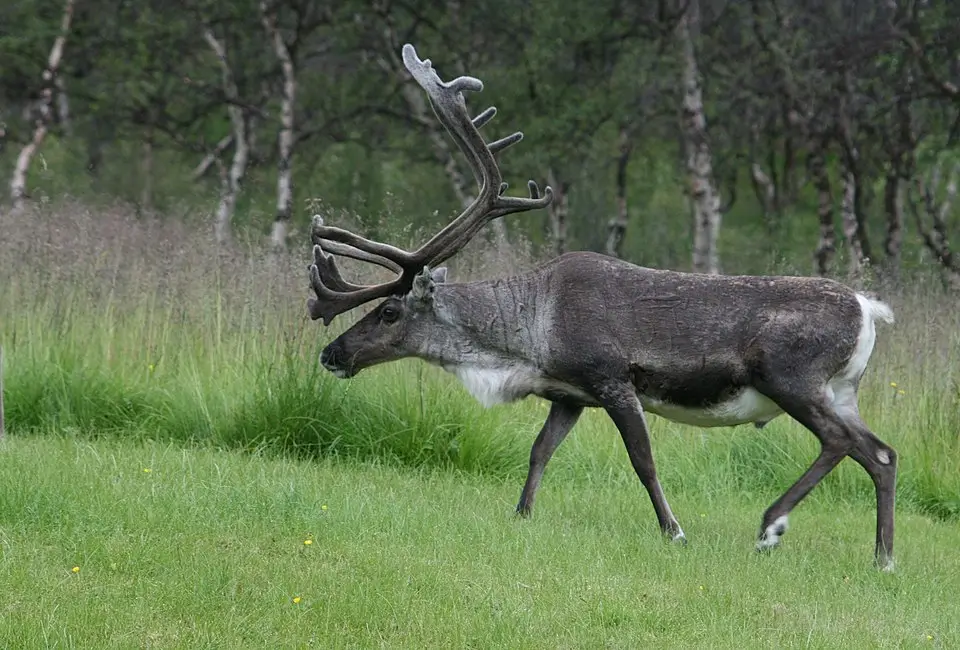
Rangifer tarandus belongs to the family Cervidae — the deer family — and is the only species in the genus Rangifer. One of the most distinctive biological features of reindeer is that both males and females grow antlers, making them unique among all living deer species. In most other cervid species, antlers are an exclusively male characteristic. The antlers of reindeer are large, branching, and palmated at the tips, and they are shed and regrown annually in a cycle driven by hormonal and seasonal changes.
Reindeer are well-equipped for life in extreme cold. Their coats consist of two layers: a dense, woolly undercoat that provides insulation close to the skin, and a longer outer layer of hollow, air-filled guard hairs that trap warmth and add buoyancy in water. This dual-layer coat is one of nature's most effective natural insulators, allowing reindeer to survive temperatures that would be lethal to many other large mammals.
Their hooves are another remarkable adaptation. Reindeer hooves are broad and concave, functioning almost like snowshoes to distribute the animal's weight across snow and soft tundra. The hooves also change seasonally: in summer, the footpads become soft and spongy to grip wet ground, while in winter they harden and shrink to expose the sharp hoof rim, which helps the animal gain traction on ice and dig through snow to reach food — a behavior known as "cratering."
Reindeer are ruminants, meaning they have a multi-chambered stomach that allows them to efficiently digest coarse, fibrous plant material. Their diet varies significantly by season. In summer, they graze on grasses, sedges, leaves, mushrooms, and flowering plants. In winter, they rely heavily on lichens — particularly Cladonia rangiferina, commonly known as reindeer lichen or reindeer moss — which they locate using a keen sense of smell to detect food beneath snow cover. This ability to find and subsist on lichens during the harshest months of the year is a critical survival trait.
Reindeer are also well-known for their extraordinary migrations, which rank among the longest of any land mammal on Earth. Herds travel hundreds or even thousands of miles between seasonal ranges, following ancient routes passed down through generations. Their large, flat hooves and powerful leg muscles make them efficient travelers across varied terrain, including tundra, boreal forest, mountain slopes, and river crossings.
In terms of size, reindeer exhibit significant variation depending on subspecies and geographic location. Males (bulls) are generally larger than females (cows), and animals from forested, southern populations tend to be larger than those from the high Arctic. Calves are born in spring — typically in May or June in North American populations — and are able to stand and walk within hours of birth, an essential adaptation given the presence of predators such as wolves, bears, and golden eagles.
Habitat & Range
Rangifer tarandus has one of the broadest geographic ranges of any large ungulate. The species inhabits Arctic tundra, boreal and montane forests, and sub-Arctic shrublands across a circumpolar belt that includes northern Europe (Scandinavia and Russia), Siberia, Greenland, Canada, and Alaska. This wide distribution has given rise to numerous recognized subspecies, each adapted to local environmental conditions.
In Alaska, reindeer hold a special place in both ecological and cultural history. Wild caribou herds — including massive migratory groups such as the Western Arctic Herd, one of the largest caribou herds in the world — range across the vast Alaskan wilderness. Alaska's expansive landscapes, from the tundra of the North Slope to the boreal forests of the interior and the coastal lowlands, provide diverse habitats for these animals throughout the year.
The state of Alaska itself is one of the most compelling places on Earth to encounter Rangifer tarandus in a wild setting. As the northernmost state in the United States, Alaska encompasses extraordinary environmental diversity and represents a critical stronghold for wild caribou populations in North America. The relationship between the land, the animals, and the people of Alaska is deep and enduring, shaped by thousands of years of coexistence.
Hunting Information
Hunting reindeer and caribou has been a cornerstone of human survival across the Arctic and subarctic world for millennia. Indigenous peoples from the Sámi of Scandinavia to the Yup'ik, Athabascan, and Inupiat peoples of Alaska have historically depended on reindeer and caribou not only as a primary food source but also for clothing, tools, shelter materials, and spiritual traditions. The hunt was — and in many communities remains — a profound cultural practice as much as a subsistence necessity.
In Alaska, caribou hunting continues to be an important tradition for both subsistence hunters and sport hunters. The state's vast wild spaces provide some of the most remote and challenging hunting experiences available anywhere in North America. Pursuing caribou across the Alaskan wilderness requires physical fitness, knowledge of the terrain, and respect for the animal and the environment.
Because hunting regulations for reindeer and caribou in Alaska are managed and updated by the Alaska Department of Fish and Game (ADF&G), prospective hunters are strongly encouraged to consult the most current official regulations directly from ADF&G before planning any hunt. Regulations governing season dates, licensing requirements, harvest limits, and legal methods of take can vary significantly by region and management unit, and they are subject to change based on the most recent population assessments and conservation priorities.
Any hunter interested in pursuing caribou in Alaska should visit the Alaska Department of Fish and Game's official website or contact their regional office directly to obtain accurate, up-to-date information on licensing, seasons, and applicable rules. Hunting responsibly and legally is both a legal obligation and a mark of respect for this iconic species and its habitat.
Conservation
The conservation status of Rangifer tarandus varies considerably across its range. Some populations are stable or recovering, while others have experienced significant declines in recent decades due to a combination of factors including climate change, habitat alteration, increased predator pressure, and human development. The species as a whole is listed as Vulnerable on the IUCN Red List, reflecting widespread concern about the long-term trajectory of many populations.
Climate change poses one of the most significant and far-reaching threats to reindeer and caribou worldwide. Rising temperatures in the Arctic are altering vegetation patterns, affecting the availability and accessibility of food, and disrupting the timing of seasonal migrations. Rain-on-snow events — where rainfall freezes into an impenetrable ice layer over the ground — can lock away the lichens and vegetation that reindeer depend on during winter, with devastating consequences for herd survival and reproduction.
Conservationists, wildlife managers, Indigenous communities, and governments across the circumpolar north are working collaboratively to monitor populations, protect critical habitats, and develop management strategies that account for the complex interplay of ecological, climatic, and human factors affecting reindeer. In Alaska, the long tradition of wildlife stewardship practiced by Indigenous communities, combined with the scientific resources of state and federal agencies, provides a strong foundation for the responsible management of caribou populations.
Hunters, too, play an important role in conservation. Through licensing fees, taxes on equipment, and active participation in wildlife monitoring programs, the hunting community contributes significantly to the funding and data collection that underpins effective wildlife management. Ethical hunting practices — including adherence to legal seasons and limits, avoiding waste, and reporting harvest data — are essential contributions to the broader conservation effort.
Ultimately, the future of Rangifer tarandus depends on the collective commitment of people around the world to protect the wild landscapes these animals need to thrive. From the tundra of Alaska to the highlands of Scandinavia, the reindeer stands as a symbol of Arctic wildness, resilience, and the enduring bond between humans and the natural world.