The Red Fox: North America's Most Adaptable Wild Canid
A Comprehensive Look at Vulpes vulpes
Few wild animals capture the human imagination quite like the red fox. With its striking russet coat, bushy tail, and sharp, intelligent eyes, the red fox (Vulpes vulpes) has earned a place in folklore, literature, and wildlife tradition across virtually every culture in the Northern Hemisphere. From the cunning trickster of Aesop's fables to the celebrated quarry of English fox hunters, this remarkable animal has lived alongside humanity for thousands of years — and has thrived because of it.
The red fox is the largest member of the genus Vulpes and one of the most widely distributed carnivores on the planet. Its extraordinary ability to adapt to a vast range of environments, food sources, and even human disturbance has made it a success story in the animal kingdom. Whether crossing the tundra of Alaska, threading through the suburban neighborhoods of the American Midwest, or hunting rodents in the open meadows of Europe, the red fox demonstrates a level of ecological flexibility that few other mammals can match.
For hunters, trappers, wildlife enthusiasts, and conservationists alike, the red fox represents a fascinating subject. Understanding its biology, behavior, habitat requirements, and the role it plays in healthy ecosystems is essential for anyone who spends time in the outdoors. This article offers a comprehensive look at one of North America's most iconic wild canids.
Biological Traits
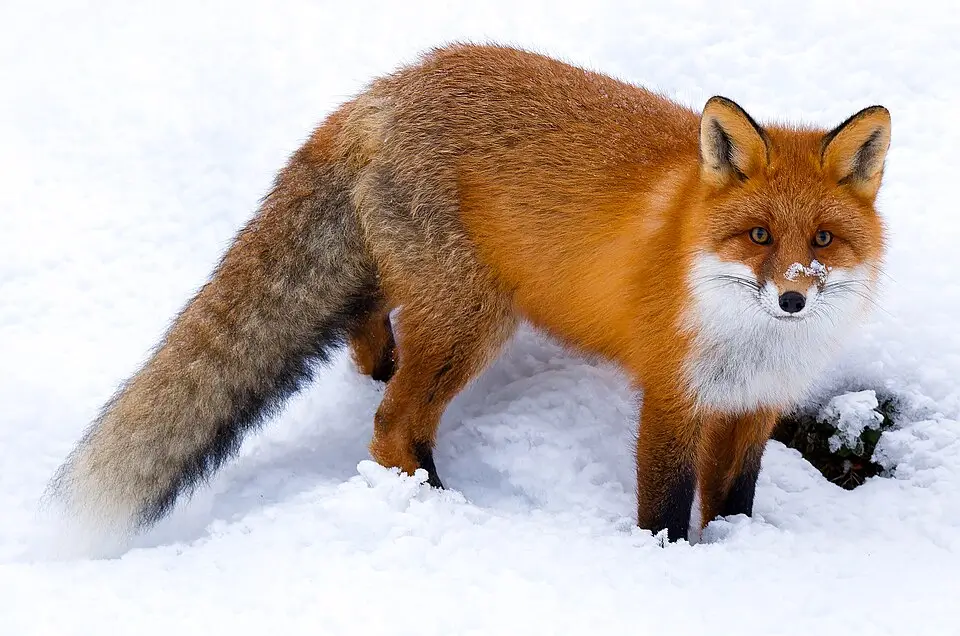
The red fox is a medium-sized member of the family Canidae, the broader group that includes wolves, coyotes, domestic dogs, and other foxes. Adults typically have a lean, athletic build designed for speed, agility, and endurance. The most recognizable feature of the species is, of course, its coat — typically a vivid reddish-orange across the back and sides, with white or pale undersides and a dark coloration on the legs and portions of the face. The tail, often called a "brush," is long, thick, and bushy, frequently tipped in white.
However, it is important to note that red foxes display considerable variation in coat color. Several recognized color morphs exist within the species, including the "cross fox," which displays a dark stripe running along the back and across the shoulders, and the "silver fox," which exhibits a black coat with silver-tipped guard hairs. These color variations are natural genetic expressions within the same species and are not separate animals.
The red fox possesses a number of physical adaptations that make it a highly effective predator. Its eyes are equipped with vertically slit pupils — a feature more commonly associated with cats — which provide excellent low-light vision ideal for the crepuscular and nocturnal hunting hours the fox prefers. Its hearing is exceptionally acute, capable of detecting the high-frequency sounds produced by small rodents moving beneath snow or leaf litter. This remarkable auditory ability enables the fox to perform its famous "mousing pounce," in which it leaps high into the air and plunges nose-first into snow to capture prey hidden beneath the surface.
Red foxes are omnivores with a highly varied diet. Their prey and food items include small mammals such as mice, voles, rabbits, and squirrels, as well as birds, eggs, insects, earthworms, fruits, berries, and carrion. This dietary flexibility is a key component of the species' success across such a wide range of environments. In areas near human habitation, red foxes will readily exploit garbage, compost piles, and other anthropogenic food sources.
The red fox is a largely solitary animal outside of the breeding season. Mating typically occurs in late winter, and following a gestation period of approximately 51 to 53 days, a female (called a vixen) gives birth to a litter of pups — typically between four and six, though larger litters are not uncommon. Pups are born in a den, which may be dug by the foxes themselves or borrowed and modified from the burrow of another animal such as a badger or groundhog. Both parents are involved in raising the young, with the male (called a dog fox or reynard) bringing food to the vixen during the early weeks after birth. By autumn, the young foxes disperse to establish their own home ranges.
Red foxes communicate through a surprisingly sophisticated repertoire of vocalizations. The eerie, high-pitched scream of a vixen in the breeding season is one of the most distinctive sounds of the winter night in fox country. They also communicate through scent marking, using urine, feces, and secretions from specialized scent glands to mark territory and convey information to other foxes.
The lifespan of a wild red fox is typically three to four years, though individuals can live considerably longer in captivity or in areas with low predator pressure and abundant food resources.
Habitat & Range
The red fox boasts one of the largest natural distributions of any terrestrial carnivore. The species is native to the entirety of the Northern Hemisphere, including North America, Europe, Asia, and North Africa. In the twentieth century, it was also introduced to Australia, where it has become one of the most problematic invasive species on that continent.
In North America, the red fox occupies an enormous range stretching from the Arctic tundra of Alaska and northern Canada down through the contiguous United States, with populations found in virtually every ecosystem type — boreal forests, temperate woodlands, grasslands, deserts, mountain ranges, wetlands, and suburban or even urban environments. In Alaska specifically, the red fox is a native species with a significant presence, ranging from the interior regions and boreal forests to coastal areas and the open tundra of the Arctic Slope.
The species shows a clear preference for edge habitats — the transitional zones between forest and open ground where cover and hunting opportunities are both readily available. This preference for ecotones, combined with its dietary opportunism, is a large part of why red foxes have integrated so successfully into agricultural and suburban landscapes. Farms, with their combination of open fields for hunting and brush-covered fence lines and woodlots for cover and denning, are classic red fox territory.
Hunting Information
The red fox has a long and storied history as a game and furbearer species across North America. Its pelt has been valued in the fur trade for centuries, and its pursuit — whether via traditional fox hunting, predator calling, or trapping — remains a cherished outdoor tradition in many regions.
In states and territories where hunting and trapping of red fox are permitted, the species is typically managed as a furbearer. Hunters pursue red foxes using a variety of methods, including predator calling with electronic or mouth-blown calls that mimic the distress sounds of rabbits or rodents, as well as more traditional methods involving hounds. Trapping with foothold or cage traps is also a widely practiced and regulated method of harvest.
Because specific season dates, license requirements, and bag limits for red fox hunting in Alaska were not available in the source data consulted for this article, hunters and trappers interested in pursuing red fox in Alaska are strongly encouraged to consult the Alaska Department of Fish and Game (ADF&G) directly for the most current and accurate regulations. Regulations governing furbearer harvest can change from season to season, and compliance with all applicable state and federal laws is the responsibility of every individual hunter and trapper.
What is broadly true across most jurisdictions is that hunting red foxes requires attention to ethical practice and fair chase principles. Shooting lanes should be safe and clearly identified, and hunters should be mindful of property boundaries and neighboring landowners. The red fox, while resilient, deserves the same respect afforded to any wild animal pursued in the field.
Conservation
From a global conservation standpoint, the red fox is currently classified as a species of Least Concern by the International Union for Conservation of Nature (IUCN). Its population is considered stable and, in many areas, robust. Unlike many wildlife species that have struggled in the face of habitat loss and human encroachment, the red fox has in many ways benefited from landscape changes brought about by human activity, including agriculture and suburban development, which tend to increase the edge habitat it favors.
In North America, properly regulated hunting and trapping programs play a meaningful role in managing red fox populations and serve as an important source of funding for broader wildlife conservation efforts through license fees and excise taxes on sporting equipment. The model of conservation through regulated hunting has a well-established track record of success across North America, and the red fox is one of many species that benefit from this system.
Red foxes also fulfill an important ecological role as mesopredators — mid-level predators that help regulate populations of small mammals and other prey species. In this capacity, they contribute to the balance of ecosystems across their range. At the same time, in some ecosystems, particularly where they have been introduced outside their native range, management of red fox populations may be necessary to protect ground-nesting bird species and other vulnerable wildlife.
The red fox's story is ultimately one of remarkable resilience and adaptability. It is an animal that has coexisted with humanity for millennia — studied, hunted, trapped, celebrated in art and story, and still thriving in the wild places and back corners of civilization alike. For anyone who has heard a vixen call on a cold winter night or watched a fox stalk silently through a frost-covered field at dawn, it is an animal that leaves a lasting impression.