The Northern Bobwhite: America's Beloved Native Quail
A Complete Guide to Colinus virginianus
Few sounds in the American countryside are as immediately recognizable — or as warmly welcomed — as the clear, whistled call of the Northern bobwhite. That bright, two-note song, unmistakably rendering its own name — bob-WHITE! — has echoed across farm fields, brushy pastures, and woodland edges for centuries. For generations of hunters, naturalists, landowners, and wildlife enthusiasts, the Northern bobwhite (Colinus virginianus) represents something deeply woven into the fabric of rural American life. It is one of the most iconic game birds on the continent, a symbol of the southern quail hunting tradition, and a species whose fortunes serve as a meaningful barometer for the health of early successional habitats across the eastern and central United States.
The Northern bobwhite belongs to the family Odontophoridae — the New World quails — a group entirely separate from the Old World quail family. Within its genus, Colinus, the Northern bobwhite is the most widespread and well-studied species, occupying a range that stretches from the Great Plains eastward to the Atlantic Coast and southward into Mexico and parts of Central America. It is a bird of remarkable adaptability, capable of living in a diverse array of open and semi-open habitats, yet it is also surprisingly sensitive to changes in land use and landscape management.
Whether you are an experienced quail hunter who grew up listening to dogs work a covey through a broomsedge field, a birder hoping to catch a glimpse of this secretive ground dweller, or simply someone curious about the natural world, the Northern bobwhite rewards attention. This article explores what makes this small, charismatic bird so significant — biologically, ecologically, and culturally.
Biological Traits
The Northern bobwhite is a compact, rotund bird, built close to the ground and ideally suited for life in dense, low vegetation. Adults are small by game bird standards, typically weighing somewhere in the range of five to eight ounces, with a body length of roughly eight to ten inches. Despite their modest size, bobwhites are remarkably sturdy birds capable of explosive, short-distance flight when flushed from cover.
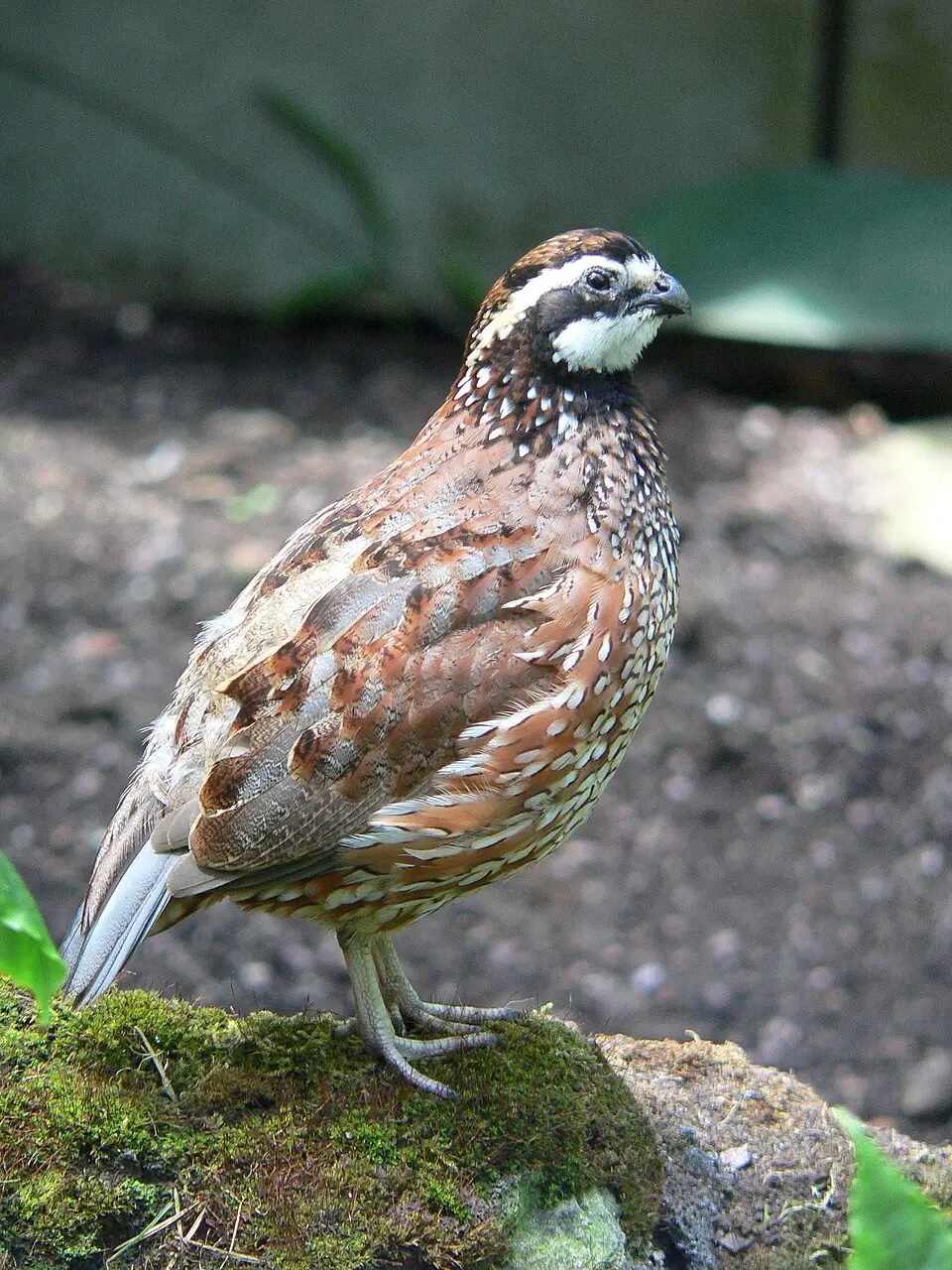
The species displays notable sexual dimorphism in facial patterning. Males are distinguished by a bold white supercilium — a stripe above the eye — and a bright white throat patch, both of which contrast sharply against a dark brown and chestnut body covered in intricate streaks and scalloped markings. Females share the same overall patterning but replace the male's white facial markings with buff or pale brown tones, making them somewhat more cryptically colored overall.
One of the most fascinating aspects of Northern bobwhite biology is its social structure. Bobwhites are gregarious birds that live most of the year in small family groups known as coveys. A typical covey might consist of anywhere from a handful of birds to more than two dozen individuals, though groups of eight to fifteen are perhaps most commonly encountered. These coveys serve an important survival function: multiple sets of eyes and ears on alert for predators, and at night, covey members roost together on the ground in a tight circular formation — tails toward the center, heads pointed outward — a behavior that conserves body heat during cold nights and allows any individual bird to detect and react quickly to an approaching threat.
The breeding season brings a dissolution of covey bonds as birds pair off. Bobwhites are notably flexible in their mating system; while monogamous pairing is common, instances of polygyny and polyandry have both been documented. Perhaps most remarkably, male bobwhites are highly involved in incubation and chick-rearing — a trait less common among game birds. Males will frequently incubate eggs and brood young chicks, and in some cases, a single male may take on the primary parenting role entirely.
Nests are built on the ground, typically consisting of a shallow cup of grasses and leaves, often with a woven canopy of vegetation overhead that helps conceal the nest from aerial predators. Clutch sizes are generous, commonly ranging from ten to fifteen or more eggs, an adaptation that helps offset high predation rates. Incubation lasts approximately 23 days. Chicks are precocial — meaning they hatch fully covered in down and are capable of leaving the nest and foraging on their own within hours of hatching, guided closely by their parents.
The diet of the Northern bobwhite is omnivorous and highly seasonal. During warmer months, invertebrates — including beetles, grasshoppers, caterpillars, and spiders — make up a significant portion of the diet, particularly for growing chicks, which require high levels of protein. As the season progresses into fall and winter, seeds become the dietary staple. Bobwhites consume seeds from a wide variety of native and agricultural plants, including partridge pea, beggar's lice, lespedeza, ragweed, and various grasses. This dietary flexibility is one of the reasons the species has been able to persist across such a broad geographic range.
Habitat & Range
The Northern bobwhite is fundamentally a bird of open and semi-open landscapes. It thrives in what ecologists describe as early successional habitats — environments characterized by a diverse mix of grasses, forbs, shrubs, and scattered woody cover, often in a mosaic pattern that provides both food resources and protective cover in close proximity.
Historically, bobwhites were abundant across the eastern half of North America, from southern Ontario and New England southward through the Gulf Coast states and into Mexico. Their range extends westward through the Great Plains states, where suitable grassland and agricultural habitats exist. Within this broad range, populations tend to be densest in the southeastern United States, where the combination of climate, land use history, and habitat management has historically been most favorable.
The species is closely associated with agricultural landscapes in many parts of its range. Old fields, fencerows, brushy pasture edges, native warm-season grass stands, and areas managed with periodic prescribed fire all provide the structural diversity that bobwhites require. Longleaf pine savannas of the Deep South, maintained through regular burning, represent some of the most productive bobwhite habitat on the continent. Similarly, the rolling grasslands and cropland edges of states like Oklahoma, Kansas, and Texas have long been strongholds for the species.
Bobwhites require several key habitat components in relative proximity: dense, low-growing grassy cover for nesting and brooding, brushy areas or shrub thickets for escape cover and loafing, and open areas with a diversity of seed-producing plants for foraging. When these elements are fragmented or one is missing from the landscape, bobwhite populations tend to decline.
Hunting Information
The Northern bobwhite holds a place of extraordinary reverence in American hunting culture. Quail hunting — particularly the classic plantation-style hunt conducted on horseback with pointing dogs working ahead — is one of the oldest and most storied field sports traditions in North America. For many hunters in the South and Midwest, the crack of wings as a covey flushes from a brushy fencerow, with a well-trained pointer locked on point, represents the pinnacle of the upland hunting experience.
Hunting bobwhites is typically conducted by walking hunters or mounted hunters who follow dogs — most commonly English pointers or English setters — through suitable habitat. When a dog locates a covey and goes on point, hunters approach carefully before the birds flush in an explosive, sometimes disorienting burst. After the initial covey rise, hunters may pursue individual birds — called singles — that have scattered into nearby cover, often offering more deliberate shooting opportunities.
Because bobwhite hunting regulations vary significantly from state to state and are updated on a seasonal basis, hunters are strongly encouraged to consult their individual state wildlife agency for the most current and accurate information regarding season dates, bag limits, licensing requirements, and any applicable wildlife management area regulations before heading afield. Regulations may differ based on geographic zone, land type, and current population assessments. Responsible hunters prioritize staying fully informed of all applicable rules.
Conservation
The Northern bobwhite is one of the most intensively studied and actively managed game birds in North America, largely because its populations have experienced significant long-term declines across much of its range over the past several decades. Land use change — including the conversion of brushy agricultural margins to clean, intensively farmed fields, the maturation of early successional habitats into closed-canopy forest, and suburban development — has reduced and fragmented the open, diverse habitats the species depends upon.
In response, a broad coalition of conservation organizations, state wildlife agencies, federal programs, and private landowners have committed substantial resources to bobwhite restoration. Habitat management practices such as prescribed burning, native grass restoration, delayed hay cutting, establishment of field borders and brush piles, and the planting of native shrubs and forbs have all demonstrated meaningful benefits for bobwhite populations where implemented at sufficient scale.
Programs like the USDA's Conservation Reserve Program (CRP) have enrolled millions of acres of marginal cropland into wildlife-friendly cover across the bobwhite's range, providing critical habitat on private working lands. Quail Forever and the National Bobwhite Conservation Initiative represent two of the most prominent organizations dedicated to the species' long-term recovery, working collaboratively with state and federal partners to implement landscape-scale habitat improvements.
The Northern bobwhite's future is closely linked to the future of America's working agricultural landscapes and the conservation ethic of the people who own and manage them. Where habitat is actively maintained and restored, bobwhite populations can and do respond positively — a hopeful sign for a species that remains one of North America's most cherished wild birds.