Mule Deer: An Icon of the American West
A Comprehensive Guide to Odocoileus hemionus
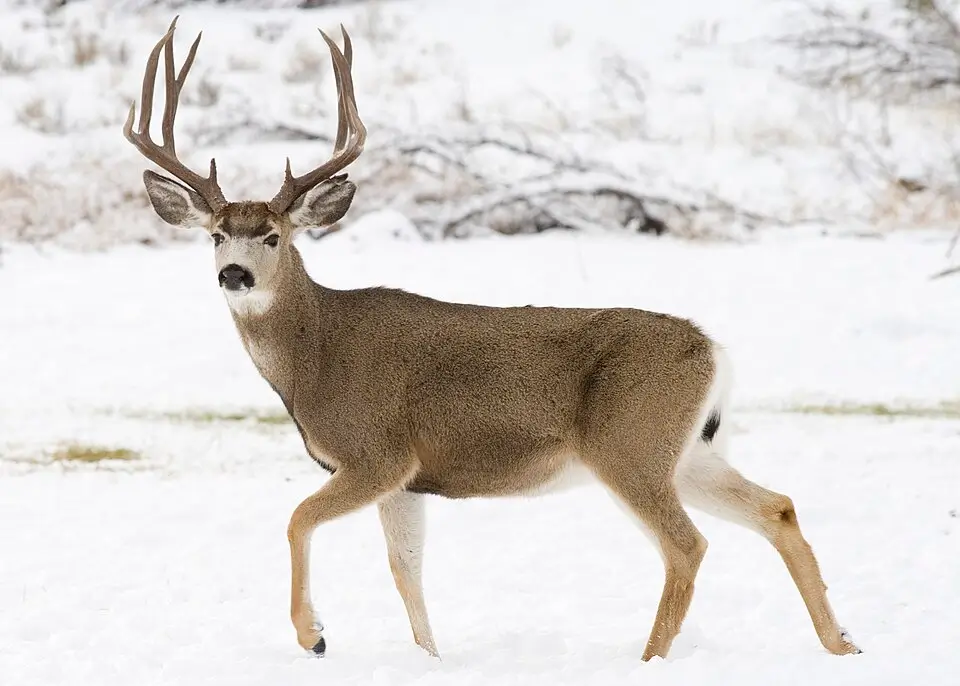
Few animals embody the spirit of the American West quite like the mule deer. With its oversized, mule-like ears constantly pivoting to catch the faintest sound, its distinctive bounding gait, and its impressive antlers silhouetted against a mountain sunset, the mule deer (Odocoileus hemionus) stands as one of North America's most recognized and beloved big game animals. Whether you are a wildlife enthusiast scanning a canyon rim with binoculars, a photographer hoping to capture the perfect shot, or a hunter pursuing a mature buck through rugged backcountry terrain, the mule deer offers an experience that is deeply woven into the fabric of outdoor life across the western United States, Canada, and beyond.
The mule deer has captivated naturalists, hunters, and conservationists for generations. Its adaptability across a stunning variety of landscapes — from scorching desert floors to alpine meadows dusted with early autumn snow — speaks to the remarkable resilience of this species. Understanding the biology, behavior, and ecology of the mule deer not only deepens our appreciation for this magnificent animal but also informs the stewardship practices that ensure healthy populations for generations to come.
Biological Traits
The mule deer, Odocoileus hemionus, belongs to the family Cervidae — the deer family — and is closely related to the white-tailed deer (Odocoileus virginianus), with which it shares the same genus. The species name hemionus is derived from the Greek word for "half mule," a direct reference to the animal's most immediately recognizable feature: its large, prominent ears. These ears, which can measure roughly half the length of the animal's head, are not merely decorative. They function as highly sensitive acoustic instruments, capable of rotating independently to detect predators and other deer from considerable distances.
One of the most distinctive behavioral characteristics of mule deer is their unique form of locomotion known as "stotting" or "pronking." Rather than sprinting in the fluid, continuous stride typical of white-tailed deer, mule deer bound with all four feet leaving and striking the ground simultaneously. This stiff-legged, pogo-like gait allows them to navigate steep, rocky terrain with remarkable agility and is thought to serve as a predator-avoidance strategy, signaling fitness and making it difficult for predators to predict their movement direction.
Mule deer are sexually dimorphic, meaning males (bucks) and females (does) differ significantly in size and appearance. Bucks are substantially larger than does and grow antlers annually, with each set typically larger and more complex than the last as the animal matures. Unlike white-tailed deer, whose antlers branch from a single main beam, mule deer antlers are bifurcated — meaning they fork, or split, repeatedly into roughly equal tines rather than branching from a single main beam. This branching pattern is one of the surest ways to distinguish a mule deer buck from a white-tailed deer buck in the field.
Mule deer are generally tan to grayish-brown in coat color, with the shade varying by season and subspecies. Their rumps feature a characteristic white patch, and their tails — small and rope-like with a black tip — contrast noticeably with the large, white, flag-like tail of the white-tailed deer. This black-tipped tail has given rise to one of the mule deer's common nicknames: the "blacktail," though this term is more precisely applied to the Columbian black-tailed deer and Sitka black-tailed deer, which are recognized subspecies of Odocoileus hemionus.
Speaking of subspecies, the mule deer is a diverse species encompassing several recognized subspecies, including the Rocky Mountain mule deer (O. h. hemionus), the desert mule deer (O. h. eremicus), the California mule deer (O. h. californicus), the Columbian black-tailed deer (O. h. columbianus), and the Sitka black-tailed deer (O. h. sitkensis), among others. Each subspecies has adapted to its particular environment, resulting in variation in body size, coat color, and behavior across the species' range.
Like all deer, mule deer are ruminants with a four-chambered stomach that allows them to digest a wide variety of plant material. They are primarily browsers, feeding on shrubs, forbs, grasses, and, in some regions, agricultural crops. Their diet shifts significantly with the seasons, reflecting the availability of forage in their environment. During the spring and summer months, mule deer take advantage of nutrient-rich new growth to build fat reserves that will sustain them through the leaner winter period. Mating season, known as the rut, typically occurs in late autumn, when bucks become highly active and sometimes reckless in their pursuit of does, making this an exciting and dynamic time to observe the species in the wild.
Habitat & Range
The mule deer's range is extensive, spanning much of western North America. The species is found from the coastal regions of British Columbia and Alaska — where the Sitka black-tailed deer subspecies is most commonly encountered — southward through the Rocky Mountain states, the Great Plains, the Great Basin, and into Mexico. Their adaptability is perhaps their greatest ecological asset, allowing them to thrive in environments as dramatically different as the Sonoran Desert and the subalpine forests of the northern Rockies.
In general, mule deer favor open to semi-open terrain with a mix of shrub cover for concealment, foraging areas with diverse plant communities, and access to water. Classic mule deer habitat often includes sagebrush flats, pinyon-juniper woodlands, canyon country, montane forests with open meadows, and river bottomlands. One of the species' most notable behavioral patterns is seasonal migration. In many parts of their range, mule deer undertake impressive migrations between summer and winter ranges, moving to lower elevations as snow accumulates in the mountains and returning to higher ground as spring conditions improve. Some of these migrations can span dozens or even hundreds of miles, representing some of the longest ungulate migrations documented in North America.
Hunting Information
Mule deer hunting is a cherished tradition across the American West and beyond, representing one of the most popular and economically significant forms of big game hunting in North America. For hunters, the pursuit of a mature mule deer buck in rugged backcountry is considered among the most challenging and rewarding experiences available. The wide-open landscapes that mule deer call home often demand physical fitness, navigational skill, and the ability to cover significant distances on foot.
Hunting methods vary by region and terrain but commonly include spot-and-stalk hunting — a technique well-suited to the open country mule deer inhabit — as well as stand hunting near water sources, food plots, or travel corridors. Archery, muzzleloader, and rifle seasons provide hunters with multiple opportunities to pursue the species throughout the autumn months.
It is important to note that hunting regulations for mule deer — including season dates, bag limits, licensing requirements, and legal hunting methods — vary significantly by state, province, and management unit. Prospective hunters should always consult the official wildlife management agency for the jurisdiction in which they plan to hunt before making any plans. Regulations are subject to change annually and are designed to ensure that harvest levels remain sustainable and consistent with sound wildlife management principles. Obtaining the proper licenses and tags, and adhering strictly to local regulations, is both a legal obligation and an ethical responsibility for every hunter.
Conservation
The conservation of mule deer is a subject of ongoing attention and effort among wildlife managers, hunters, conservationists, and researchers. Mule deer populations face a range of challenges, including habitat loss and fragmentation due to development and energy infrastructure, drought and changing vegetation patterns associated with shifting climate conditions, predation pressure, disease, and competition with other ungulates such as elk and livestock in some areas.
Despite these challenges, mule deer remain abundant across much of their historical range, a testament to the effectiveness of science-based wildlife management and the contributions of the hunting community to conservation funding. In the United States, a significant portion of wildlife conservation funding is generated through the Federal Aid in Wildlife Restoration Act (commonly known as the Pittman-Robertson Act), which directs excise taxes on firearms, ammunition, and archery equipment toward wildlife restoration and habitat projects. Hunters and sportsmen's organizations have also been instrumental in advocating for the protection of migration corridors and critical winter range habitats.
Conservation organizations dedicated specifically to mule deer, as well as broader wildlife advocacy groups, work to restore and enhance habitat, support research initiatives, and engage with policymakers to promote land management practices that benefit the species. Public awareness and appreciation of the mule deer — as a cultural icon, a wildlife watching attraction, and a valued game species — play an important role in building the broad public support necessary for effective, long-term conservation.
For anyone who has watched a mule deer buck pause on a ridgeline at dusk, ears swiveling, eyes scanning the valley below, it is easy to understand why this animal inspires such dedication. The mule deer is not merely a game animal or a wildlife statistic — it is a living symbol of wild, open country, and a reminder of what is worth protecting.