The Mallard: North America's Most Recognizable Waterfowl
Introduction to the Mallard
The mallard belongs to the family Anatidae, which encompasses ducks, geese, and swans. Within this family, mallards are classified as dabbling ducks—a group characterized by their feeding behavior of tipping forward in shallow water to reach aquatic vegetation and invertebrates below the surface. Unlike diving ducks that submerge completely, dabbling ducks remain buoyant with their tails pointed skyward as they forage.
What makes the mallard particularly noteworthy is its remarkable adaptability. This species has successfully colonized an extraordinary range of habitats across North America, Europe, Asia, and parts of North Africa. In many regions, mallards represent the most abundant duck species, and their populations have remained relatively stable compared to other waterfowl that have faced more significant conservation challenges.
The mallard's success as a species stems from several factors: its omnivorous diet, tolerance for human presence, ability to nest in varied environments, and strong reproductive capacity. These traits have allowed mallards to flourish even as wetland habitats have diminished in many areas, though they certainly benefit from quality wetland conservation efforts.
Biological Traits and Identification
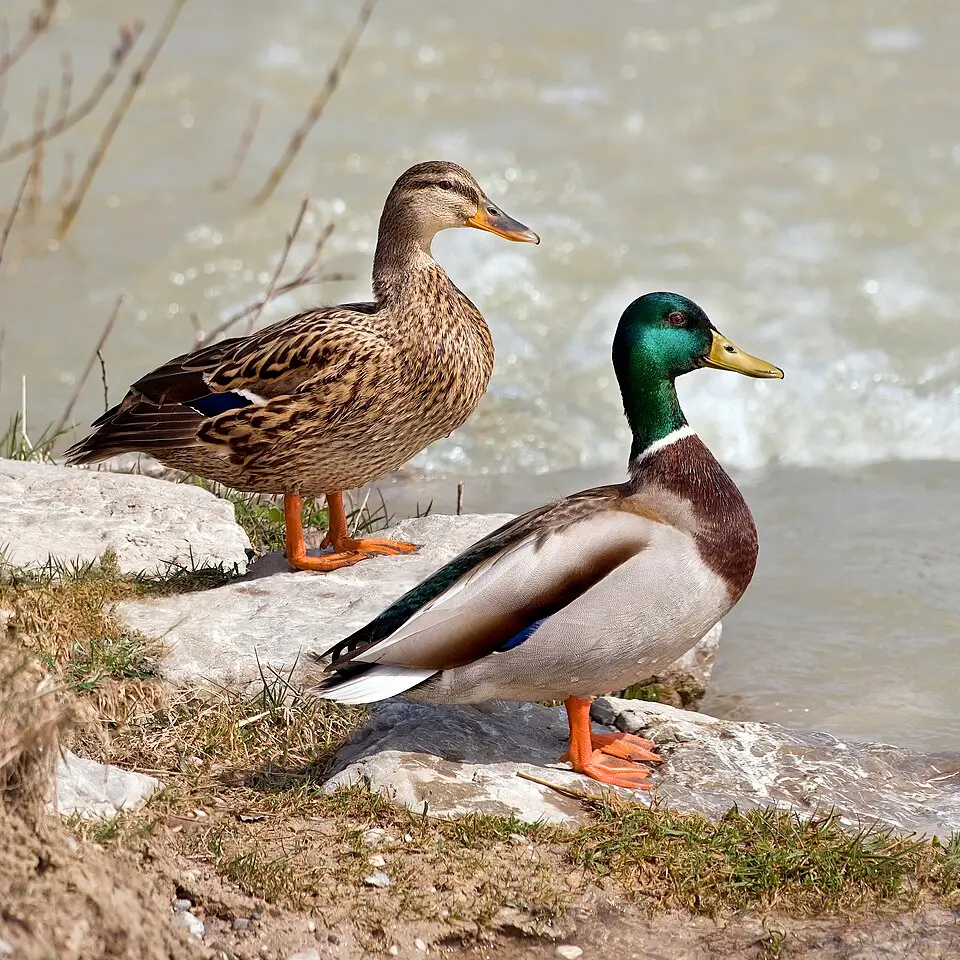
The mallard exhibits pronounced sexual dimorphism, meaning males and females display distinctly different plumage. During the breeding season, drake mallards are unmistakable with their iridescent green heads, bright yellow bills, white neck rings, and chestnut-brown breasts. Their bodies feature grayish sides and backs, with black tail feathers that curl upward in a distinctive manner. This breeding plumage makes drakes one of the most easily identified waterfowl species in North America.
Female mallards, known as hens, display more cryptic coloring—a mottled brown plumage that provides excellent camouflage while nesting. Their bills are orange with dark markings, and they lack the dramatic coloration of males. This subdued appearance serves an important evolutionary purpose, helping hens remain concealed from predators during the vulnerable nesting period.
Both sexes feature a distinctive blue-purple speculum (wing patch) bordered by white, which becomes visible during flight. This field mark can help identify mallards even when other plumage features are obscured. Adult mallards typically measure between 20 to 26 inches in length with wingspans reaching 32 to 39 inches. Body weight varies seasonally and by sex, with drakes generally weighing between 2 to 3.5 pounds and hens slightly lighter at 1.6 to 3 pounds.
Mallards are vocal birds, with hens producing the classic loud "quack" that most people associate with ducks. Drakes, conversely, make softer, raspier sounds and a distinctive whistle. These vocalizations play important roles in pair bonding, territorial defense, and communication within flocks.
The species reaches sexual maturity at approximately one year of age. Pair formation typically begins in fall and winter, with breeding occurring in spring. Hens construct nests on the ground, often near water but sometimes at considerable distances from wetlands. Clutch sizes average 9 to 13 eggs, which the hen incubates for about 28 days. Ducklings are precocial, meaning they hatch covered in down and can leave the nest within hours, following their mother to water where they begin feeding themselves almost immediately.
Habitat & Range
Mallards occupy one of the broadest geographic ranges of any duck species. In North America, they breed across much of Canada and the northern United States, with particularly high densities in the Prairie Pothole Region—a landscape of glacially-formed wetlands spanning parts of Montana, North Dakota, South Dakota, Minnesota, and the Canadian provinces of Alberta, Saskatchewan, and Manitoba. This region serves as the continent's most productive waterfowl breeding habitat.
The species' habitat preferences are remarkably flexible. Mallards utilize freshwater marshes, prairie potholes, river systems, lakes, reservoirs, agricultural areas, and even urban parks. They require wetlands with shallow water for feeding, though the specific characteristics of these wetlands can vary considerably. During breeding season, mallards prefer areas with emergent vegetation that provides nesting cover and protection for broods.
Migration patterns vary across the mallard's range. Northern populations are strongly migratory, traveling substantial distances between breeding and wintering grounds. Birds breeding in Canada and the northern United States migrate southward in fall, with major migration corridors following the Mississippi, Central, and Pacific flyways. Some mallards winter as far south as Mexico and the Gulf Coast states.
However, not all mallards are long-distance migrants. In areas with mild winters and open water, many mallards remain year-round or make only short-distance movements. Urban and suburban populations, in particular, often exhibit reduced migratory behavior, taking advantage of artificial food sources and ice-free water maintained by human activity.
Wintering habitat includes coastal marshes, flooded agricultural fields, rivers, lakes, and reservoirs. Mallards readily adapt to agricultural landscapes, feeding in harvested grain fields where waste corn, rice, wheat, and other crops provide high-energy food sources crucial for surviving winter and preparing for spring migration.
Hunting Information and Traditions
The mallard holds a special place in North American waterfowl hunting traditions. As one of the most abundant and widely distributed duck species, mallards have been a primary quarry for waterfowl hunters for generations. Their large size, excellent table quality, and challenging hunting characteristics make them highly sought after.
Waterfowl hunting in North America operates under a sophisticated regulatory framework designed to ensure sustainable harvest. The U.S. Fish and Wildlife Service, in cooperation with state wildlife agencies and the Canadian Wildlife Service, establishes annual hunting regulations based on population surveys, habitat conditions, and harvest data. This adaptive management approach has proven successful in maintaining healthy waterfowl populations while providing recreational opportunities.
Hunting seasons typically occur during fall and winter months, coinciding with migration periods when birds move from northern breeding areas to southern wintering grounds. Specific season dates, bag limits, and shooting hours vary by state and region, reflecting local population dynamics and management objectives. Hunters must possess appropriate licenses and, in most jurisdictions, a federal duck stamp—a program that has generated billions of dollars for wetland conservation since its inception in 1934.
Traditional mallard hunting methods include pass shooting along flight corridors, hunting over decoy spreads in marshes and flooded fields, and jump shooting along rivers and streams. The use of duck calls to mimic mallard vocalizations represents both an art form and an effective hunting technique. Skilled callers can attract distant birds by replicating the sounds of feeding, greeting, and comeback calls.
Hunting ethics and conservation consciousness are deeply embedded in waterfowl hunting culture. Organizations like Ducks Unlimited, founded by hunters in 1937, have conserved millions of acres of wetland habitat across North America. This conservation work benefits not only hunted species but entire wetland ecosystems and the countless other species that depend on these habitats.
Conservation Status and Management
The mallard is currently classified as a species of Least Concern by the International Union for Conservation of Nature (IUCN), reflecting its large, stable population and extensive range. However, this favorable status should not suggest that mallards face no conservation challenges or that management efforts are unnecessary.
Wetland loss remains the primary long-term threat to mallard populations. Since European settlement of North America, more than half of the continent's original wetlands have been drained, filled, or degraded—primarily for agricultural development and urban expansion. The Prairie Pothole Region, despite its critical importance for waterfowl production, has experienced significant wetland losses, though conservation programs have helped slow this trend.
Climate variability also affects mallard populations, particularly in prairie breeding areas where drought conditions can dramatically reduce available nesting habitat. During drought years, mallard production declines as wetlands dry up and nesting success decreases. Conversely, wet years with abundant water create excellent breeding conditions and result in strong production.
The North American Waterfowl Management Plan, established in 1986, provides a continental framework for waterfowl conservation. This international partnership between the United States, Canada, and Mexico has guided habitat conservation, research, and monitoring efforts for nearly four decades. The plan's population objectives for mallards reflect the species' importance to both ecosystems and human communities.
Agricultural practices significantly influence mallard populations. Conservation programs that incentivize farmers to maintain wetlands, establish buffer strips, and delay haying operations can substantially benefit nesting mallards. The U.S. Department of Agriculture's Conservation Reserve Program has enrolled millions of acres of environmentally sensitive cropland, providing valuable nesting cover for ground-nesting birds including mallards.
Predator management represents another aspect of mallard conservation, particularly in fragmented landscapes where predator populations may be elevated. Nest predation by raccoons, skunks, foxes, and other mammals can significantly reduce nesting success in some areas. Habitat management that provides dense nesting cover helps protect nests from predators.
Looking forward, mallard conservation will require continued commitment to wetland protection and restoration, adaptive harvest management, and addressing emerging challenges such as climate change and land-use intensification. The species' adaptability provides reason for optimism, but sustained conservation efforts remain essential for ensuring that future generations can enjoy these magnificent birds.
Conclusion
The mallard exemplifies successful wildlife management and the resilience of species that can adapt to changing landscapes. From remote wilderness wetlands to city park ponds, these ducks have proven their ability to thrive across diverse environments. For hunters, the mallard represents both a challenging quarry and a connection to conservation traditions that have shaped modern wildlife management. For all who appreciate wildlife, the sight of mallards on the water or the sound of their wings overhead enriches our experience of the natural world.
Understanding and appreciating the mallard—its biology, ecology, and conservation needs—helps ensure that this iconic species will continue to grace our wetlands and skies for generations to come.