The Gray Fox: North America's Versatile and Remarkable Canid
Among the many fascinating members of North America's wildlife community, the gray fox (Urocyon cinereoargenteus) stands out as one of the continent's most distinctive and adaptable canids. Often overshadowed in popular culture by its more famous cousin, the red fox, the gray fox is in many ways a far more remarkable animal. It possesses a unique combination of physical traits, behavioral adaptations, and ecological roles that make it a subject of genuine fascination for wildlife enthusiasts, hunters, and biologists alike.
The gray fox occupies a special place in North American natural history. It is one of the oldest members of the dog family found on the continent, belonging to a lineage that has remained relatively unchanged for millions of years. Unlike most other canids, the gray fox has retained an extraordinary ability that sets it apart from virtually every other member of the dog family in the world — it can climb trees. This single trait, combined with its wide geographic distribution and highly adaptable lifestyle, makes the gray fox one of the most interesting and resilient wild animals on the continent.
Whether you are a hunter pursuing fox in the field, a wildlife photographer hoping to capture a glimpse of this elusive creature, or simply a nature lover with a curiosity about the animals that share our landscapes, the gray fox has much to offer. Understanding this animal — its biology, behavior, habitat preferences, and role in the broader ecosystem — enriches our appreciation of North America's natural world.
Biological Traits
The gray fox (Urocyon cinereoargenteus) belongs to the family Canidae and is the only member of the genus Urocyon commonly found across the continental United States and beyond. The genus name Urocyon is derived from the Greek words for "tailed dog," a reference to the animal's notably bushy tail, while the species name cinereoargenteus translates roughly to "ashen silver," a fitting description of its coat.
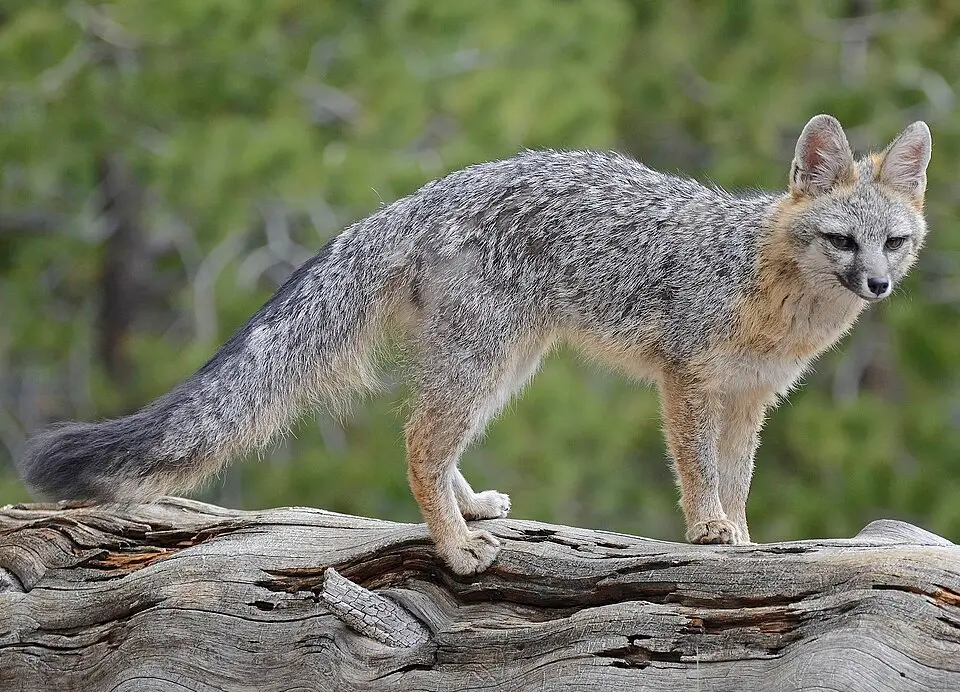
In terms of physical appearance, the gray fox is a medium-sized canid, generally smaller and more compact than a coyote but similar in size to the red fox. Adults typically display a grizzled gray coat along the back and sides, the result of individual hairs that are banded with gray and black, giving the animal its characteristic salt-and-pepper appearance. The sides of the neck, chest, and legs often display warm reddish-brown or tawny coloring, which can sometimes cause casual observers to mistake gray foxes for red foxes at a distance. The belly is typically whitish, and the face is marked with distinctive dark streaking that runs along the muzzle and cheeks. The bushy tail is a particularly notable feature, displaying a prominent black stripe running along its dorsal surface and ending in a black tip — a reliable field identification mark that distinguishes the gray fox from the red fox, which has a white-tipped tail.
One of the most celebrated and scientifically noteworthy traits of the gray fox is its ability to climb trees. Unlike virtually all other members of the family Canidae, the gray fox possesses semi-retractable claws and rotating forearms that allow it to grip and ascend tree trunks with impressive agility. This adaptation allows the animal to escape predators, access food sources such as fruits and bird nests high in the canopy, and even rest or den in elevated locations. Observers have reported gray foxes climbing to considerable heights in trees, a behavior that remains surprising and delightful even to experienced naturalists.
The gray fox is an omnivore with a highly varied diet. It feeds on small mammals such as rabbits, cottontails, mice, and voles, but it also readily consumes birds, insects, carrion, fruits, berries, corn, and other plant material. This dietary flexibility is a key component of the species' remarkable adaptability and allows it to thrive across a wide range of habitats and seasonal conditions. During autumn and winter, fruits and mast crops such as acorns can form a significant portion of the diet, demonstrating the species' ability to shift its feeding strategy as prey availability changes.
Gray foxes are generally nocturnal and crepuscular, meaning they are most active during the hours around dawn and dusk and through the night. They are typically solitary animals outside of the breeding season, though mated pairs may remain loosely associated through the year. Breeding occurs in late winter, generally between January and March in most parts of the range. After a gestation period of approximately 53 days, the vixen (female) gives birth to a litter of pups, commonly ranging from two to seven in number. Pups are born blind and helpless and develop rapidly over the summer months, typically dispersing by autumn to establish their own territories.
Communication in gray foxes involves a variety of vocalizations, scent markings, and body postures. Their vocalizations include barks, yips, and a distinctive raspy scream or bark that can startle those unfamiliar with it when heard at night in woodland settings.
Habitat & Range
The gray fox boasts one of the broadest geographic distributions of any North American canid. Its range extends from southern Canada through the continental United States, Mexico, Central America, and into the northern portions of South America. This vast range reflects the species' considerable ecological adaptability.
Within this range, gray foxes show a strong preference for mixed and deciduous woodland habitats, forest edges, and brushy areas. Unlike the red fox, which tends to favor open fields, farmland, and suburban edges, the gray fox is much more closely tied to forested environments. Thickets, brushy draws, rocky outcrops, and woodland corridors all provide ideal habitat for this secretive canid. The species' ability to climb trees makes it particularly well-suited to forested terrain where aerial escape routes and elevated resting sites are available.
Gray foxes are also found in chaparral and scrubland environments in western North America, where dense brush provides the cover they require. In the southeastern United States, they inhabit swampy woodlands and pine-hardwood mixes. Throughout their range, proximity to water is often a common feature of preferred habitat, as riparian corridors support the diverse prey base upon which gray foxes depend.
Territories vary in size depending on habitat quality and prey availability but generally range from a few hundred to several thousand acres. Gray foxes are known to use dens for raising pups, often selecting hollow logs, rock crevices, brush piles, or underground burrows as denning sites. Their tendency to use natural cover extensively makes them less visible than red foxes in open country, contributing to their somewhat secretive reputation.
Hunting Information
The gray fox has a long tradition as a quarry species across much of North America, valued both for its pelt and as a challenging and exciting target for predator hunters. Fox hunting and calling, whether with electronic calls or mouth-blown predator calls, has a dedicated following among hunters who appreciate the skill and fieldcraft required to consistently bring gray foxes within range.
Gray foxes respond well to distress calls mimicking injured rabbits or rodents, as well as to prey bird sounds. Their tendency to hang up at the edge of cover rather than charging into the open — a behavior sometimes described as "hanging the brush" — makes calling gray foxes a particularly rewarding challenge that rewards patience and careful setup.
Because gray foxes are so closely tied to wooded terrain, successful hunting strategies often involve setting up near brushy draws, forest edges, creek bottoms, and other transitional cover zones. Still-hunting and walking creek drainages at dawn or dusk can also produce encounters with gray foxes during active periods.
It is essential for hunters to be thoroughly familiar with the regulations governing gray fox hunting in their specific state or jurisdiction. Seasons, licensing requirements, bag limits, and legal methods of take vary significantly from state to state and may change from year to year. Hunters in Alaska and all other states should consult their respective state wildlife agency directly for the most current and accurate regulatory information before pursuing gray fox. Responsible hunters always prioritize compliance with all applicable laws and regulations.
Conservation
The gray fox is currently classified by the International Union for Conservation of Nature (IUCN) as a species of Least Concern, reflecting its broad distribution, adaptability, and generally stable populations across much of its range. The species has demonstrated a remarkable ability to persist in fragmented landscapes and has shown some capacity to adapt to changing land-use patterns, although it remains most abundant in areas with adequate forest cover.
Habitat loss and fragmentation represent the most significant long-term threats to gray fox populations in many parts of their range. As forests are cleared for agricultural and urban development, the wooded corridors and brushy habitat that gray foxes depend upon are reduced, potentially limiting population connectivity and long-term resilience. Maintaining forested landscapes, protecting riparian corridors, and managing land with an eye toward habitat diversity all benefit gray foxes and the broader communities of wildlife that share their habitat.
Predator management and regulated hunting, when conducted responsibly and in accordance with scientifically informed regulations, play an important role in maintaining healthy and balanced wildlife populations. State wildlife agencies across the gray fox's range monitor populations and adjust seasons and regulations accordingly, ensuring that hunting remains sustainable over the long term.
The gray fox also plays a meaningful ecological role as a mid-level predator, helping to regulate populations of small mammals and contributing to seed dispersal through its consumption of fruits and berries. Recognizing and appreciating this ecological contribution adds another dimension to our understanding of and respect for this remarkable animal.
Conclusion
The gray fox is a truly exceptional North American canid — ancient in lineage, remarkably adaptable, and unique among the world's dog family members in its ability to take to the trees. From its striking grizzled coat and tawny flanks to its secretive, forest-dwelling habits, the gray fox rewards careful observation and study. Whether encountered in the wild, pursued in the field, or simply admired from afar, Urocyon cinereoargenteus represents the quiet resilience and diversity of North America's wildlife heritage.