Fox Squirrel (Sciurus niger): A Complete Guide to North America's Largest Tree Squirrel
Few creatures embody the spirit of the eastern and central North American woodlands quite like the fox squirrel. Bold, curious, and unmistakably large, the fox squirrel (Sciurus niger) has long captured the attention of naturalists, wildlife enthusiasts, and hunters alike. Whether spotted bounding across a sun-dappled forest floor or perched high in the canopy of an old oak tree, this remarkable rodent is a fixture of the American outdoor experience.
The fox squirrel holds the distinction of being the largest tree squirrel native to North America. Its impressive size, striking color variations, and adaptable nature have allowed it to thrive across a broad swath of the continent, from the pine forests of the Southeast to the hardwood groves of the Midwest and Great Plains. Despite facing localized pressures in some parts of its range, the fox squirrel remains a vibrant and fascinating component of North American wildlife.
For hunters, the fox squirrel represents a rewarding small-game quarry that demands patience, woodsmanship, and a deep appreciation for the natural world. For wildlife watchers, it offers endless entertainment and an accessible window into the rhythms of forest life. This guide takes a thorough look at the fox squirrel — its biology, habitat, behavior, hunting traditions, and conservation status — to help readers better understand and appreciate this iconic North American species.
Biological Traits
The fox squirrel, Sciurus niger, belongs to the family Sciuridae, the large and diverse family of squirrels that includes tree squirrels, ground squirrels, chipmunks, marmots, and flying squirrels. Within this family, the fox squirrel is classified in the genus Sciurus, alongside other familiar tree squirrels such as the eastern gray squirrel (Sciurus carolinensis) and the western gray squirrel (Sciurus griseus).
One of the most immediately striking characteristics of the fox squirrel is its size. Adults typically range from approximately 17 to 27 inches in total length, including the tail, and can weigh anywhere from 1.5 to 2.5 pounds, though larger individuals have been documented. This makes the fox squirrel noticeably bigger than its close relative, the eastern gray squirrel, which rarely exceeds 1.5 pounds.
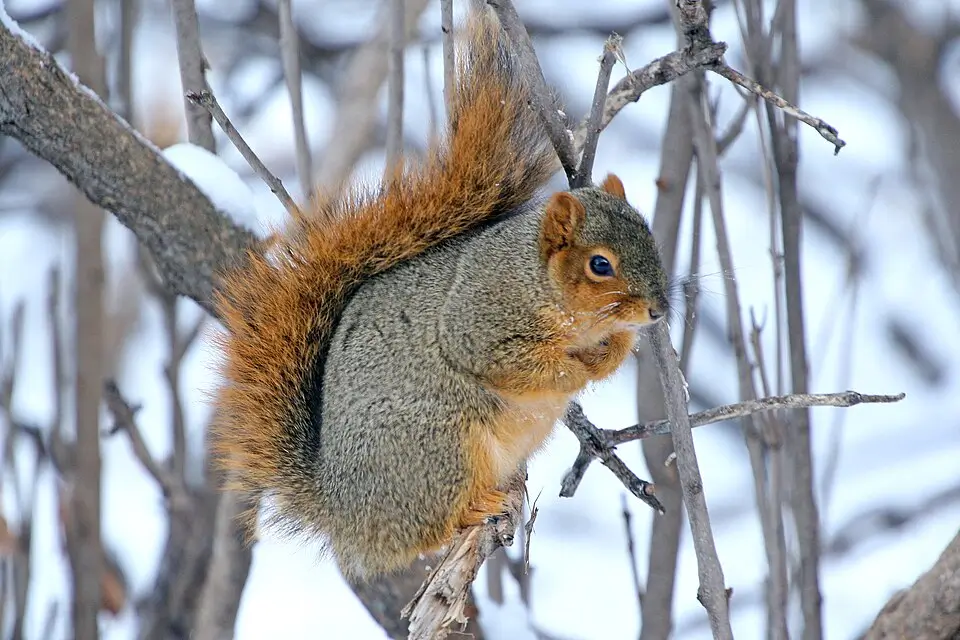
Perhaps even more remarkable than its size is the fox squirrel's extraordinary range of coat colors. Unlike many mammal species that display relatively uniform coloration across their range, fox squirrels show dramatic variation depending on geography. In the Midwest and Great Plains, individuals are commonly a rich, rusty-orange or tawny color along the belly, with a grayish-brown back — a coloration reminiscent of a red fox, which is generally believed to be the origin of the common name. In the southeastern United States, melanistic (very dark or nearly black) individuals are common, while in some coastal plain populations, a striking black-and-white pattern, including a distinctive white nose and ears, is characteristic. This remarkable polymorphism makes the fox squirrel one of the most visually variable mammals in North America.
The fox squirrel's bushy, well-furred tail serves multiple purposes. It acts as a counterbalance during the animal's agile movements through the tree canopy, functions as a communication device through tail-flagging displays, and even serves as a form of insulation during cold weather, when the squirrel may wrap the tail around its body for warmth.
Like all members of the squirrel family, the fox squirrel is a scatter-hoarder, meaning it buries individual food caches in numerous locations rather than storing all food in a single location. This behavior is ecologically significant: the squirrels do not always recover every cached item, and forgotten seeds and nuts can germinate, making fox squirrels important contributors to forest regeneration. Acorns, hickory nuts, and other hard mast species benefit greatly from this inadvertent planting behavior.
Fox squirrels are primarily diurnal — active during daylight hours — with peak activity typically occurring in the morning and late afternoon. They are generally less social than gray squirrels and tend to have larger home ranges, which they patrol in a deliberate, somewhat unhurried manner. This behavioral tendency toward slower, more methodical movement is one of the traits that distinguishes fox squirrels from the more frenetic gray squirrels that share much of their range.
Breeding typically occurs twice per year, with litters produced in late winter or early spring and again in midsummer. Litter sizes generally range from two to four young. The young are born altricial — blind, hairless, and entirely dependent on the mother — and develop relatively slowly compared to some other small mammals. Young fox squirrels typically remain with the mother for several months before dispersing to establish their own territories.
Fox squirrels construct large, leafy nests called dreys in the upper branches of trees, as well as den cavities in hollow trunks and large limbs. Den cavities are especially important during winter months and for raising young, offering superior insulation and protection from predators compared to open leaf nests. Common predators of the fox squirrel include red-tailed hawks, great horned owls, red foxes, coyotes, and bobcats, as well as domestic cats and dogs in suburban and agricultural settings.
Habitat & Range
The fox squirrel has one of the broadest distributions of any tree squirrel in North America. Its range extends across much of the eastern and central United States, from the Atlantic coast westward through the Great Plains to portions of the Rocky Mountain foothills in states such as Colorado and Wyoming, and from the Gulf Coast northward into the Great Lakes region and southern Canada.
Despite this broad range, the fox squirrel shows clear habitat preferences that reflect its evolutionary history and dietary needs. Open, park-like forests with a relatively sparse understory are among the species' preferred habitats. In the Midwest, fox squirrels are strongly associated with oak-hickory woodlands, forest edges, hedgerows, and woodlots — often the smaller, more isolated patches of trees that border agricultural fields. In the Southeast, longleaf pine forests, mixed pine-hardwood stands, and bottomland hardwood forests provide important habitat.
Unlike the eastern gray squirrel, which tends to favor dense, closed-canopy forest, the fox squirrel is something of an edge specialist. It thrives in landscapes where open areas and woodland patches are interspersed, allowing the squirrel to forage on the ground while retaining access to trees for escape cover, nesting, and food. This adaptability has allowed fox squirrels to persist — and in some cases even thrive — in agricultural landscapes, suburban green spaces, and city parks where large, mature trees are present.
The fox squirrel's diet is broad and opportunistic, reflecting the diverse plant communities it inhabits. Hard mast — including acorns from various oak species and nuts from hickory, walnut, and pecan trees — forms the dietary backbone, especially in autumn and winter when the squirrels are actively caching food. During spring and summer, fox squirrels readily consume fungi, berries, fruits, agricultural crops such as corn, insects, bird eggs, and even carrion on occasion, demonstrating a dietary flexibility that contributes to the species' resilience.
Hunting Information
The fox squirrel occupies a cherished place in North American hunting tradition. Squirrel hunting is widely regarded as one of the oldest and most accessible forms of small-game hunting on the continent, and the fox squirrel — with its impressive size, challenging behavior, and excellent table quality — has always been a prized quarry.
Hunting fox squirrels demands a combination of patience and woodsmanship. Because fox squirrels tend to move more slowly and deliberately than gray squirrels, hunters who sit quietly near productive mast trees, wood edges, or travel corridors often find success simply by waiting and watching. Still-hunting — slowly and quietly working through suitable habitat while scanning for movement, shapes, and the telltale sound of feeding squirrels — is another effective and deeply satisfying approach.
Early morning hunts, timed to coincide with the fox squirrel's peak activity period, are particularly productive. Hunters who learn to identify productive habitat — large, mast-bearing oaks and hickories with nearby den trees — greatly improve their odds. Sign such as cut nut hulls, digging sites, and scratch marks on bark can help pinpoint active areas.
Firearms and archery equipment are both used for fox squirrel hunting. Small-bore rifles in .22 caliber are popular for their precision, while 20-gauge and 12-gauge shotguns with small shot offer effective options in dense cover where shots may be quick and close. For hunters seeking a traditional challenge, recurve and longbow equipment adds another dimension to the pursuit.
Fox squirrel seasons, bag limits, and licensing requirements vary by state and are managed by individual state wildlife agencies. Hunters are always encouraged to consult the current regulations for their specific state or region before heading afield. As no specific regulatory information for Alaska was available from official sources at the time of this writing, readers in that region should contact the Alaska Department of Fish and Game directly for the most current guidance.
The culinary qualities of the fox squirrel are worth noting. The meat is lean, mildly flavored, and remarkably versatile in the kitchen. Traditional preparations include squirrel stew, Brunswick stew, and pan-fried squirrel with gravy — dishes with deep roots in American frontier and Southern cooking that continue to be enjoyed by hunters and their families today.
Conservation
The fox squirrel's conservation status varies across its range. At the species level, Sciurus niger is not currently considered threatened or endangered and maintains healthy populations across much of its core range in the Midwest and Great Plains. The species' adaptability to fragmented, edge-heavy landscapes has helped it maintain stable numbers in many agricultural regions.
However, certain subspecies of the fox squirrel have faced more significant challenges. The Delmarva fox squirrel (Sciurus niger cinereus), native to the Delmarva Peninsula of the eastern United States, was listed under the U.S. Endangered Species Act for several decades before being delisted following successful recovery efforts — a notable conservation success story. The Big Cypress fox squirrel (Sciurus niger avicennia) of southern Florida and the Sherman's fox squirrel (Sciurus niger shermani) of Florida are among the subspecies that continue to receive attention from wildlife managers due to habitat loss and fragmentation concerns.
Habitat management plays a central role in supporting fox squirrel populations. The maintenance of open, parklike woodlands — including the use of prescribed fire in longleaf pine ecosystems — benefits the species by creating the sparse, well-structured forest conditions it prefers. Conservation of mature mast-producing trees, maintenance of dead snags and hollow trees for denning, and the preservation of woodland corridors connecting isolated habitat patches are all recognized management priorities.
Regulated hunting, conducted within the bounds of state wildlife management programs, plays a constructive role in fox squirrel conservation. Hunter-generated licensing revenue funds state wildlife agencies that conduct population monitoring, habitat management, and research programs that benefit squirrels and countless other species. The hunting community's investment in the land and its creatures has historically been among the most powerful forces for wildlife conservation in North America.