The American Elk: A Majestic Giant of the Wild
Few animals embody the spirit of the North American wilderness quite like the elk. Massive, regal, and commanding in presence, the elk (Cervus canadensis) is one of the largest members of the deer family (Cervidae) and one of the most iconic big game animals on the continent. Known by many names — including wapiti, a Shawnee and Cree word meaning "white rump" — the elk has captured the imagination of naturalists, wildlife enthusiasts, and hunters alike for centuries.
Whether you encounter one standing silently at the edge of a misty meadow at dawn, or hear the haunting, bugling call of a bull echoing through a mountain valley during the autumn rut, the elk is an animal that leaves a lasting impression. It is a creature of power, grace, and remarkable adaptability — one that has survived ice ages, westward expansion, and dramatic habitat changes to remain a thriving symbol of wild America.
This article explores the biology, habitat, hunting tradition, and conservation story of this extraordinary animal.
Biological Traits
The elk, Cervus canadensis, belongs to the order Artiodactyla and is closely related to other members of the deer family, including moose (Alces alces), white-tailed deer (Odocoileus virginianus), and caribou (Rangifer tarandus). It is one of the largest land mammals in North America, with bulls (males) typically weighing between 700 and 1,100 pounds and standing around 4 to 5 feet tall at the shoulder. Cows (females) are noticeably smaller, generally weighing between 500 and 600 pounds.
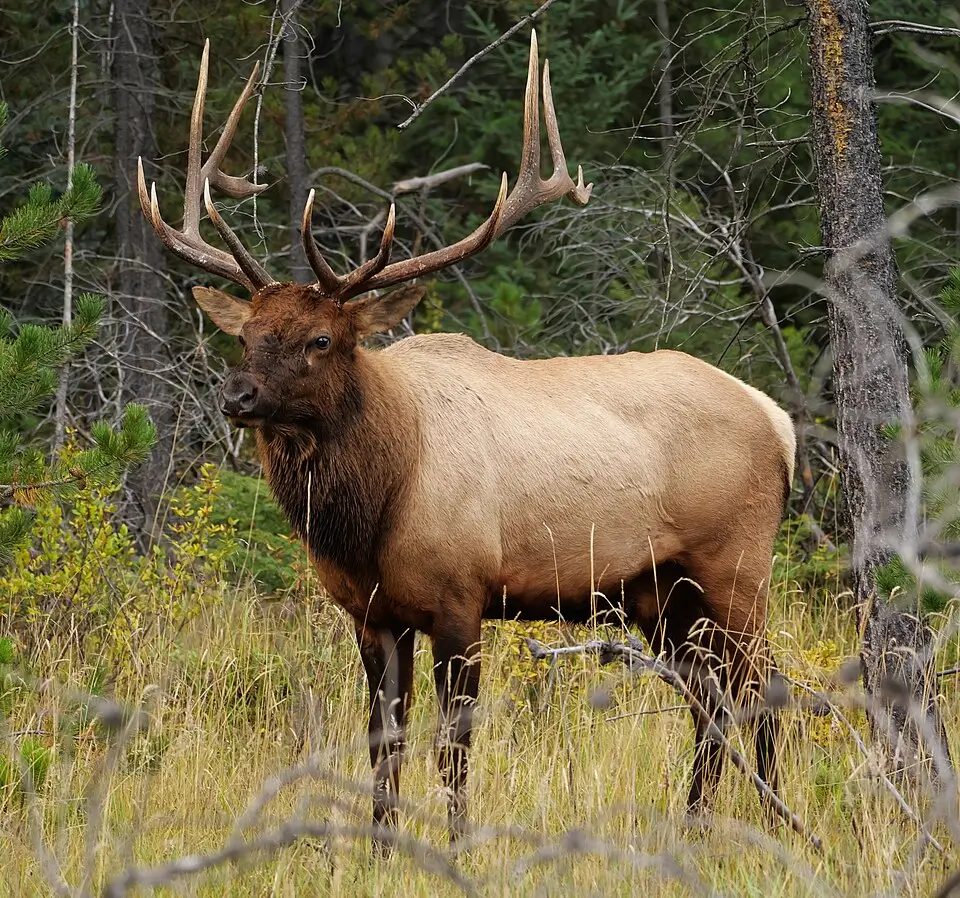
One of the elk's most striking features is the antlers carried by bulls. These incredible bony structures are among the fastest-growing tissues in the animal kingdom, capable of growing as much as an inch per day during peak development. Antlers begin growing in spring, covered in a soft, blood-vessel-rich tissue called velvet, which supplies nutrients to the rapidly growing bone. By late summer, testosterone levels rise, blood flow ceases, and bulls begin to shed the velvet — revealing the hardened, polished antlers used for sparring during the breeding season.
A mature bull's antler rack can span five feet or more in width and weigh upwards of 40 pounds. Antlers are shed each winter, and a new set begins growing almost immediately, typically becoming larger and more complex with each successive year until the animal reaches its prime.
The elk's coat changes seasonally. In summer, elk display a reddish-brown coat that transitions to a thicker, darker brown in winter, providing insulation against cold temperatures. The characteristic pale yellow or cream-colored rump patch — the feature that inspired the Shawnee name "wapiti" — is a prominent identifying feature year-round.
Elk are highly social animals. Cows, calves, and young bulls typically live in herds, which can number in the dozens or even hundreds. Mature bulls tend to be more solitary outside of the breeding season, also known as the rut. The rut typically occurs in September and October, during which bulls compete aggressively for breeding rights. This competition involves bugling — a complex, high-pitched vocalization used to attract cows and challenge rival bulls — as well as antler sparring and display behavior. The bugle of a bull elk is one of the most evocative sounds in the natural world.
Calves are born in late spring, typically between May and June, after a gestation period of approximately 240 to 262 days. Newborn calves are spotted, offering camouflage in dappled forest light, and are capable of standing within hours of birth. Cows typically give birth to a single calf, though twins are occasionally recorded.
Elk are grazers and browsers, feeding on grasses, sedges, forbs, and shrubs depending on the season. In summer, they tend to graze on lush grasses and forbs in open meadows, while in winter they shift to browsing on shrubs, tree bark, and dried grasses when snow covers the ground.
Habitat & Range
Elk are remarkably adaptable and can thrive in a wide variety of ecosystems. Historically, elk ranged across much of North America, from the Atlantic coast to the Pacific and from northern Canada down into parts of Mexico. Today, elk populations are concentrated primarily in the western United States and Canada, with notable populations in states such as Colorado, Wyoming, Montana, Idaho, Oregon, Washington, and New Mexico. Reintroduction efforts have also established growing herds in parts of the eastern United States, including Kentucky, Tennessee, Pennsylvania, and Michigan.
Elk favor habitats that offer a mix of open meadows for grazing and dense forested areas for cover and shelter. Mountain meadows, river valleys, mixed conifer forests, and subalpine zones are all prime elk territory. They are seasonally migratory in many areas, moving to higher elevations in summer to escape heat and insects and descending to lower valleys in winter to avoid deep snow and find accessible forage.
In Alaska specifically, elk are not native to most of the state, though Roosevelt elk (Cervus canadensis roosevelti) — a recognized subspecies — were successfully introduced to Afognak Island and Raspberry Island in the early 20th century. These herds have established themselves over the decades and represent a unique hunting opportunity in the region.
Several subspecies of elk are recognized across North America, including the Rocky Mountain elk (Cervus canadensis nelsoni), the Roosevelt elk (Cervus canadensis roosevelti) of the Pacific Northwest, the Manitoban elk (Cervus canadensis manitobensis), and the Tule elk (Cervus canadensis nannodes) of California.
Hunting Information
Elk hunting is a deeply rooted tradition in North American outdoor culture. For generations, hunters have pursued elk not only for the challenge of the hunt, but for the exceptional quality of the meat and the remarkable experience of being immersed in wild, remote landscapes. Elk meat is lean, nutritious, and widely regarded as some of the finest wild game available.
Elk hunting is demanding. It typically involves navigating rugged mountain terrain, packing gear into backcountry wilderness areas, and developing a thorough understanding of elk behavior, movement patterns, and habitat. Success often requires patience, physical fitness, and sharp woodsmanship skills.
Common methods for hunting elk include archery, muzzleloader, and rifle seasons, which are typically staggered throughout the fall months in most states to align with different phases of the rut and to manage harvest pressure. Calling — mimicking bull bugles and cow mews using mouth calls, diaphragm calls, or external reed calls — is a popular and exciting technique, particularly during the peak rut in September.
Still hunting, spot-and-stalk, and hunting from blinds near water sources or wallows are also effective methods. Many hunters in western states and Canada opt for guided backcountry pack-in hunts, venturing deep into wilderness areas by horseback to access remote elk populations.
Because elk are large-bodied animals, field dressing, quartering, and packing out meat is a significant undertaking, often requiring multiple trips and careful attention to meat care in warm early-season temperatures.
Important Note: Specific season dates, licensing requirements, and bag limits vary significantly by state and management unit. Hunters interested in pursuing elk in Alaska or any other state should consult directly with their respective state wildlife management agency for the most current and accurate regulations before planning a hunt.
Conservation
The elk's conservation story is one of the great wildlife recovery successes in North American history. By the late 19th and early 20th centuries, unregulated market hunting and rapid habitat loss had reduced elk populations to dangerously low numbers across much of their historic range. Populations that once numbered in the millions had been reduced to isolated remnants.
The establishment of national parks, wildlife refuges, and regulated hunting seasons played a crucial role in reversing this decline. Organizations such as the Rocky Mountain Elk Foundation (RMEF), founded in 1984, have since protected or enhanced millions of acres of elk habitat through conservation easements, land acquisitions, and habitat restoration projects. Today, elk populations across North America number in the hundreds of thousands and continue to grow and expand thanks to ongoing conservation and wildlife management efforts.
Hunters have been instrumental partners in elk conservation, as license fees and excise taxes on sporting equipment — collected under the Federal Aid in Wildlife Restoration Act (Pittman-Robertson Act) of 1937 — fund state wildlife agencies and habitat programs across the country.
Reintroduction programs have successfully returned elk to portions of their eastern range, with populations now thriving in states where elk had been absent for over a century. These programs stand as a testament to what science-based wildlife management and conservation partnership can achieve.
Elk face ongoing challenges from habitat fragmentation, disease (notably Chronic Wasting Disease, or CWD), predator-prey dynamics, and the effects of climate change on seasonal forage availability. Wildlife managers continue to monitor populations closely and adapt management strategies to ensure healthy, sustainable herds for future generations.
Conclusion
The elk is far more than a game animal — it is a living symbol of wild North America, a keystone species that shapes ecosystems and inspires all who are fortunate enough to encounter it. From its thunderous bugle echoing across a mountain valley to its quiet, steady presence in winter meadows, Cervus canadensis remains one of the continent's most treasured wildlife species. Through thoughtful conservation, responsible hunting, and continued habitat stewardship, the elk will continue to roam North American wildlands for centuries to come.