Eastern Gray Squirrel: A Complete Guide to Sciurus carolinensis
Few wild animals are as familiar to North Americans as the Eastern gray squirrel (Sciurus carolinensis). Whether darting across a backyard fence, spiraling up the bark of a towering oak, or burying acorns in a city park, this small but remarkably adaptable rodent has carved out a place in ecosystems ranging from dense hardwood forests to suburban neighborhoods. The Eastern gray squirrel is one of the most widely recognized and frequently observed wildlife species on the continent, and for good reason — it is abundant, behaviorally complex, and ecologically important in ways that many casual observers never fully appreciate.
Beyond its role as a backyard visitor, Sciurus carolinensis is also a celebrated small game animal with a long and storied tradition in American hunting culture. Long before deer and turkey dominated the hunting conversation, squirrel hunting was considered a fundamental outdoor skill and a rite of passage for generations of hunters. Today, squirrel hunting continues to thrive as a beloved tradition that introduces new hunters to the field, offers seasoned sportsmen a challenging and rewarding pursuit, and puts high-quality, wild-harvested meat on the table. Understanding the Eastern gray squirrel — its biology, behavior, habitat preferences, and the ethical considerations surrounding its pursuit — is a rewarding endeavor for wildlife enthusiasts and hunters alike.
Biological Traits
The Eastern gray squirrel belongs to the family Sciuridae, the large and diverse squirrel family that includes tree squirrels, ground squirrels, chipmunks, and marmots. Within this family, Sciurus carolinensis is a classic tree squirrel — agile, sharp-sensed, and perfectly adapted for life in the forest canopy.
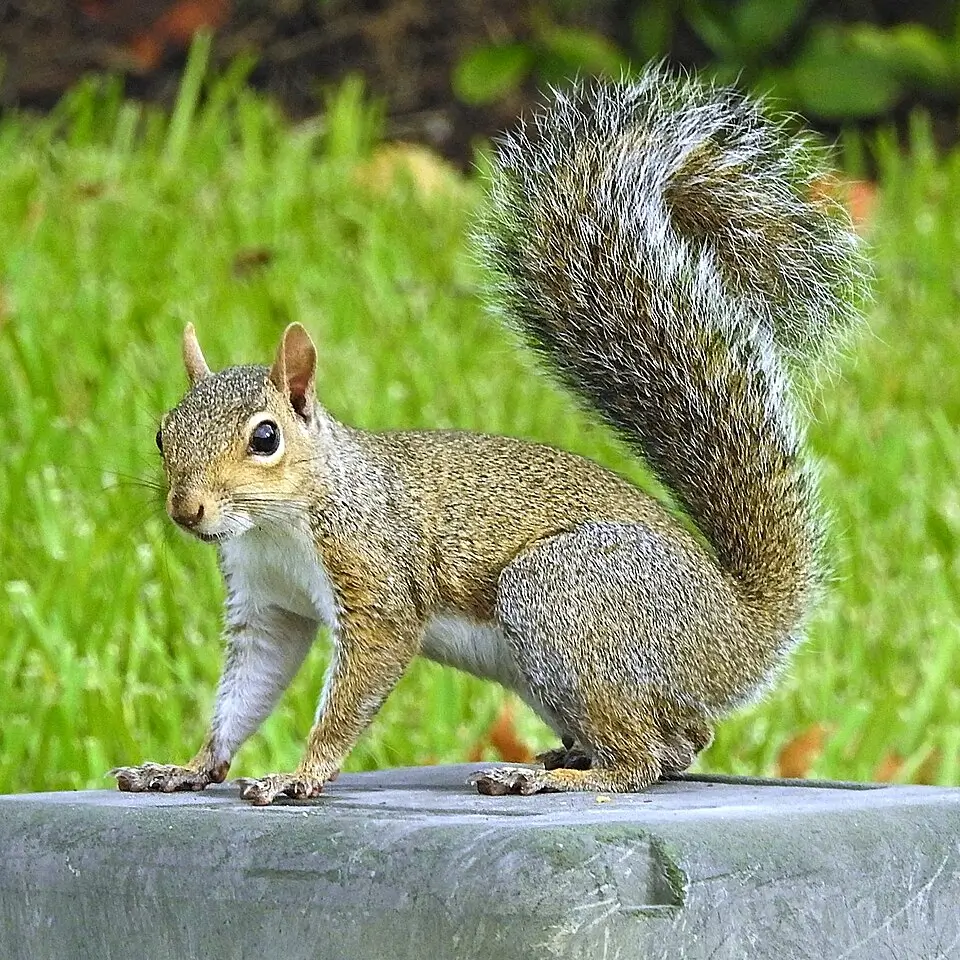
As the common name suggests, the Eastern gray squirrel is primarily gray in coloration, with lighter underparts that often appear white or cream. The tail is large, bushy, and prominently fringed with white-tipped hairs, giving it a distinctly silvery appearance in the right light. Some individuals display reddish or brownish tones mixed into their gray coats, and melanistic (black) color phases are not uncommon in certain populations, particularly in urban areas. Albino individuals, while rare, have also been documented.
This species is a medium-sized tree squirrel. Adults are generally compact and well-muscled, built for rapid movement through branches and along the ground. Their limbs are strong and their claws sharp, allowing them to grip bark with remarkable security. The hind feet are notably large relative to body size, which aids in balance and leaping. The eyes are positioned on the sides of the head, providing a wide field of vision that helps detect approaching predators.
One of the most fascinating aspects of Eastern gray squirrel biology is the species' extraordinary memory and spatial reasoning. Gray squirrels are scatter-hoarders, meaning they bury food caches — primarily nuts and seeds — at numerous individual sites across their home range rather than storing everything in a single location. Research has demonstrated that gray squirrels can remember the locations of thousands of individual caches, retrieving them months later even beneath heavy snow cover. This behavior makes them critical agents of forest regeneration, as a portion of cached seeds are inevitably forgotten and allowed to germinate, effectively planting the next generation of forest trees.
Eastern gray squirrels are diurnal, meaning they are most active during daylight hours, with peak activity typically occurring in the morning and late afternoon. They do not hibernate but may reduce activity during periods of extreme cold, relying on cached food stores to sustain themselves through winter. Females may produce two litters per year under favorable conditions, with young born in leaf nests or tree cavities. The young are altricial at birth — born hairless and with eyes closed — but develop rapidly and are typically independent within a few months.
Communication in gray squirrels involves a rich repertoire of vocalizations and tail movements. The familiar sharp "kuk-kuk-kuk" alarm call is a well-known sound in woodlands and parks alike, serving as a warning to nearby squirrels of potential danger. Tail flagging — the rapid, exaggerated flicking of the tail — often accompanies these vocalizations and appears to serve multiple communicative purposes.
Habitat & Range
The Eastern gray squirrel's native range spans much of the eastern and midwestern United States and extends into southern Canada. As the name implies, the species is primarily associated with the eastern half of the North American continent, though it has been introduced, both intentionally and accidentally, to many areas far beyond its native range, including parts of western North America, the United Kingdom, Ireland, Italy, and South Africa.
Within its native range, Sciurus carolinensis is strongly associated with mature hardwood and mixed hardwood-conifer forests. The species thrives in environments with abundant mast-producing trees — particularly oaks, hickories, beeches, and walnuts — as acorns and hard mast form the backbone of its diet. Forest edges, riparian corridors, and woodlots surrounded by open areas are also productive habitat, as these transitional zones often offer both food diversity and cover.
Perhaps one of the most remarkable aspects of the Eastern gray squirrel's ecology is its ability to adapt to human-modified landscapes. Few wildlife species have transitioned as seamlessly into suburban and urban environments. Mature shade trees in parks and residential neighborhoods provide both food and nesting sites, and the species has demonstrated a notable tolerance for human proximity. This adaptability is one of the primary reasons the Eastern gray squirrel has been so successfully introduced outside its native range.
Regarding Alaska specifically: the Eastern gray squirrel is not a native species to the state of Alaska. Alaska's wildlife is dominated by species adapted to boreal, subarctic, and arctic environments, and the Eastern gray squirrel's natural range does not extend into the far north. Alaska is home to the red squirrel (Tamiasciurus hudsonicus) as its primary native tree squirrel, along with various ground squirrels and other members of the Sciuridae family. Hunters and wildlife enthusiasts in Alaska interested in squirrel hunting should look to local regulations and consult the Alaska Department of Fish and Game regarding applicable species and seasons.
Hunting Information
Squirrel hunting has an enduring place in American outdoor tradition. In many parts of the Eastern gray squirrel's native range, small game seasons for squirrels open in late summer or early fall — often timed to coincide with the beginning of the nut-masting season, when squirrels are most actively foraging and visible to hunters. The pursuit of gray squirrels offers a genuinely challenging and rewarding experience that demands woodsmanship, patience, and marksmanship.
Hunters typically pursue Eastern gray squirrels in mature hardwood timber, focusing on areas with abundant acorn-producing oaks or stands of hickory. Early morning hunts, when squirrels are first emerging to feed, and late afternoon sessions before they retire to their nests, are traditionally the most productive windows. Still hunting — moving slowly and quietly through the woods, pausing frequently to listen and watch — is a classic approach that rewards hunters who have learned to read the forest. Alternatively, hunters may post near known feeding trees and wait for squirrel activity to begin.
Rimfire rifles in .22 caliber are a popular and traditional choice for squirrel hunting, offering the accuracy needed for precise shots at moderate ranges. Small-bore shotguns, particularly in 20-gauge or .410 bore, are also widely used, especially in dense cover where quick shots at moving squirrels are common. Archery hunters occasionally pursue squirrels as well, presenting an added level of challenge.
Because specific season dates, bag limits, and licensing requirements for Eastern gray squirrel hunting vary significantly by state and are subject to change annually, hunters are always encouraged to consult their state's wildlife agency for current, accurate regulations before heading afield. In Alaska, as noted, the Eastern gray squirrel is not native, and hunters should verify local small game regulations with the Alaska Department of Fish and Game directly.
Gray squirrel meat is widely regarded as excellent table fare — mild, lean, and versatile in the kitchen. Traditional preparations include squirrel stew, pan-fried squirrel, and Brunswick stew, a Southern classic with deep roots in squirrel hunting culture. The culinary heritage surrounding squirrel hunting is a meaningful part of the broader tradition that surrounds this small game animal.
Conservation
The Eastern gray squirrel is currently listed as a species of Least Concern by the International Union for Conservation of Nature (IUCN), reflecting its broad range, large and stable population, and high degree of adaptability. In its native range, the species faces no significant conservation threats, and populations remain robust across most of the eastern United States and Canada.
Sustainable hunting of Sciurus carolinensis is broadly recognized as compatible with healthy squirrel populations. The species' relatively high reproductive rate — with the potential for two litters per year and multiple young per litter — means that populations can withstand regulated harvest without long-term population impacts when managed responsibly by wildlife agencies.
Habitat conservation remains important for the long-term health of gray squirrel populations. The preservation and management of mature hardwood forests, with their critical mast-producing trees, benefits not only gray squirrels but a wide range of associated wildlife species. Forest management practices that maintain a diversity of tree species and age classes help ensure a consistent supply of hard mast across years, buffering squirrel populations against the natural boom-and-bust cycles of individual tree species' mast production.
As a keystone species in forest ecology — through their unintentional role as seed dispersers — Eastern gray squirrels contribute meaningfully to forest regeneration and health. Protecting the hardwood forest habitats on which this species depends is ultimately an investment in the broader ecological community.
Conclusion
The Eastern gray squirrel is far more than a familiar backyard visitor. Sciurus carolinensis is an ecologically significant, behaviorally sophisticated, and wonderfully adaptable wild animal that has shaped American forests for millennia and American hunting culture for generations. Whether you encounter one in a city park, watch one harvest acorns in an autumn forest, or pursue one through the timber with a .22 rifle, the Eastern gray squirrel deserves appreciation and respect as one of North America's most successful and engaging wild creatures.