The Brown Bear (Ursus arctos): North America's Most Iconic Wilderness Predator
Few animals capture the imagination of wildlife enthusiasts, hunters, and outdoor adventurers quite like the brown bear. Massive, powerful, and undeniably majestic, the brown bear (Ursus arctos) stands as one of the most recognized large mammals on Earth. Across cultures and continents, it has inspired folklore, commanded respect, and earned its place as a symbol of wild, untamed landscapes. In North America, no place embodies the spirit of brown bear country more completely than Alaska — a vast, rugged state stretching across the northwestern reaches of the continent, where millions of acres of pristine wilderness provide ideal habitat for one of the planet's most impressive omnivores.
Whether observed fishing for salmon along a coastal river, foraging through alpine meadows, or lumbering across a remote tundra plain, the brown bear never fails to inspire awe. For hunters, naturalists, and wildlife photographers alike, an encounter with a wild brown bear is an experience that lingers for a lifetime. Understanding this remarkable animal — its biology, its habits, its range, and its role in the ecosystem — is essential for anyone who ventures into bear country or simply wishes to appreciate one of nature's great success stories.
Biological Traits
The brown bear, Ursus arctos, belongs to the family Ursidae and is one of the largest terrestrial carnivores on Earth, though it is more accurately described as an omnivore given the broad and varied nature of its diet. Brown bears are part of the order Carnivora, but they have evolved to consume an enormously diverse range of foods, from grasses, berries, and roots to fish, insects, and larger mammals.
One of the most striking features of the brown bear is its sheer physical size. Brown bears vary considerably in size depending on their geographic location, the availability of food resources, and the time of year. Coastal populations that have access to rich, calorie-dense food sources — particularly salmon — tend to grow significantly larger than their inland counterparts. Bears living in coastal Alaska and along salmon-bearing rivers are among the largest brown bears in the world, with large males capable of reaching impressive body weights, particularly in the period leading up to winter dormancy.
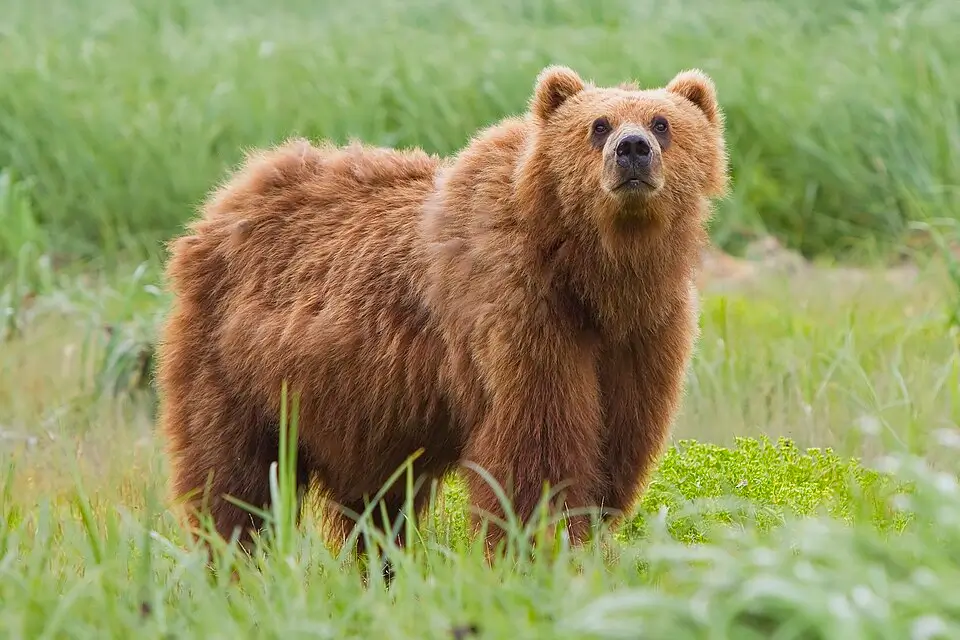
Brown bears are distinguished from other bear species by several physical characteristics. They typically display a prominent muscular hump on their shoulders, which is composed of muscle mass that powers their forelimbs — useful for digging tubers, overturning rocks and logs, and excavating dens. Their claws are long and relatively straight compared to the more curved claws of black bears, making them highly effective tools for digging. Their facial profile tends to be somewhat dished or concave, and their ears are relatively rounded and small in proportion to their large heads.
Coat color in brown bears can vary widely, ranging from pale blonde and cream to deep chocolate brown and almost black. Many individuals display a distinctive grizzled or frosted appearance on their back and shoulders, which has given rise to the common North American name "grizzly bear" — a term typically applied to inland brown bear populations. This variation in coat color is entirely natural and occurs within single populations.
Brown bears are highly intelligent animals with excellent long-term memory. They are known to remember productive foraging areas and return to them seasonally year after year. They possess an acute sense of smell — widely regarded as one of the most sensitive of any land mammal — which they rely on heavily to locate food, detect danger, and communicate with other bears. Their eyesight and hearing are also well-developed, though smell remains their primary sensory tool.
One of the most fascinating biological traits of brown bears is their ability to enter a state of torpor, commonly referred to as hibernation, during the winter months. As autumn approaches, brown bears enter a period of intense feeding known as hyperphagia, during which they consume enormous quantities of food in preparation for winter. During torpor, bears experience a significant drop in metabolic rate, and they survive entirely on fat reserves accumulated during the active season. Remarkably, female bears give birth to cubs during this period of winter dormancy. Cubs are born remarkably small and helpless relative to the size of their mother, and they nurse and grow within the warmth of the den until spring arrival prompts the family to emerge.
Brown bears are generally solitary animals, with the exception of mothers with cubs and temporary aggregations at productive food sources such as salmon streams. Social hierarchies exist within these aggregations, with larger, more dominant bears typically accessing the most productive fishing spots.
Habitat & Range
The brown bear boasts one of the widest geographic distributions of any bear species, ranging across North America, Europe, and Asia. In North America, the species is primarily found in Canada, Alaska, and portions of the lower 48 United States, including small populations in portions of the northern Rocky Mountain states.
Alaska represents one of the most significant strongholds for brown bears in the entire world. The state's sheer size and largely undeveloped landscape provide an extraordinary range of habitats suitable for brown bears. Alaska encompasses coastal rainforests, expansive river deltas, alpine tundra, boreal forest, and remote island chains — all of which support brown bear populations. The Alaska Peninsula, Kodiak Island, and coastal regions of Southeast Alaska are particularly well-known for their high-density brown bear populations, largely due to the abundance of Pacific salmon that return to coastal streams each year.
Inland populations, often referred to as grizzly bears, tend to inhabit more open landscapes including tundra, grasslands, and mountain ranges where they forage on roots, ground squirrels, berries, and whatever other resources are available. These interior populations are typically leaner and somewhat smaller than their coastal counterparts due to the relative scarcity of high-calorie food sources compared to salmon-rich coastal areas.
Alaska's geographical uniqueness — as the northernmost, westernmost, and, by longitude, the easternmost state in the United States — encompasses enormous ecological diversity. The state borders the Canadian territory of Yukon and the province of British Columbia to the east, and shares a western maritime border in the Bering Sea region, allowing for connectivity with bear populations in far eastern Russia. This broad, connected landscape supports robust, genetically diverse brown bear populations.
Brown bears occupy territories that can vary enormously in size depending on the quality of the habitat and the availability of food resources. Coastal bears in food-rich environments may maintain relatively smaller home ranges, while bears in more resource-limited interior habitats may roam over much larger areas.
Hunting Information
Brown bear hunting is a deeply storied tradition in Alaska, representing one of the most challenging and revered big game pursuits in North American hunting. Pursuing brown bears across Alaska's wilderness demands physical endurance, woodsmanship, patience, and a profound respect for the animal and its environment. Many hunters consider a brown bear hunt to be the ultimate North American big game experience.
Brown bears are hunted through a variety of methods in Alaska, including spot-and-stalk hunting across open tundra and alpine terrain, hunting near salmon-bearing streams during the fish runs, and guided wilderness expeditions into some of the state's most remote regions. The experience of hunting brown bears is as much about immersion in Alaska's extraordinary wild landscapes as it is about the quarry itself.
It is important for any hunter considering a brown bear hunt in Alaska to consult directly with the Alaska Department of Fish and Game for the most current and accurate licensing requirements, season dates, and applicable regulations. Hunting regulations can vary by region, unit, and season, and compliance with all applicable rules is both a legal obligation and a mark of ethical sportsmanship. Working with a qualified, licensed guide — which is required for non-resident hunters pursuing brown bears in Alaska — is strongly recommended for both safety and success.
The pursuit of brown bears demands exceptional respect for the animal. Brown bears are powerful, potentially dangerous animals, and understanding their behavior is critical for anyone operating in bear country, whether hunting or otherwise.
Conservation
The brown bear serves as a keystone species in many of the ecosystems it inhabits. Perhaps the most well-known example of this ecological role involves the relationship between brown bears and Pacific salmon. When bears catch salmon and carry them into the surrounding forest, the nutrient-rich carcasses fertilize the soil and contribute to the health of riparian ecosystems — a remarkable example of cross-ecosystem nutrient transfer that benefits countless other species.
In Alaska, brown bear populations are generally considered to be healthy and well-managed. The state's vast wild lands, relatively low human population density, and strong wildlife management traditions have helped maintain robust brown bear numbers. Conservation efforts continue to focus on habitat preservation, responsible hunting management, and ongoing research to monitor population trends.
The brown bear's wide global range has allowed it to persist through centuries of change, though populations in parts of Europe and the contiguous United States have experienced historical declines due to habitat loss and persecution. Today, conservation initiatives across its range reflect a growing commitment to ensuring that Ursus arctos continues to thrive as a vital part of the world's wild heritage.
For hunters, wildlife watchers, and anyone who values wild places, the brown bear represents something profound — a living reminder of the power and beauty of truly wild ecosystems. Alaska, with its sweeping landscapes and enduring wilderness, remains one of the finest places on Earth to experience this magnificent animal in its natural element.