Also known as: Speckled Trout, Spec, Trout, Spotted Weakfish
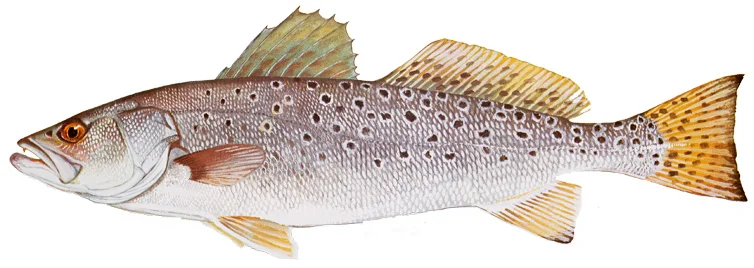
Game fish - see bag & size limits Spotted seatrout males average 19 inches (48 cm) in length. Females are 25 inches (63 cm) long on average. Males and females weigh 2 to 3 pounds (1 to 1.3 kg). Distinguishing characteristics include a dark gray or green back and silvery-white below, with distinct round spots on back, fins and tail; black margin along the edge of tail; soft dorsal (back) fin with no scales; and one or two prominent canine teeth usually present at the tip of the upper jaw.
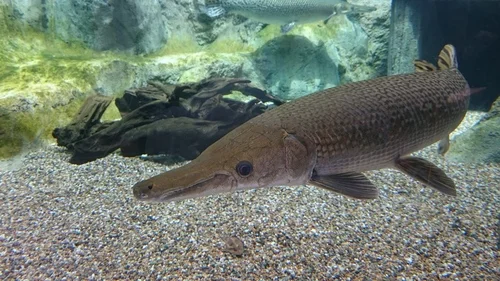
Life History: Small trout feed primarily on small crustaceans. Medium-size trout feed on shrimp and small fish. Large fish feed almost exclusively on other fish. Predators of the spotted seatrout include alligator gar, striped bass, Atlantic croaker, tarpon and barracuda. Spotted seatrout swim near seagrass beds of shallow bays and estuaries during spring and summer, looking for prey. As water temperatures decline during fall, they move into deeper bay waters and the Gulf of Mexico. As water temperatures warm in the spring, the fish return to the shallows of the primary and secondary bays. Spotted seatrout reaches sexual maturity at one to two years. Most large spotted seatrout caught are females and commonly live to be nine or 10 years of age. Anglers long ago recognized that very large trout were usually female and appropriately called them "sow" trout. A female spotted seatrout may spawn several times during the season. Younger females may release 100,000 eggs and older, larger females may release a million eggs. Recent studies indicate that spotted seatrout spawn between dusk and dawn and usually within coastal bays, estuaries and lagoons. They prefer shallow grassy areas where eggs and larvae have some cover from predators. Some trout caught may have worms embedded in the flesh along the backbone. These "spaghetti" worms are larval stages of a tapeworm that can only reach maturity in sharks. The worms cannot survive in man even if the seatrout is eaten raw. The worms can easily be rem
Distribution: It occurs in the western Atlantic and Gulf of Mexico, ranging from Massachusetts to the Yucatan peninsula.
Other: The spotted seatrout, commonly called speckled trout, is one of the most popular sport fish along the Texas coast. Its abundance, willingness to hit natural and artificial baits, and fine eating qualities make the species extremely popular with anglers. It has been commercially harvested in all the states bordering the Gulf of Mexico. However, a decline in harvest of spotted seatrout in recent years caused Alabama and Texas to close commercial fishing of the species. In Texas, the record spotted seatrout caught was 37.25 inches and 15.6 pounds.
Habitat & Range
Spotted seatrout prefer shallower bays and estuaries with oyster beds and seagrass beds that attract prey species. They are most common in the shallow bays during spring and summer. As water temperatures decline during fall, fish move into deeper bay waters and the Gulf of Mexico. As water temperatures warm in the spring the fish move back into the shallows of the primary and secondary bays. During periods of low rainfall and runoff, many trout often move into deeper rivers and bayous with the first cool weather of fall. Similar concentrations occur at dredged boat harbors and channels.
Where to fish is just as important the proper bait and technique. During warm weather, fish shallow areas early in the morning and late in the evening. In the heat of the day, move to deeper areas such as the dropoffs around grass flats, channels or around oyster reefs. When the weather is moderate, the fish may remain in shallow water a greater portion of the day. However, during very cold weather, try fishing the deep rivers, harbors and channels. Generally these deep areas are best after a "norther" has subsided and clearing skies are associated with rising temperatures. Boat fishers look for groups of feeding gulls during summer and fall. Schools of trout chase shrimp or small fish to the surface, which attracts the gulls. Action while fishing under birds can be fast and furious with the feeding trout taking almost any bait. Many anglers watch and "sniff" for slicks when searching for trout. Yes, people can smell trout! Trout often regurgitate when excited (as during feeding) and the oils from partially digested food rise to the surface to make a slick. The odor has been described as similar to watermelon or newly mown grass. Other fish can also be "smelled," but a practiced nose can tell the difference. Local information about what tackle to use, when to fish and where to go within the particular areas of the coast that you plan to fish, is usually found at local fishing camps,
Life History
Small trout feed primarily on small crustaceans. Medium-size trout feed on shrimp and small fish. Large fish feed almost exclusively on other fish. Predators of the spotted seatrout include alligator gar, striped bass, Atlantic croaker, tarpon and barracuda. Spotted seatrout swim near seagrass beds of shallow bays and estuaries during spring and summer, looking for prey. As water temperatures decline during fall, they move into deeper bay waters and the Gulf of Mexico. As water temperatures warm in the spring, the fish return to the shallows of the primary and secondary bays. Spotted seatrout reaches sexual maturity at one to two years. Most large spotted seatrout caught are females and commonly live to be nine or 10 years of age. Anglers long ago recognized that very large trout were usually female and appropriately called them "sow" trout. A female spotted seatrout may spawn several times during the season. Younger females may release 100,000 eggs and older, larger females may release a million eggs. Recent studies indicate that spotted seatrout spawn between dusk and dawn and usually within coastal bays, estuaries and lagoons. They prefer shallow grassy areas where eggs and larvae have some cover from predators. Some trout caught may have worms embedded in the flesh along the backbone. These "spaghetti" worms are larval stages of a tapeworm that can only reach maturity in sharks. The worms cannot survive in man even if the seatrout is eaten raw. The worms can easily be removed when the fish is cleaned to make the meat more appealing. The spotted seatrout is a member of the croaker family (Sciaenidae) and is a first cousin to the Atlantic croaker, red drum, black drum, and sand seatrout.
License & Regulations
A valid Texas fishing license is required for anglers age 17 and older. Licenses are available for residents, non-residents, and short-term durations (1-day, 5-day, and annual). Freshwater and saltwater endorsements may be required for certain waters. Purchase online through the Texas Parks and Wildlife Department website or at authorized license retailers throughout the state.
Frequently Asked Questions
Life History
Small trout feed primarily on small crustaceans. Medium-size trout feed on shrimp and small fish. Large fish feed almost exclusively on other fish. Predators of the spotted seatrout include alligator gar, striped bass, Atlantic croaker, tarpon and barracuda. Spotted seatrout swim near seagrass beds of shallow bays and estuaries during spring and summer, looking for prey. As water temperatures decline during fall, they move into deeper bay waters and the Gulf of Mexico. As water temperatures warm in the spring, the fish return to the shallows of the primary and secondary bays. Spotted seatrout reaches sexual maturity at one to two years. Most large spotted seatrout caught are females and commonly live to be nine or 10 years of age. Anglers long ago recognized that very large trout were usua
Habitat
Spotted seatrout prefer shallower bays and estuaries with oyster beds and seagrass beds that attract prey species. They are most common in the shallow bays during spring and summer. As water temperatures decline during fall, fish move into deeper bay waters and the Gulf of Mexico. As water temperatures warm in the spring the fish move back into the shallows of the primary and secondary bays. During periods of low rainfall and runoff, many trout often move into deeper rivers and bayous with the first cool weather of fall. Similar concentrations occur at dredged boat harbors and channels. Where to fish is just as important the proper bait and technique. During warm weather, fish shallow areas early in the morning and late in the evening. In the heat of the day, move to deeper areas such as
Fishing Tips
Spotted seatrout are opportunistic carnivores whose feeding habits vary with size. Small trout feed primarily on small crustaceans. Medium-size trout feed on shrimp and small fish. Large fish feed almost exclusively on other fish such as mullet, pinfish, pigfish and menhaden. This preference for large fish makes large trout difficult to catch. Large trout do not feed often and few anglers like to use 12-inch live mullet for bait. Experienced trout anglers have their own combination of bait, tackle, location, etc. for catching fish. The following is offered primarily for the novice with the expectation that use of the suggestions as a starting point will lead to the development of his or her own "magic" for catching trout. Any light to medium action rod and reel combination is appropriate s
Interesting Facts
The spotted seatrout has an excellent flavor and texture. Remember that care of the fish between landing and the skillet is important. Clean and place your fish on ice as rapidly as possible. The delicate meat of the trout loses quality rapidly if left unchilled, especially during warm weather. Recipes for preparation of trout and other Texas seafood are available in many recipe book and on the internet. Some trout caught may have worms embedded in the flesh along the backbone. These "spaghetti" worms are larval stages of a tapeworm that can only reach maturity in sharks. It cannot survive in man even if it is eaten raw. The worms can easily be removed during filleting to make the meat more appealing.
Distribution
It occurs in the western Atlantic and Gulf of Mexico, ranging from Massachusetts to the Yucatan peninsula.
Regulations
Texas fishing regulations apply to Spotted Seatrout. A valid Texas fishing license is required for anglers 17 and older. Bag and size limits vary by species and water body. Some species have catch-and-release only restrictions or special tournament regulations. Check the Texas Parks and Wildlife Outdoor Annual for current regulations specific to your fishing location. Possession limits in Texas are twice the daily bag limit unless otherwise noted.
References
| State | Category | Directory | Subcategory | Content | Source |
|---|---|---|---|---|---|
| Texas | Fishing | License | License & Fees | A valid Texas fishing license is required for anglers age 17 and older. Licenses are available for residents, non-reside | Link |