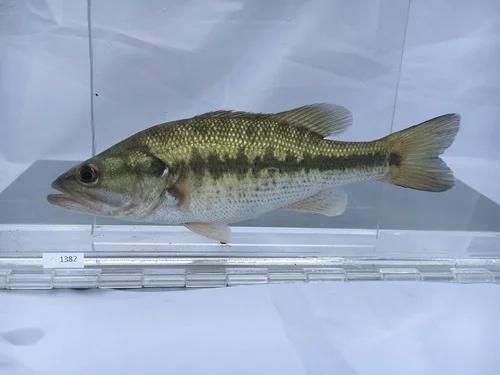
Also known as: Kentucky Spotted Bass, Spotted Black Bass
Game fish - see statewide bag & size limits and lake-specific exceptions Micropterus is Greek meaning "small fin" [see Guadalupe bass for further explanation]. The species epithet punctulatus, Latin for "dotted", refers to rows of dark spots on the lower sides. Coloration is similar to that of Guadalupe bass, but does not extend as low on the body.
Life History: Although a large proportion reach maturity within a year, spotted bass found in spawning areas are usually three to four years old. Rock and gravel are usually chosen as suitable spawning areas at water temperatures of 57-74°F. Nest depths may vary widely. Females may lay between 1,150 and 47,000 eggs. Males guard the eggs during incubation and for up to four weeks after they have hatched. As young fish grow their diet shifts from zooplankton to insects, and finally to fish and crayfish.
Distribution: Spotted bass are distributed throughout the Ohio River basin as well as the central and lower Mississippi River basin. The species may be found in Gulf Coast states from Texas east to Florida. Spotted bass are native to portions of East Texas from the Guadalupe River to the Red River, exclusive of the Edwards Plateau region.
Other: Despite the fact that spotted bass are not nearly so large and numerous as largemouth bass (in Texas their maximum size is less than one-third that of largemouth bass), they are excellent fighters. Spotted bass are very popular in east Texas, particularly in the Sabine, Neches, and Cypress Rivers. Known maximum size in Texas exceeds 5.5 pounds.
Habitat & Range
Spotted bass seem to be segregated by habitat type from closely related species. They tend to be found in areas with more current than largemouth bass, and they usually inhabit areas that are too warm, turbid, and sluggish for smallmouth bass.
Life History
Although a large proportion reach maturity within a year, spotted bass found in spawning areas are usually three to four years old. Rock and gravel are usually chosen as suitable spawning areas at water temperatures of 57-74°F. Nest depths may vary widely. Females may lay between 1,150 and 47,000 eggs. Males guard the eggs during incubation and for up to four weeks after they have hatched. As young fish grow their diet shifts from zooplankton to insects, and finally to fish and crayfish.
License & Regulations
A valid Texas fishing license is required for anglers age 17 and older. Licenses are available for residents, non-residents, and short-term durations (1-day, 5-day, and annual). Freshwater and saltwater endorsements may be required for certain waters. Purchase online through the Texas Parks and Wildlife Department website or at authorized license retailers throughout the state.
Frequently Asked Questions
Life History
Although a large proportion reach maturity within a year, spotted bass found in spawning areas are usually three to four years old. Rock and gravel are usually chosen as suitable spawning areas at water temperatures of 57-74°F. Nest depths may vary widely. Females may lay between 1,150 and 47,000 eggs. Males guard the eggs during incubation and for up to four weeks after they have hatched. As young fish grow their diet shifts from zooplankton to insects, and finally to fish and crayfish.
Habitat
Spotted bass seem to be segregated by habitat type from closely related species. They tend to be found in areas with more current than largemouth bass, and they usually inhabit areas that are too warm, turbid, and sluggish for smallmouth bass.
Distribution
Spotted bass are distributed throughout the Ohio River basin as well as the central and lower Mississippi River basin. The species may be found in Gulf Coast states from Texas east to Florida. Spotted bass are native to portions of East Texas from the Guadalupe River to the Red River, exclusive of the Edwards Plateau region.
Regulations
Texas fishing regulations apply to Spotted Bass. A valid Texas fishing license is required for anglers 17 and older. Bag and size limits vary by species and water body. Some species have catch-and-release only restrictions or special tournament regulations. Check the Texas Parks and Wildlife Outdoor Annual for current regulations specific to your fishing location. Possession limits in Texas are twice the daily bag limit unless otherwise noted.
References
| State | Category | Directory | Subcategory | Content | Source |
|---|---|---|---|---|---|
| Texas | Fishing | License | License & Fees | A valid Texas fishing license is required for anglers age 17 and older. Licenses are available for residents, non-reside | Link |