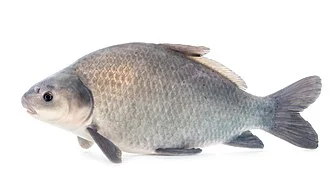
Ictiobus and bubalus are both Greek words meaning "bull fish" and "buffalo", respectively. The back and sides are light brown or otherwise dark with a coppery or greenish tent. The belly is pale yellow to white. Smallmouth buffalo scales are large, and the species sometimes be confused with common carp by the novice. However, buffalo lack the barbels of carp. Smallmouth buffalo, as opposed to bigmouth buffalo, have a distinctive sucker-type mouth, oriented downward.
Life History: Although the life history of smallmouth buffalo is not well understood, spawning seems to occur in the spring when water temperatures reach 60-65°F. Eggs are broadcast over weeds and mud bottom, hatching in one to two weeks. This species is primarily bottom feeding which is why insect larvae, algae, detritus, and sand often make up significant portions of the fishes' gut contents.
Distribution: The native range of the smallmouth buffalo includes larger tributaries of the Mississippi River from Montana east to Pennsylvania and West Virginia. The species is also found in Gulf slope drainages from Alabama to the Rio Grande River drainage. In Texas, smallmouth buffalo are found in most large streams, rivers, and reservoirs exclusive of the Panhandle.
Other: Although some anglers consider smallmouth buffalo to be a rough fish, in many areas the species is highly prized. Specimens in excess of 82 pounds have been landed by rod and reel anglers, whereas the trotline record is 97 pounds in Texas. Buffalo will sometimes take doughballs made with cottonseed meal, and when hooked provide exceptional sport. Many people may be unaware that smallmouth buffalo is quite a food fish. It is the number one species sold by commercial freshwater fishermen.
Life History
Although the life history of smallmouth buffalo is not well understood, spawning seems to occur in the spring when water temperatures reach 60-65°F. Eggs are broadcast over weeds and mud bottom, hatching in one to two weeks. This species is primarily bottom feeding which is why insect larvae, algae, detritus, and sand often make up significant portions of the fishes' gut contents.
License & Regulations
A valid Texas fishing license is required for anglers age 17 and older. Licenses are available for residents, non-residents, and short-term durations (1-day, 5-day, and annual). Freshwater and saltwater endorsements may be required for certain waters. Purchase online through the Texas Parks and Wildlife Department website or at authorized license retailers throughout the state.
Frequently Asked Questions
Life History
Although the life history of smallmouth buffalo is not well understood, spawning seems to occur in the spring when water temperatures reach 60-65°F. Eggs are broadcast over weeds and mud bottom, hatching in one to two weeks. This species is primarily bottom feeding which is why insect larvae, algae, detritus, and sand often make up significant portions of the fishes' gut contents.
Distribution
The native range of the smallmouth buffalo includes larger tributaries of the Mississippi River from Montana east to Pennsylvania and West Virginia. The species is also found in Gulf slope drainages from Alabama to the Rio Grande River drainage. In Texas, smallmouth buffalo are found in most large streams, rivers, and reservoirs exclusive of the Panhandle.
Regulations
Texas fishing regulations apply to Smallmouth Buffalo. A valid Texas fishing license is required for anglers 17 and older. Bag and size limits vary by species and water body. Some species have catch-and-release only restrictions or special tournament regulations. Check the Texas Parks and Wildlife Outdoor Annual for current regulations specific to your fishing location. Possession limits in Texas are twice the daily bag limit unless otherwise noted.
References
| State | Category | Directory | Subcategory | Content | Source |
|---|---|---|---|---|---|
| Texas | Fishing | License | License & Fees | A valid Texas fishing license is required for anglers age 17 and older. Licenses are available for residents, non-reside | Link |