Also known as: Rio Grande Perch, Texas Cichlid
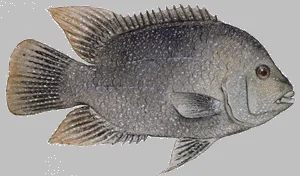
The Rio Grande cichlid is a native member of the Cichlid family of fishes, which also includes the exotic tilapia. The word cyanoguttatus is Greek and means "blue spotted." Rio Grande cichlid are distinctive in that they exhibit cream and turquoise colored spots, giving them a speckled look. Background color varies from very dark to light olive. Lighter colored specimens usually exhibit five dark vertical bars. Both dorsal and anal fins are long and tapered extending behind the caudal peduncle (fleshy portion of the tail). Unlike tilapia and most sunfishes, which typically have three spines on the anal fin, Rio Grande cichlids are equipped with five to six anal fin spines. Adult males may also develop a pronounced "hump" on the head which is not present in tilapia. These fish may grow to exceed 10 inches in length.
Life History: Like most of its family, the Rio Grande cichlid is generally considered a warm-water fish, and is very sensitive to cold. In general, this fish does not survive at water temperatures below 49°Fahrenheit. The species may do well in heated water, and in spring-fed waters with constant favorable temperatures. Spawning occurs in early spring. Both parents protect their young, which feed primarily on small fish, insects and crustaceans. Adults are also known to consume large quantities of fish eggs when they are available.
Distribution: The distribution of the Rio Grande cichlid in Texas appears to have originally been limited to the lower reaches of the Rio Grande. However, a number of populations have been established in river drainages of Central Texas' Edwards Plateau including the San Marcos, Guadalupe, San Antonio and Colorado rivers. Minimum temperature tolerances in the Colorado River have been measured at 57-66°F.
Other: The Rio Grande cichlid is a fine fighter, and easily caught. It is considered good table fare. The Texas state record was caught at Lake Dunlap in 2011 and weighed 2.02 pounds.
Life History
Like most of its family, the Rio Grande cichlid is generally considered a warm-water fish, and is very sensitive to cold. In general, this fish does not survive at water temperatures below 49°Fahrenheit. The species may do well in heated water, and in spring-fed waters with constant favorable temperatures. Spawning occurs in early spring. Both parents protect their young, which feed primarily on small fish, insects and crustaceans. Adults are also known to consume large quantities of fish eggs when they are available.
License & Regulations
A valid Texas fishing license is required for anglers age 17 and older. Licenses are available for residents, non-residents, and short-term durations (1-day, 5-day, and annual). Freshwater and saltwater endorsements may be required for certain waters. Purchase online through the Texas Parks and Wildlife Department website or at authorized license retailers throughout the state.
Frequently Asked Questions
Life History
Like most of its family, the Rio Grande cichlid is generally considered a warm-water fish, and is very sensitive to cold. In general, this fish does not survive at water temperatures below 49°Fahrenheit. The species may do well in heated water, and in spring-fed waters with constant favorable temperatures. Spawning occurs in early spring. Both parents protect their young, which feed primarily on small fish, insects and crustaceans. Adults are also known to consume large quantities of fish eggs when they are available.
Distribution
The distribution of the Rio Grande cichlid in Texas appears to have originally been limited to the lower reaches of the Rio Grande. However, a number of populations have been established in river drainages of Central Texas' Edwards Plateau including the San Marcos, Guadalupe, San Antonio and Colorado rivers. Minimum temperature tolerances in the Colorado River have been measured at 57-66°F.
Regulations
Texas fishing regulations apply to Rio Grande Cichlid. A valid Texas fishing license is required for anglers 17 and older. Bag and size limits vary by species and water body. Some species have catch-and-release only restrictions or special tournament regulations. Check the Texas Parks and Wildlife Outdoor Annual for current regulations specific to your fishing location. Possession limits in Texas are twice the daily bag limit unless otherwise noted.
References
| State | Category | Directory | Subcategory | Content | Source |
|---|---|---|---|---|---|
| Texas | Fishing | License | License & Fees | A valid Texas fishing license is required for anglers age 17 and older. Licenses are available for residents, non-reside | Link |