Also known as: Pargo, Snapper, Pensacola Snapper
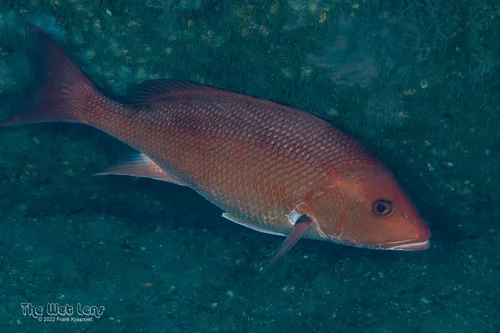
Regulated nongame species - see bag & size limits Red snapper are a deep rosy red color, with a dark fringe around the dorsal and tail fins. Adults average 2-4 pounds but can reach over 50 pounds. To avoid misidentifying small red snapper as lane snapper, note that red snapper have an angular anal fin and 14 soft dorsal fin ray. Lane snapper has a rounded anal fin, 12-13 soft dorsal fin ray and 8 narrow yellow stripes that fund the length of the fish.
Life History: Spawning occurs from June through September when adults are about 2 years old. Juveniles are widely distributed over muddy or sandy bottom and are caught in great numbers during shrimping operations. Growth is fairly fast, reaching 8 inches in the first year and gaining 3-4 inches each year thereafter.
Distribution: All Gulf waters
Habitat & Range
Although as young fish, they may be found on muddy bottoms or inshore, adult red snapper are located primarily near structure in deeper water. They feed on crab, squid, shrimp and small fish which they find near artificial reefs, oil rigs and other underwater structures.
Reefs, rigs, snapper banks offshore are the best places to catch red snapper.
Life History
Spawning occurs from June through September when adults are about 2 years old. Juveniles are widely distributed over muddy or sandy bottom and are caught in great numbers during shrimping operations. Growth is fairly fast, reaching 8 inches in the first year and gaining 3-4 inches each year thereafter.
License & Regulations
A valid Texas fishing license is required for anglers age 17 and older. Licenses are available for residents, non-residents, and short-term durations (1-day, 5-day, and annual). Freshwater and saltwater endorsements may be required for certain waters. Purchase online through the Texas Parks and Wildlife Department website or at authorized license retailers throughout the state.
Frequently Asked Questions
Life History
Spawning occurs from June through September when adults are about 2 years old. Juveniles are widely distributed over muddy or sandy bottom and are caught in great numbers during shrimping operations. Growth is fairly fast, reaching 8 inches in the first year and gaining 3-4 inches each year thereafter.
Habitat
Although as young fish, they may be found on muddy bottoms or inshore, adult red snapper are located primarily near structure in deeper water. They feed on crab, squid, shrimp and small fish which they find near artificial reefs, oil rigs and other underwater structures. Reefs, rigs, snapper banks offshore are the best places to catch red snapper.
Fishing Tips
Red Snapper are caught from reefs, rigs and banks along the entire Texas coast. Hand line, manual reels and electric reels are used, all equipped with heavy weights and multiple hooks. Bait with fresh squid or cigar minnows; live pinfish or pigifsh will catch larger snapper. This is the most sought-after offshore fish, representing an important recreational and commercial fishery.
Interesting Facts
The flesh of red snapper is excellent and snapper throats are classed as a delicacy.
Distribution
All Gulf waters
Regulations
Texas fishing regulations apply to Red Snapper. A valid Texas fishing license is required for anglers 17 and older. Bag and size limits vary by species and water body. Some species have catch-and-release only restrictions or special tournament regulations. Check the Texas Parks and Wildlife Outdoor Annual for current regulations specific to your fishing location. Possession limits in Texas are twice the daily bag limit unless otherwise noted.
References
| State | Category | Directory | Subcategory | Content | Source |
|---|---|---|---|---|---|
| Texas | Fishing | License | License & Fees | A valid Texas fishing license is required for anglers age 17 and older. Licenses are available for residents, non-reside | Link |