Also known as: Redfish, Rat Red, Bull Red, Or Just "Red"
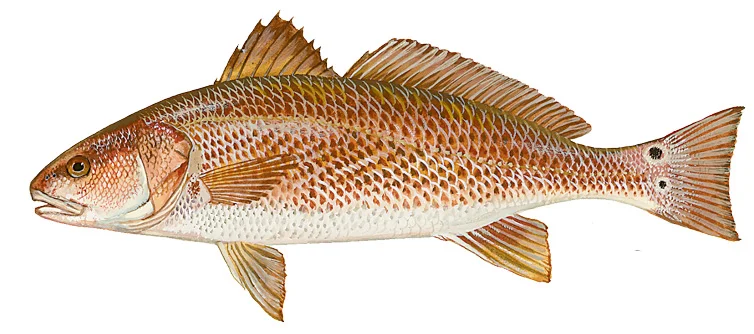
Game fish - see bag & size limits and freshwater exceptions The most distinguishing mark on the red drum is one large black spot on the upper part of the tail base. Having multiple spots is not uncommon for this fish but having no spots is extremely rare. The color of red drum ranges from a deep blackish, coppery color to nearly silver. The most common color is reddish-bronze. Red drum is a fast growing fish reaching approximately 11 inches and one pound in its first year, 17-22 inches and 3 1/2 pounds in two years, and 22-24 inches and 6-8 pounds in three years. The record red drum was 94 pounds and was caught on the East coast. The current Texas record is 59 1/2 pounds.
Life History: For the first three years of their lives red drum live in the bays or in the surf zone near passes. Evidence from tag returns show that they remain in the same area and generally move less than 3 miles from where they were tagged. As they mature, they move from the bays to the Gulf of Mexico where they remain the rest of their lives, except for infrequent visits to the bays. Although there is little evidence of seasonal migrations, anglers find concentrations of red drum in rivers and tidal creeks during the winter. Daily movement from the shallows to deeper waters is influenced by tides and water temperatures. During the fall, especially during stormy weather, large adult red drum move to the gulf beaches, possibly for spawning, where they can be caught from piers and by surf anglers. This is known as the "bull redfish run." Young red drum feed on small crabs, shrimp, and marine worms. As they grow older, they feed on larger crabs, shrimp, small fish, and sometimes their cousins, the Atlantic croaker. They generally are bottom feeders but will feed in the water column when the opportunity arises. A phenomenon called "tailing" occurs when the red drum feed in shallow water with their head down in the grass and the tail exposed to the air. Predators include humans, birds, larger fish, and turtles. Between the third and fourth year, the red drum reaches sexual maturity. Spawning season is from mid-August through mid-October in Gulf waters, near the mouths of passes and shorelin
Distribution: Red drum range from Massachusetts to Key West, Florida, and along the Gulf Coast to Tupxan, Mexico.
Other: The red drum is a popular game fish in coastal waters from Massachusetts to Mexico. Red drum is considered a great sport fish because it will hit on most kinds of bait. The Texas record for a red drum catch was 59.5 pounds (23 kg); however, a red drum weighing 94 pounds (42.69 kg) was caught along the North Carolina coast.
Habitat & Range
Red drums prefer shallow waters (1-4 feet deep) along the edges of bays with submerged vegetation such as seagrasses. They are found over all bottom types but they seem to prefer areas with submerged vegetation and soft mud. These fish are also commonly found around oyster reefs. Breaks in continuity of shorelines such as coves, points, jetties, old pier pilings, and guts attract them. They prefer soft mud along jetties, pier pilings and jetties. They are often found in water so shallow that their backs are exposed while swimming. During cold spells large numbers of red drum can be found in tidal creeks and rivers. They can live in fresh water and have been found many miles upriver.
Life History
For the first three years of their lives red drum live in the bays or in the surf zone near passes. Evidence from tag returns show that they remain in the same area and generally move less than 3 miles from where they were tagged. As they mature, they move from the bays to the Gulf of Mexico where they remain the rest of their lives, except for infrequent visits to the bays. Although there is little evidence of seasonal migrations, anglers find concentrations of red drum in rivers and tidal creeks during the winter. Daily movement from the shallows to deeper waters is influenced by tides and water temperatures. During the fall, especially during stormy weather, large adult red drum move to the gulf beaches, possibly for spawning, where they can be caught from piers and by surf anglers. This is known as the "bull redfish run." Young red drum feed on small crabs, shrimp, and marine worms. As they grow older, they feed on larger crabs, shrimp, small fish, and sometimes their cousins, the Atlantic croaker. They generally are bottom feeders but will feed in the water column when the opportunity arises. A phenomenon called "tailing" occurs when the red drum feed in shallow water with their head down in the grass and the tail exposed to the air. Predators include humans, birds, larger fish, and turtles. Between the third and fourth year, the red drum reaches sexual maturity. Spawning season is from mid-August through mid-October in Gulf waters, near the mouths of passes and shorelines. Eggs incubate for 24 hours. Larvae are carried into tidal bays by the current. They move to quiet, shallow water with grassy or muddy bottoms to feed on detritus (dead or decomposing plant and animal matter). The oldest recorded red drum was 37 years old! During spawning, red drum males attract females by producing a drum-like noise by vibrating a muscle in their swim bladder. They sometimes swim in water so shallow that their backs are exposed. Red drum are related to black drum, spotted se
License & Regulations
A valid Texas fishing license is required for anglers age 17 and older. Licenses are available for residents, non-residents, and short-term durations (1-day, 5-day, and annual). Freshwater and saltwater endorsements may be required for certain waters. Purchase online through the Texas Parks and Wildlife Department website or at authorized license retailers throughout the state.
Frequently Asked Questions
Life History
For the first three years of their lives red drum live in the bays or in the surf zone near passes. Evidence from tag returns show that they remain in the same area and generally move less than 3 miles from where they were tagged. As they mature, they move from the bays to the Gulf of Mexico where they remain the rest of their lives, except for infrequent visits to the bays. Although there is little evidence of seasonal migrations, anglers find concentrations of red drum in rivers and tidal creeks during the winter. Daily movement from the shallows to deeper waters is influenced by tides and water temperatures. During the fall, especially during stormy weather, large adult red drum move to the gulf beaches, possibly for spawning, where they can be caught from piers and by surf anglers. Thi
Habitat
Red drums prefer shallow waters (1-4 feet deep) along the edges of bays with submerged vegetation such as seagrasses. They are found over all bottom types but they seem to prefer areas with submerged vegetation and soft mud. These fish are also commonly found around oyster reefs. Breaks in continuity of shorelines such as coves, points, jetties, old pier pilings, and guts attract them. They prefer soft mud along jetties, pier pilings and jetties. They are often found in water so shallow that their backs are exposed while swimming. During cold spells large numbers of red drum can be found in tidal creeks and rivers. They can live in fresh water and have been found many miles upriver.
Fishing Tips
One attractive characteristics of this fish is its willingness to take most kinds of bait, both natural and artificial. The best natural baits are live shrimp, small finger mullet, Atlantic croaker, and small live blue crabs. Live shrimp are fished under a popping cork or "free shrimped" using a small weight and letting the shrimp swim freely. Live fish are best on the bottom using a slip-sinker type rig where the fish can swim freely. The bait fish are hooked through the lips or through the top of the back behind the dorsal fin. Small blue crab are fished on bottom and are hooked through one of the swimming legs at the rear of the crab. Stalking the shallow grass flats for red drum is the ultimate challenge for the wade anglers. Artificial baits such as 1/2 and 1/4 ounce shallow-running g
Distribution
Red drum range from Massachusetts to Key West, Florida, and along the Gulf Coast to Tupxan, Mexico.
Regulations
Texas fishing regulations apply to Red Drum. A valid Texas fishing license is required for anglers 17 and older. Bag and size limits vary by species and water body. Some species have catch-and-release only restrictions or special tournament regulations. Check the Texas Parks and Wildlife Outdoor Annual for current regulations specific to your fishing location. Possession limits in Texas are twice the daily bag limit unless otherwise noted.
References
| State | Category | Directory | Subcategory | Content | Source |
|---|---|---|---|---|---|
| Texas | Fishing | License | License & Fees | A valid Texas fishing license is required for anglers age 17 and older. Licenses are available for residents, non-reside | Link |