Also known as: Amberjack, Coronado, Amberfish
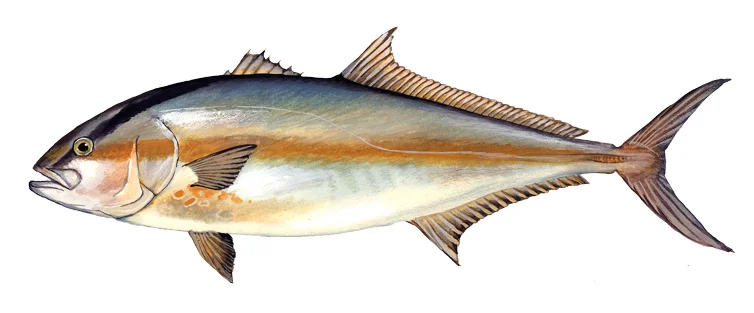
Regulated nongame species - see bag & size limits Greater amberjack is a large reef fish found in the Gulf. It is the largest and most common amberjack that lives along the coast.More slender than most jacks, they do not have finlets and the keel at the base of the tails is slight and soft. The back is bluish purple, the sides yellowish and the underside silver. Amberjacks have a distinctive dark band on the sides of the head which angles from the front of the back fin, through the eye to the mouth. The tail fin is lunate or moon-shaped. Although they average about 20 pounds, they can weight in at more than 170 pounds. The Texas record is 115 bounds and 66.5 inches; 1994.
Life History: Food consists of other smaller reef fish. Small jacks may congregate, but larger fish are often solitary. Larger fish are also usually females, because they tend to live much longer than males (up to 15 years). Spawning occurs offshore and begins at about 2 to 3 years of age.
Distribution: Amberjacks are found through the tropical and temperate Atlantic Ocean, including the Gulf of Mexico.
Habitat & Range
Greater Amberjacks live primarily near structure such as artificial reefs and oil rigs in Texas waters.
Are easiest to catch around artificial reefs or oil rigs in Texas waters.
Life History
Food consists of other smaller reef fish. Small jacks may congregate, but larger fish are often solitary. Larger fish are also usually females, because they tend to live much longer than males (up to 15 years). Spawning occurs offshore and begins at about 2 to 3 years of age.
License & Regulations
A valid Texas fishing license is required for anglers age 17 and older. Licenses are available for residents, non-residents, and short-term durations (1-day, 5-day, and annual). Freshwater and saltwater endorsements may be required for certain waters. Purchase online through the Texas Parks and Wildlife Department website or at authorized license retailers throughout the state.
Frequently Asked Questions
Life History
Food consists of other smaller reef fish. Small jacks may congregate, but larger fish are often solitary. Larger fish are also usually females, because they tend to live much longer than males (up to 15 years). Spawning occurs offshore and begins at about 2 to 3 years of age.
Habitat
Greater Amberjacks live primarily near structure such as artificial reefs and oil rigs in Texas waters. Are easiest to catch around artificial reefs or oil rigs in Texas waters.
Fishing Tips
Fish are often caught incidental to red snapper around offshore oil rigs and artificial reefs. They can be caught with large hooks on cut bait or using fish, especially ribbonfish, for bait.
Interesting Facts
Amberjacks are edible, but generally not a preferred eating fish.
Distribution
Amberjacks are found through the tropical and temperate Atlantic Ocean, including the Gulf of Mexico.
Regulations
Texas fishing regulations apply to Greater Amberjack. A valid Texas fishing license is required for anglers 17 and older. Bag and size limits vary by species and water body. Some species have catch-and-release only restrictions or special tournament regulations. Check the Texas Parks and Wildlife Outdoor Annual for current regulations specific to your fishing location. Possession limits in Texas are twice the daily bag limit unless otherwise noted.
References
| State | Category | Directory | Subcategory | Content | Source |
|---|---|---|---|---|---|
| Texas | Fishing | License | License & Fees | A valid Texas fishing license is required for anglers age 17 and older. Licenses are available for residents, non-reside | Link |