Also known as: Robalo, Saltwater Pike, Sergeant Fish
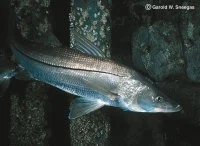
Game fish - see bag & size limits Snook have long, convcave snouts with jutting underjaws. The lateral line is pigmented and distinct, extending well into the tail. Coloration ranges from dark brown on back to silvery on the sides and white below. The two dorsal fins are well separated.
Life History: Spawning occurs in June or July in the Gulf and probably around passes. Snook Are tropical fish that visit when Texas water are warm enough. They spend time in both fresh and saltwater, never far from seawater when they're up river and never far from freshwater water when they're in the Gulf.
Distribution: Lower Gulf coast in Texas and in tropical Gulf waters of Mexico
Habitat & Range
The range of snook is largely determined by water temperature. Adults concentrate in Gulf passes and around pilings or other underwater structures and sometimes run up rivers and into lakes. Periodic blizzards decimate populations of this tropical species and the presence of young fish is revealed by stunted individuals struggling at the surface.
Snook are most often caught in the lower Laguna Madre near pilings or other underwater structure.
Life History
Spawning occurs in June or July in the Gulf and probably around passes. Snook Are tropical fish that visit when Texas water are warm enough. They spend time in both fresh and saltwater, never far from seawater when they're up river and never far from freshwater water when they're in the Gulf.
License & Regulations
A valid Texas fishing license is required for anglers age 17 and older. Licenses are available for residents, non-residents, and short-term durations (1-day, 5-day, and annual). Freshwater and saltwater endorsements may be required for certain waters. Purchase online through the Texas Parks and Wildlife Department website or at authorized license retailers throughout the state.
Frequently Asked Questions
Life History
Spawning occurs in June or July in the Gulf and probably around passes. Snook Are tropical fish that visit when Texas water are warm enough. They spend time in both fresh and saltwater, never far from seawater when they're up river and never far from freshwater water when they're in the Gulf.
Habitat
The range of snook is largely determined by water temperature. Adults concentrate in Gulf passes and around pilings or other underwater structures and sometimes run up rivers and into lakes. Periodic blizzards decimate populations of this tropical species and the presence of young fish is revealed by stunted individuals struggling at the surface. Snook are most often caught in the lower Laguna Madre near pilings or other underwater structure.
Fishing Tips
The snook is a vicious feeder and a strong fighter when hooked. Captures do not reflect actual numbers present but experienced anglers make good catches by using long poles and dangling live shrimp along pilings in clear water. They eat other fish, crabs and shrimp.
Interesting Facts
Snook is a fine food fish and can be cooked as other bony fish.
Distribution
Lower Gulf coast in Texas and in tropical Gulf waters of Mexico
Regulations
Texas fishing regulations apply to Common Snook. A valid Texas fishing license is required for anglers 17 and older. Bag and size limits vary by species and water body. Some species have catch-and-release only restrictions or special tournament regulations. Check the Texas Parks and Wildlife Outdoor Annual for current regulations specific to your fishing location. Possession limits in Texas are twice the daily bag limit unless otherwise noted.
References
| State | Category | Directory | Subcategory | Content | Source |
|---|---|---|---|---|---|
| Texas | Fishing | License | License & Fees | A valid Texas fishing license is required for anglers age 17 and older. Licenses are available for residents, non-reside | Link |