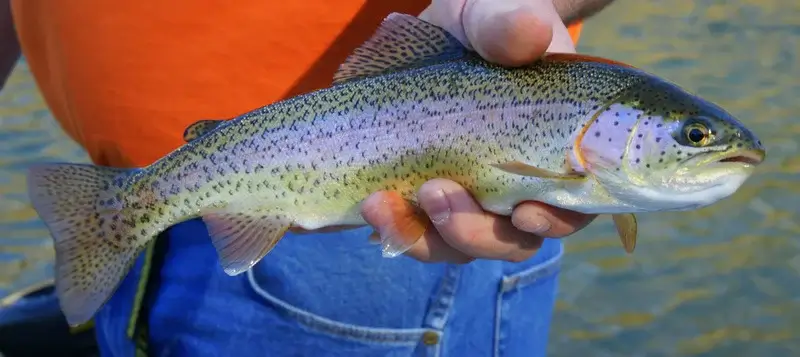
Description: Yes! Oklahoma has two introduced species of trout — rainbows and browns, with rainbow trout being far more abundant. Rainbow trout are native to the cold streams west of the Continental Divide but have been introduced here and elsewhere. The brown, or German brown trout is originally from Europe. Browns are stocked periodically in the Mountain Fork River below Broken Bow Lake and in the Illinois River below Lake Tenkiller. Rainbows are stocked approximately every two weeks at all eight of the state’s trout areas during the designated trout seasons. Click here for additional trout info Oklahoma's two trout species can be easily identified. First look at the side of the fish. A brown trout will have orange and red spots, but a rainbow trout will be iridescent. The brown trout will have few or no black spots on its tail and a creamy belly. In comparison, the rainbow trout will have black spots on its tail and a white belly. Facts: The key to putting rainbows on the stringer is light tackle. An ultra-light rod and reel spooled with six-pound or lighter line will produce more strikes and provide exciting action. Like all trout, rainbows have definite feeding periods which may begin and end suddenly. There are days, though, when it seems they feed for hours. However, early morning and late afternoon are favored times and most trout are caught during these periods. On streams, larger fish are likely to be found in deep pools while smaller rainbows feed in shallow riffles. Trout face upstream to wait for mayflies, caddis flies, stoneflies, dobsonflies and dragonflies to appear above them. When heavy insect hatches are on, you may see evidence of feeding trout by circular rings or rise forms on the water’s surface. If you don’t detect riseforms, you may want to switch to wetflies or nymphs. Feeding habits dictate what works and what doesn’t and there are times and places when only flashing spoons, marabou jigs or spinners work. Bait anglers can tempt rainbows by using whole-kernel corn, cheese, salmon eggs and worms on small (sizes 10 to 18) single or treble hooks. Those preferring the challenge of artificial lures will find small spinners, spoons and marabou jigs are most productive. Using artificial flies is an effective way to catch hungry trout on a fly rod. Trout Fishing Oklahoma
Habitat: Trout tend to seek out and congregate in calm waters. So when fishing in swift waters, cast your bait above exposed boulders and let it drift down through the calm water on the downstream side of the outcropping. Food sources: Rainbow trout feed on a variety of living organisms including insects, crustaceans, mollusks, and fish.
Habitat & Range
Trout tend to seek out and congregate in calm waters. So when fishing in swift waters, cast your bait above exposed boulders and let it drift down through the calm water on the downstream side of the outcropping. Food sources: Rainbow trout feed on a variety of living organisms including insects, crustaceans, mollusks, and fish.
Life History
Eggs are laid in shallow nests dug out by the female in gravel riffles. The eggs require continuous oxygenation at temperatures around 55°F, the eggs hatch about 21 days after they are laid. The natural spawning of rainbow trout has been documented in the Lower Mountain Fork River. Explore more Oklahoma Fish ODWC Photo Orangethroat Darter Photo by: Duane Raver Bass, Striped Hybrid Photo by: Duane Raver Saugeye Previous Next
License & Regulations
A valid Oklahoma fishing license is required for anglers age 16 and older. Licenses are available for residents, non-residents, and short-term durations (1-day, 3-day, and annual). An Oklahoma fishing license also includes the privilege to fish for all species. Purchase online through the Oklahoma Department of Wildlife Conservation website or at authorized license retailers.
Frequently Asked Questions
Description
Yes! Oklahoma has two introduced species of trout — rainbows and browns, with rainbow trout being far more abundant. Rainbow trout are native to the cold streams west of the Continental Divide but have been introduced here and elsewhere. The brown, or German brown trout is originally from Europe. Browns are stocked periodically in the Mountain Fork River below Broken Bow Lake and in the Illinois River below Lake Tenkiller. Rainbows are stocked approximately every two weeks at all eight of the state’s trout areas during the designated trout seasons. Click here for additional trout info Oklahoma's two trout species can be easily identified. First look at the side of the fish. A brown trout will have orange and red spots, but a rainbow trout will be iridescent. The brown trout will have few o...
Habitat
Trout tend to seek out and congregate in calm waters. So when fishing in swift waters, cast your bait above exposed boulders and let it drift down through the calm water on the downstream side of the outcropping. Food sources: Rainbow trout feed on a variety of living organisms including insects, crustaceans, mollusks, and fish.
Life Cycle
Eggs are laid in shallow nests dug out by the female in gravel riffles. The eggs require continuous oxygenation at temperatures around 55°F, the eggs hatch about 21 days after they are laid. The natural spawning of rainbow trout has been documented in the Lower Mountain Fork River. Explore more Oklahoma Fish ODWC Photo Orangethroat Darter Photo by: Duane Raver Bass, Striped Hybrid Photo by: Duane Raver Saugeye Previous Next
Regulations
Oklahoma fishing regulations apply to Rainbow Trout. A valid Oklahoma fishing license is required for anglers 16 and older. Bag and size limits vary by species and water body. Check the Oklahoma Department of Wildlife Conservation Fishing Regulations for current rules.
References
| State | Category | Directory | Subcategory | Content | Source |
|---|---|---|---|---|---|
| Oklahoma | Fishing | License | License & Fees | A valid Oklahoma fishing license is required for anglers age 16 and older. Licenses are available for residents, non-res | Link |