Overview
Few animals capture the imagination of hunters, wildlife enthusiasts, and naturalists quite like the white-tailed deer (Odocoileus virginianus). Recognized across the continent for its graceful form, alert demeanor, and that distinctive flash of white tail raised in alarm, the white-tailed deer stands as one of the most recognizable and celebrated wildlife species in North America. From the dense hardwood forests of the eastern United States to the sweeping prairies and badlands of North Dakota, this adaptable ungulate has carved out a thriving existence in an extraordinary range of environments.
For hunters, the white-tailed deer represents the ultimate pursuit — a quarry that is simultaneously abundant and challenging, familiar yet endlessly surprising. In a state like North Dakota, where vast stretches of grassland, coulees, river bottoms, and agricultural fields create a diverse mosaic of habitat, white-tailed deer hunting occupies a cherished place in the outdoor tradition. Whether you are a lifelong resident who has been pursuing deer since childhood or a visiting hunter drawn by the reputation of North Dakota's quality herds, understanding the biology, behavior, and habitat requirements of Odocoileus virginianus is the foundation of a rewarding experience in the field.
This article explores the fascinating world of the white-tailed deer — its biology, its preferred habitats, its remarkable range, and what hunters and wildlife enthusiasts should know about pursuing this species in North Dakota and beyond.
Biological Traits
The white-tailed deer belongs to the family Cervidae, the deer family, and represents one of two species in the genus Odocoileus found in North America (the other being the mule deer, Odocoileus hemionus). The species name virginianus reflects the fact that early specimens were formally described from Virginia, though the animal's range extends far beyond that single state.
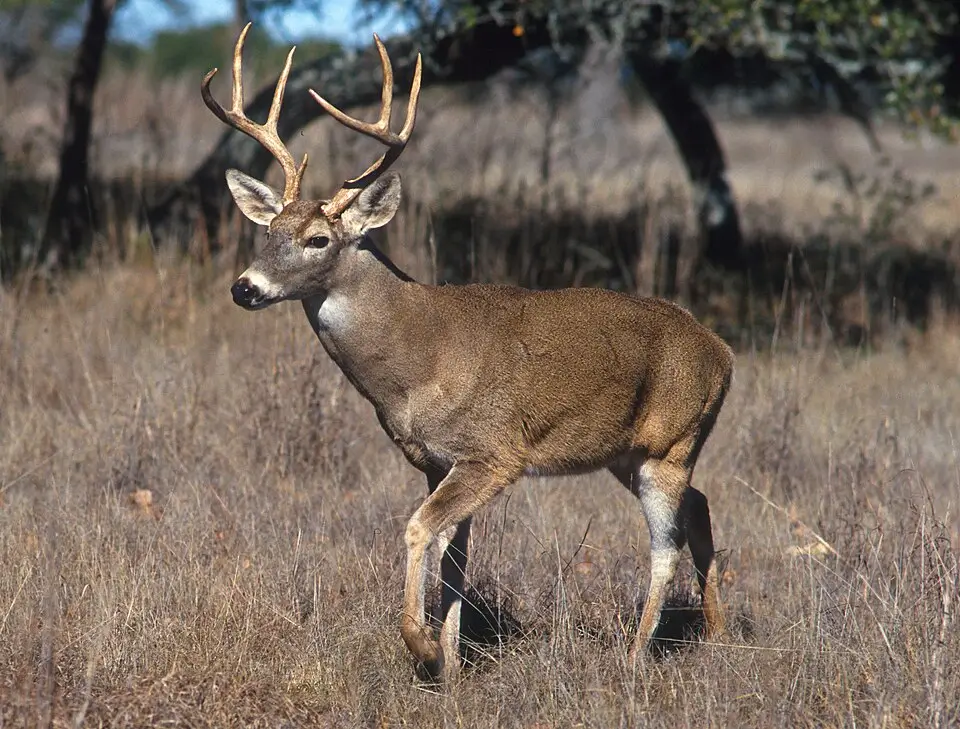
One of the white-tailed deer's most defining physical characteristics is, of course, its tail. When startled or fleeing, a deer will raise its tail to reveal a bright white underside, a behavior often called "flagging." This signal is thought to alert other deer in the area and may confuse predators. The upper coat of a white-tailed deer shifts with the seasons — a reddish-brown in summer transitions to a grayer, thicker coat in winter, providing both camouflage and insulation against cold temperatures.
Bucks are distinguished by their antlers, which are grown and shed annually. Antler growth begins in spring, fueled by lengthening days and rising testosterone levels, and the antlers are covered in a soft, blood-rich skin called velvet during the growth period. By late summer and early fall, velvet is shed, and bucks are left with hardened, polished antlers that they use for sparring with rival males during the rut. Antler size is influenced by age, genetics, and nutrition — factors that hunters and wildlife managers pay close attention to when assessing herd quality.
Does, on the other hand, are typically antlerless, though rare cases of antlered does do occur. Does are generally smaller than bucks in body size. Fawns are born in late spring or early summer, typically one to two per doe, and are famously spotted at birth — a pattern that provides camouflage as they lie still in vegetation during their first weeks of life. By the time their first autumn arrives, fawns have lost their spots and are growing rapidly on the abundant forage available before winter.
The rut, or breeding season, is one of the most exciting and behaviorally dramatic periods in a white-tailed deer's annual cycle. Triggered primarily by shortening daylight hours in autumn, the rut causes bucks to become intensely active, ranging widely in search of receptive does. Scrapes — areas of bare dirt where bucks paw the ground and deposit scent — and rubs, where bucks polish their antlers and deposit scent on small trees, are the calling cards of rutting bucks and are eagerly sought out by hunters reading the landscape.
White-tailed deer are herbivores with a highly varied diet that changes with the seasons and the available vegetation. They browse on leaves, twigs, and buds; graze on grasses and forbs; and eagerly consume agricultural crops such as corn, soybeans, and alfalfa where available. Mast crops, particularly acorns, are a critical high-energy food source in areas where oaks are present. This dietary flexibility is one of the key reasons the white-tailed deer has thrived across such a broad and varied range.
Habitat & Range
The white-tailed deer is one of the most widely distributed large mammals in the Western Hemisphere. Its range extends from the southern reaches of Canada through virtually all of the contiguous United States, and continues south through Central America and into northern portions of South America. Within this enormous range, the species occupies an impressive variety of habitats, demonstrating a flexibility that few other large mammals can match.
White-tailed deer thrive in edge habitat — the transitional zones between forest and open land, between cropland and brushy draws, and between river bottoms and upland prairies. This preference for edge habitat is driven largely by the deer's need to balance food availability with cover for security. Dense vegetation provides refuge from predators and shelter from harsh weather, while open areas and fields offer rich feeding opportunities. The ideal white-tailed deer country often combines both in close proximity.
In North Dakota, the landscape provides exactly this kind of varied terrain. The state's geography, characterized by broad prairies, the famous Badlands of the west, rolling farmland, and the productive river corridors of the Missouri, Little Missouri, and other waterways, creates a patchwork of habitats that supports robust deer populations. River bottoms lined with cottonwood, ash, and willow provide critical cover and thermal refuge, especially during North Dakota's notoriously cold winters. Agricultural fields — North Dakota is one of the nation's top producers of wheat, corn, sunflowers, and soybeans — provide an abundant food supply that supports healthy deer herds.
The western portion of North Dakota, including the rugged Badlands terrain, tends to be prime mule deer country, while white-tailed deer are more commonly associated with the river corridors, wooded draws, and agricultural landscapes found throughout the central and eastern regions of the state. That said, the two species can overlap in transitional zones, adding an element of pleasant surprise for hunters who venture into mixed terrain.
Hunting Information
Hunting in North Dakota is overseen by the North Dakota Game and Fish Department, which manages deer hunting as part of a broader suite of big game species including elk, moose, pronghorn, and bighorn sheep. Deer hunting in North Dakota operates through a licensing system, and hunters should consult the North Dakota Game and Fish Department directly for the most current season dates, licensing requirements, and regulation details, as these can change from year to year.
According to information from the North Dakota Game and Fish Department, licenses for deer — along with other big game species such as bighorn sheep, elk, moose, and pronghorn — are allocated through a lottery system. This lottery system is designed to manage hunting pressure and ensure sustainable harvest levels that keep deer populations healthy for future generations. Prospective hunters are encouraged to apply for licenses well in advance and to review the current year's regulations carefully before heading into the field.
North Dakota offers hunters access to a variety of public land opportunities. Walk-In Areas, known as the PLOTS (Private Land Open To Sportsmen) program, provide hunters with access to private agricultural and wildlife lands that might otherwise be unavailable. Wildlife Management Areas (WMAs) also offer public hunting access across the state. These programs reflect North Dakota's strong commitment to providing meaningful hunting access to residents and visitors alike.
The combination of North Dakota's agricultural richness and its diverse terrain makes it a compelling destination for white-tailed deer hunters. River bottom hunts, where deer funnel through cottonwood corridors during the rut, are a classic North Dakota experience. Stand hunting over agricultural fields during the early season, and tracking rutting bucks through snowy coulees in November, are among the many rewarding strategies available to those who pursue white-tailed deer in the state.
Hunters pursuing white-tailed deer should invest time in scouting before the season, identifying travel corridors, feeding areas, and sign such as rubs and scrapes. Understanding the rut calendar for your specific region is also valuable, as the peak of the rut represents the best opportunity to encounter a mature buck moving during daylight hours.
Conservation
The conservation story of the white-tailed deer in North America is, in many respects, one of the great wildlife management success stories of the 20th century. Deer populations had been severely depleted in many parts of their range by the early 1900s due to market hunting and habitat loss. Through the combined efforts of state wildlife agencies, conservation organizations, and the regulated hunting community, white-tailed deer populations recovered dramatically throughout the 20th century and continue to thrive today.
In North Dakota, the Game and Fish Department plays a central role in monitoring deer populations, managing harvest, and addressing challenges such as Chronic Wasting Disease (CWD). CWD is a prion-based neurological disease that affects deer, elk, and related species, and its management is an active priority for wildlife agencies across the country, including in North Dakota. Hunters play a critical role in CWD management efforts by complying with carcass transportation regulations and participating in voluntary testing programs.
Habitat conservation is equally important to the long-term health of white-tailed deer populations. Protecting and restoring riparian corridors, maintaining diverse agricultural landscapes, and preserving native grasslands all contribute to deer habitat quality. In North Dakota, programs that provide access through PLOTS and WMAs also incentivize landowners to maintain and improve wildlife habitat on private lands, creating a win-win situation for hunters and deer alike.
The enduring popularity of white-tailed deer hunting generates significant funding for conservation through excise taxes on hunting equipment (via the Federal Aid in Wildlife Restoration Act, commonly known as the Pittman-Robertson Act) and through license sales. This funding supports not only deer management but a wide range of wildlife research and habitat programs that benefit countless species across North Dakota and the nation.
Conclusion
The white-tailed deer (Odocoileus virginianus) is far more than just a game animal — it is a symbol of wild North America, a testament to the power of conservation, and a source of joy, challenge, and tradition for millions of hunters and wildlife watchers. In North Dakota, where wide-open landscapes meet productive river corridors and thriving agricultural lands, the white-tailed deer finds an ideal home, and hunters find one of the continent's most rewarding big game experiences.
Whether you are drawn by the challenge of pursuing a mature buck through the cottonwood bottoms of the Missouri River valley, the thrill of watching the rut unfold across a frosty November prairie, or simply the deep satisfaction of putting venison on the table for your family, the white-tailed deer represents the heart of the North Dakota hunting tradition.