Overview
Few animals embody the spirit of wild, untamed waterways quite like the American mink. Agile, fierce, and strikingly beautiful, this small but tenacious carnivore has captured the imagination of naturalists, trappers, and wildlife enthusiasts for centuries. Known scientifically as Neogale vison, the American mink is one of North America's most recognizable semi-aquatic mammals, equally at home slipping through the icy currents of a prairie stream or prowling the marshy edges of a glacial lake. In a state like North Dakota — where rolling prairies give way to countless rivers, wetlands, and sloughs — the American mink finds an ideal home, making it a species of considerable interest to hunters, trappers, and conservationists alike.
The American mink belongs to the family Mustelidae, a group that includes otters, weasels, badgers, and wolverines. These animals share many traits: elongated bodies, short legs, thick fur, and a bold, predatory nature that belies their relatively modest size. Within this family, the American mink stands out as a particularly successful and adaptable predator, capable of thriving across a vast range of aquatic environments across North America. Understanding this animal — its biology, its behavior, its role in the ecosystem, and its place in the hunting and trapping traditions of states like North Dakota — gives us a deeper appreciation for the rich natural heritage of the American continent.
Biological Traits
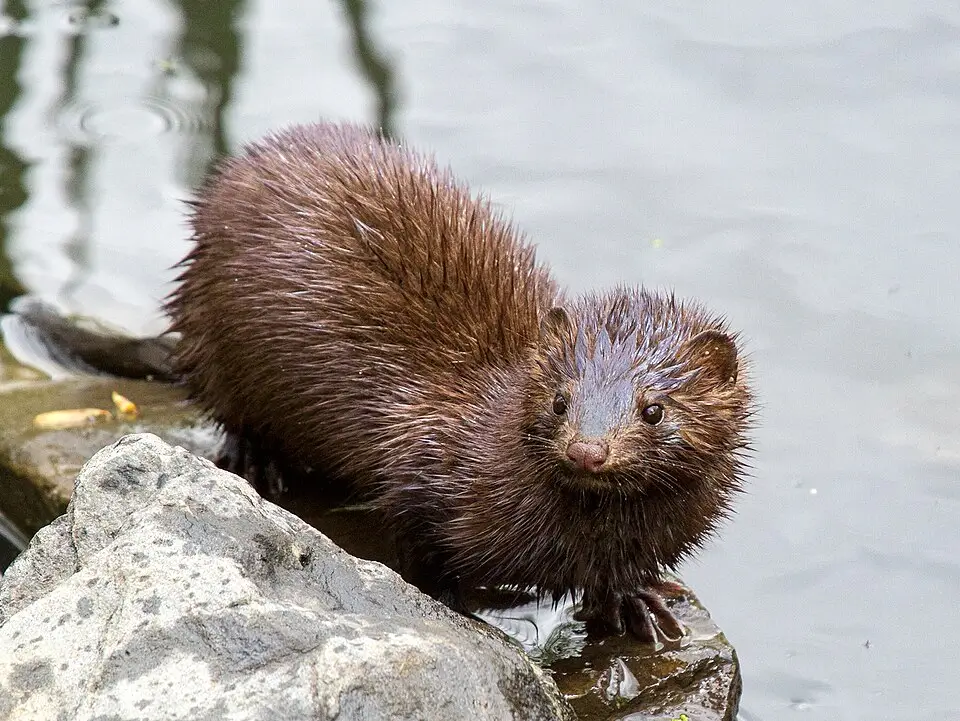
The American mink (Neogale vison) is a medium-sized mustelid, typically displaying the classic elongated, low-to-the-ground body plan that characterizes its family. Males are noticeably larger than females, a pattern of sexual dimorphism common among mustelids. The animal's fur is dense, glossy, and water-resistant — a trait perfectly suited to its semi-aquatic lifestyle. Natural coloration ranges from rich chocolate brown to nearly black across the body, often with small patches of white on the chin or chest. This luxurious coat has made the American mink one of the most commercially sought-after furbearers in history.
The mink's body is well-adapted for life along the water's edge. Its feet are partially webbed, allowing for efficient swimming, and its muscular, flexible body allows it to pursue prey both in water and on land. The animal has sharp, recurved teeth and powerful jaws relative to its size, enabling it to take prey that is often comparable to or larger than itself. Musk glands near the base of the tail allow the mink to produce a strong-smelling secretion, used for marking territory and communication with other mink — a trait shared with many of its mustelid relatives.
American mink are solitary and highly territorial animals. They maintain home ranges along waterways, actively defending their territories from other mink. Their activity patterns vary seasonally, but they are generally considered to be most active at dawn and dusk, making them crepuscular hunters, though nighttime activity is also well documented. They do not hibernate and remain active throughout the cold winter months, relying on their thick fur and high metabolic rate to survive the frigid temperatures typical of northern states like North Dakota.
The diet of the American mink is diverse and opportunistic. As skilled hunters, they prey on a wide variety of animals including fish, frogs, crayfish, small mammals such as muskrats and mice, birds, and invertebrates. This dietary flexibility makes the mink a highly effective predator across changing seasons and environments. Their hunting style is bold and persistent — mink have been observed pursuing prey into burrows, diving beneath ice to catch fish, and raiding the lodges of muskrats with remarkable determination.
Breeding in the American mink typically occurs in late winter or early spring. Mink have a fascinating reproductive adaptation known as delayed implantation, where the fertilized egg does not immediately implant in the uterine wall. This allows the female to time the birth of her kits to coincide with optimal environmental conditions. Litters generally consist of several kits, which are born helpless and depend on their mother for warmth and nutrition in the early weeks of life. By late summer or early fall, young mink disperse from the natal territory and begin establishing their own home ranges — a period that often brings juveniles into new areas and increases their visibility to hunters and trappers.
Habitat & Range
The American mink is found across a vast swath of North America, ranging from Alaska and Canada in the north to the Gulf Coast in the south, and from the Atlantic seaboard to the Pacific Northwest. Its range encompasses nearly every region where suitable aquatic habitat exists. The species shows a strong preference for riparian environments — the productive zones where land meets water — including the banks of rivers and streams, the edges of lakes and ponds, freshwater marshes, swamps, and coastal wetlands.
North Dakota provides a rich mosaic of habitats that are well-suited to the American mink. The state's geography, shaped by glacial activity thousands of years ago, is dotted with prairie potholes, wetlands, rivers, and reservoirs. Major river systems such as the Missouri, the Red River of the North, the Sheyenne, and the James River provide extensive riparian corridors where mink populations can thrive. The prairie pothole region of North Dakota, one of the most important wetland complexes in North America, offers an abundance of prey species and sheltered denning habitat that support healthy mink populations year-round.
Mink are not particularly selective about the specific type of wetland they inhabit, provided food is plentiful and suitable cover is available. They den in a variety of locations, including hollow logs, the burrows of other animals, rock crevices, and the root systems of streamside vegetation. Dense riparian vegetation, overhanging banks, and woody debris along watercourses provide the kind of sheltered, complex habitat that mink prefer. In North Dakota, areas where cattail marshes border open water, or where wooded stream corridors cut through the open prairie, are prime mink country.
The presence of muskrats is often considered a reliable indicator of good mink habitat. These two species share many of the same wetland environments, and muskrats represent an important prey item for mink. Wherever muskrat populations are robust — as they are across much of North Dakota's wetland landscape — mink are likely to be present as well.
Hunting Information
In North Dakota, the American mink is classified as a furbearer, and hunting and trapping activities for this species are overseen by the North Dakota Game and Fish Department. The state's official hunting framework organizes furbearers within its broader hunting and trapping regulatory structure, which encompasses licensing, season dates, and legal methods of take. Hunters and trappers interested in pursuing American mink in North Dakota should consult the current North Dakota Game and Fish regulations, as specific season dates and licensing requirements are subject to change and are established on a seasonal basis by state wildlife managers.
Trapping has historically been the most common and effective method for harvesting American mink, owing to the animal's semi-aquatic habits and its tendency to travel established routes along waterway edges. Water sets placed near runs, slides, or trails along stream banks and marshes can be highly productive. Understanding the mink's behavioral patterns — its tendency to investigate holes and openings along the water's edge, its preference for moving beneath overhanging cover, and its curiosity about scent lures — is key to successful trapping. Many experienced trappers use fish-based or musk-based lures to attract mink to set locations.
Hunters pursuing mink through direct take should be aware of the animal's crepuscular and nocturnal habits, as well as its preference for dense, low-lying cover near water. Patience and a thorough knowledge of local wetlands and stream corridors are invaluable assets. North Dakota's extensive network of Wildlife Management Areas (WMAs) and PLOTS (Private Land Open To Sportsmen) program lands provide significant public access opportunities for those looking to explore the state's productive furbearer habitat.
Beyond the harvest itself, pursuing American mink in North Dakota connects hunters and trappers to one of the oldest wildlife traditions on the continent. The fur trade played a formative role in the exploration and settlement of North America, and the American mink was among the most prized species in that trade. Carrying on this tradition in a modern, regulated, and conservation-minded framework honors that heritage while contributing directly to wildlife management funding through license purchases and excise taxes.
Conservation
The American mink is currently considered a species of least concern from a conservation standpoint across its native North American range. Its adaptability, broad habitat tolerance, and high reproductive potential have allowed it to maintain stable populations across most of its range, even in the face of historical fur trade pressures and ongoing habitat changes. In North Dakota, where wetland conservation efforts by organizations and state agencies have helped preserve and restore prairie pothole and riparian habitats, conditions for mink remain generally favorable.
It is worth noting that while the American mink is thriving natively in North America, introduced populations in Europe have raised significant conservation concerns there. Escaped or released farm-bred mink established feral populations across much of Europe, where they have had notable impacts on native wildlife. This situation serves as an important reminder of how carefully wildlife managers must consider the ecological role of predatory species, and underscores the value of science-based wildlife management in maintaining healthy, balanced ecosystems.
In North Dakota, regulated hunting and trapping of the American mink plays an important role in the broader framework of wildlife management. Harvest data collected through licensing and reporting systems helps biologists monitor population trends and make informed management decisions. Revenue generated through license sales and federal excise taxes on hunting equipment — through programs like the Federal Aid in Wildlife Restoration Act — funds habitat conservation, research, and wildlife education efforts that benefit not just mink, but the entire suite of wildlife species that share North Dakota's wetlands and waterways.
Ensuring the long-term health of American mink populations in North Dakota ultimately depends on maintaining the wetland and riparian habitats upon which this species depends. Continued investment in habitat conservation, thoughtful land management along waterways, and the sustainable harvest traditions upheld by the state's hunting and trapping community all contribute to a future in which this sleek and resourceful predator continues to thrive across the prairie waterways of the northern Great Plains.