Overview
Few sights in the natural world command attention quite like a flock of Tundra swans in flight — their massive white wings catching the light, their haunting calls echoing across open water and prairie sky. Among North America's most elegant and recognizable waterfowl, the Tundra swan (Cygnus columbianus) represents a remarkable intersection of raw wildness and breathtaking beauty. These large, white birds undertake some of the longest migratory journeys of any waterfowl species on the continent, traveling thousands of miles between their Arctic breeding grounds and their wintering areas along the coasts and interior wetlands of the United States.
For wildlife enthusiasts and hunters alike, the Tundra swan occupies a special place. Regulated hunting opportunities for this species are deliberately limited and carefully managed, making an encounter with one — whether through binoculars or over decoys — a genuinely memorable experience. In states like North Dakota, the Tundra swan is recognized as a prized game species, with licenses allocated through a competitive lottery system that underscores just how special these birds truly are. Understanding the biology, behavior, and conservation status of the Tundra swan enriches every experience with this extraordinary bird.
Biological Traits
The Tundra swan is a member of the family Anatidae and the genus Cygnus, which includes all true swans. Its scientific name, Cygnus columbianus, references the Columbia River region where early naturalists first documented North American specimens. As the smallest of the three swan species native to North America — the others being the Trumpeter swan (Cygnus buccinator) and the introduced Mute swan (Cygnus olor) — the Tundra swan is still an impressively large bird by any measure.
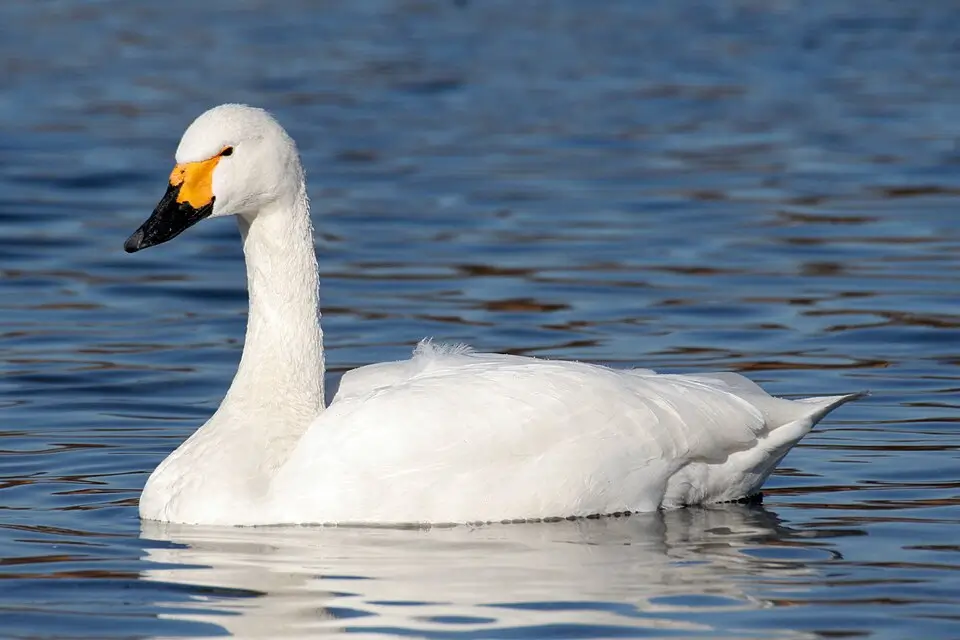
Adult Tundra swans are characterized by their brilliant white plumage, long graceful necks, and black bills. A key identification feature is the small yellow spot at the base of the bill, near the loral area in front of the eye, though this mark is variable and not always present on every individual. Their legs and feet are black. In flight, Tundra swans hold their necks straight and extended, and their wingbeats are powerful and steady, producing a distinctive whistling sound that gives rise to one of their colloquial names: "whistling swans."
Two subspecies are recognized: the nominate Cygnus columbianus columbianus, found across North America and commonly called the Whistling swan, and Cygnus columbianus bewickii, known as Bewick's swan, which breeds in Arctic Russia and winters in Europe and East Asia. The North American subspecies is the focus of wildlife management efforts in the United States and Canada.
Tundra swans are highly social birds, particularly outside of the breeding season. They form large flocks during migration and on wintering grounds, often associating with other waterfowl species. They are primarily herbivorous, feeding on aquatic vegetation, roots, tubers, and agricultural grains — particularly during migration stopovers when they may feed extensively in harvested cropfields. Their long necks allow them to reach submerged vegetation in shallow water bodies, and they are well adapted to tipping up, much like dabbling ducks, to access food below the surface.
Mated pairs form long-term bonds, and pairs typically return to the same breeding territories year after year. Nesting occurs on Arctic and subarctic tundra, where the female constructs a large mound nest near water. Clutches typically consist of several eggs, and both parents participate in raising the young, known as cygnets. Cygnets are grayish-brown when young and gradually develop their white adult plumage over the course of their first year. Family groups remain together through the first migration, with parents guiding their offspring along the traditional flyway routes.
The vocal repertoire of the Tundra swan is varied and musical. Their calls range from soft, conversational cooing notes to loud, bugling calls that carry great distances across open landscapes. These vocalizations serve important social functions, helping flocks stay coordinated during migration and aiding in mate recognition and territory maintenance during the breeding season.
Habitat & Range
The Tundra swan's range spans the full breadth of North America on a seasonal basis, making it one of the continent's true long-distance migrants. During the breeding season, these swans nest across the vast Arctic and subarctic tundra of Alaska and northern Canada. They favor shallow lakes, ponds, marshes, and river deltas — areas where aquatic vegetation is abundant and terrestrial nest sites are available near water.
As summer gives way to autumn, Tundra swans begin their southward migration, following well-established flyway corridors. Two primary populations are recognized based on their migratory routes and wintering destinations. The western population migrates from Alaskan breeding grounds southward through the interior of the continent, eventually reaching wintering areas in California's Central Valley and along the Pacific Coast. The eastern population breeds across the Canadian Arctic and migrates through the central flyway and eastern portions of the continent, ultimately wintering along the Atlantic Coast.
During migration, Tundra swans make use of a variety of wetland habitats, including prairie potholes, river impoundments, natural lakes, and flooded agricultural fields. The Great Plains states, including North Dakota, serve as critical migration corridors and staging areas for large numbers of Tundra swans. These stopover sites provide essential refueling opportunities, allowing birds to build up the energy reserves necessary to complete their long journeys.
North Dakota's landscape, with its characteristic prairies, wetlands, and the extensive network of prairie pothole lakes, makes it an ideal stopover habitat for migrating waterfowl of all kinds, including Tundra swans. The state's position within the central flyway means that thousands of swans may pass through during the peak migration windows each autumn and spring.
Hunting Information
Hunting the Tundra swan is one of the most exclusive and coveted waterfowl experiences available in North America. Because of the species' relatively slow reproductive rate, its long life span, and the importance of sound population management, hunting opportunities are carefully rationed through state and federal regulatory frameworks.
In North Dakota, the Tundra swan is specifically recognized as a species for which licenses are allocated by lottery. According to the North Dakota Game and Fish Department, licenses for tundra swan are among a select group of highly sought permits distributed through a competitive lottery process — alongside other prestigious big game and special species licenses for bighorn sheep, deer, elk, moose, and pronghorn. This lottery system reflects the premium nature of a tundra swan hunt and ensures that harvest levels remain sustainable over time.
Hunters interested in pursuing Tundra swans in North Dakota should consult the North Dakota Game and Fish Department's official resources for the most current and detailed information on application deadlines, license availability, legal shooting requirements, and any applicable zone or season restrictions. Regulations for migratory waterfowl, including swans, are set through a cooperative process between the U.S. Fish and Wildlife Service and individual states, meaning that requirements can change from season to season.
Successfully hunting Tundra swans demands patience, skill, and preparation. Hunters typically employ large white decoys to attract birds within range, and calling can be an effective technique given the Tundra swan's vocal nature. Scouting migration routes and identifying active staging areas on wetlands and agricultural fields is essential preparation. Because of the lottery's competitive nature, successfully drawing a tundra swan license in North Dakota is itself a significant achievement that many hunters celebrate.
Conservation
The conservation story of the Tundra swan is, on the whole, a positive one. Unlike its larger cousin the Trumpeter swan, which declined dramatically due to market hunting and habitat loss in the 19th and early 20th centuries and required intensive recovery efforts, Tundra swan populations have remained relatively robust. The species benefits from the remote, difficult-to-access nature of its Arctic breeding grounds, which provides a degree of natural protection from many anthropogenic pressures.
Regulated hunting, conducted within the framework of the Migratory Bird Treaty Act and coordinated flyway management, has been an important component of maintaining sustainable Tundra swan populations while providing meaningful wildlife-based recreation. The lottery system employed in states like North Dakota exemplifies the kind of science-based, controlled approach to harvest management that has allowed waterfowl hunting and conservation to coexist successfully in North America for generations.
Wetland conservation remains a priority for the long-term health of Tundra swan populations. The prairie pothole region — encompassing much of North Dakota and neighboring states and Canadian provinces — is one of the most important wetland ecosystems in the world for waterfowl, and ongoing conservation work by agencies, conservation organizations, and private landowners helps ensure that migratory swans and countless other species have the habitat they need during their journeys.
Climate change poses emerging questions for Arctic-nesting species like the Tundra swan. Shifts in tundra ecology, water availability, and the timing of seasonal events may affect breeding success and habitat quality in ways that wildlife managers will need to continue monitoring carefully. The resilience of Tundra swan populations, combined with adaptive management approaches, provides reason for cautious optimism.