Overview
Few animals in North America command as much immediate recognition — and respectful distance — as the striped skunk (Mephitis mephitis). With its bold black-and-white coloration and legendary chemical defense mechanism, this medium-sized mammal has earned a permanent place in both the natural landscape and the cultural imagination of the continent. From backyard encounters in suburban neighborhoods to quiet sightings along the prairie edges of North Dakota, the striped skunk is one of the most widely distributed and ecologically important furbearers in the United States.
Despite its reputation, the striped skunk is a fascinating creature worthy of serious study and appreciation. It plays a vital role in controlling insect and rodent populations, contributes to the broader furbearer hunting tradition, and serves as an important indicator species for ecosystem health across its range. In states like North Dakota — where open prairies, agricultural fields, and wetlands stretch across an enormous and diverse landscape — the striped skunk is a regular part of wildlife communities and a recognized game species under the state's furbearer regulations.
This article takes a comprehensive look at the striped skunk: its biology, its preferred habitats, its remarkable adaptations, and its role in the hunting and trapping traditions of the American Midwest, with particular attention to North Dakota.
Biological Traits
The striped skunk (Mephitis mephitis) belongs to the family Mephitidae, which encompasses the skunks of the Americas. The genus name Mephitis is derived from the Latin word for a noxious or poisonous exhalation — a fitting name for an animal whose primary defense is one of the most effective chemical deterrents in the natural world.
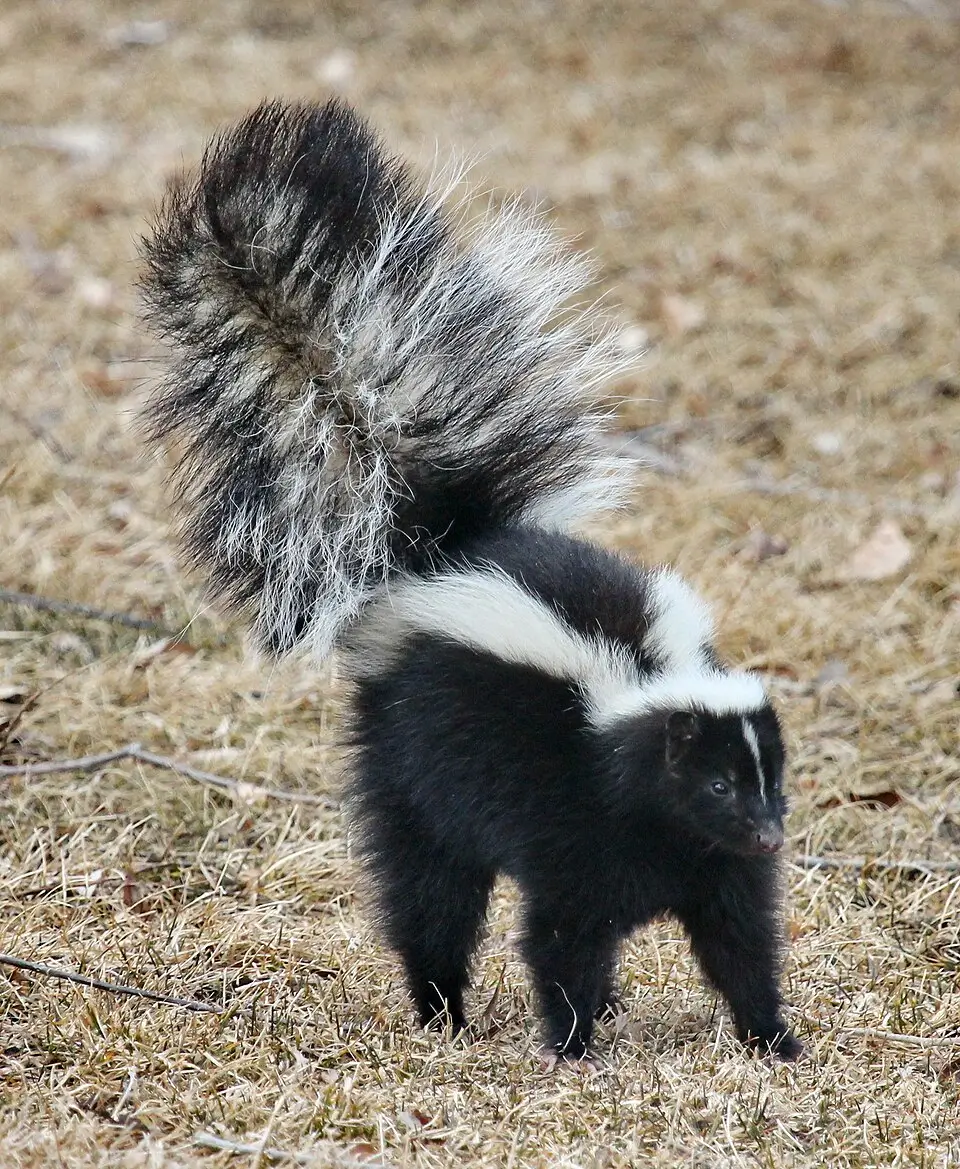
Striped skunks are medium-sized mammals, comparable in body size to a domestic house cat. They have a robust, stocky build with short, powerful legs, a broad head, and a large, bushy tail that they raise prominently as a warning display before deploying their chemical spray. Their fur is predominantly black with a distinctive white stripe that typically begins at the top of the head, forks at the shoulders, and runs down either side of the back toward the tail. The pattern can vary significantly between individuals — some skunks display wide, sweeping white stripes while others show only narrow markings — but the basic black-and-white contrast is universal and serves as a highly effective aposematic signal, warning potential predators of the animal's defensive capabilities.
The skunk's most famous trait, of course, is its ability to spray a sulfur-containing chemical compound — specifically a mixture of thiols and thioacetates — produced by a pair of anal scent glands located beneath the tail. This spray can be directed with considerable accuracy at distances of up to ten feet or more, and the odor can linger for days on skin, fur, or clothing. Before spraying, skunks typically issue clear warning signals: stomping their front feet, raising their tail, and performing a handstand-like posture. They are generally reluctant to spray unless genuinely threatened, as replenishing the chemical supply takes several days.
Striped skunks are omnivores with a broad and opportunistic diet. They consume insects — particularly ground-dwelling species like beetles, grasshoppers, and grubs — as well as small mammals, bird eggs, amphibians, fruits, berries, and plant material. Their strong foraging instincts and flexible diet make them highly adaptable to a wide range of environments. During winter months, striped skunks do not truly hibernate but enter a state of torpor, remaining largely inactive in their dens during the coldest periods while surviving on fat reserves built up in the fall.
Breeding typically occurs in late winter, and females give birth to litters of four to seven young — called kits — in the spring. The kits are born blind and helpless but develop quickly, and by late summer they are capable of living independently. Adult striped skunks generally have a lifespan of two to four years in the wild, though predation, disease, and harsh winters can significantly reduce survival rates.
One important biological consideration for wildlife managers and hunters alike is the striped skunk's well-documented role as a primary carrier of rabies in North America. Skunks are among the most common rabies vectors in the United States, and encounters with unusually bold or disoriented skunks should always be treated with caution. This biological reality also underscores the importance of responsible wildlife management and the value of regulated hunting and trapping seasons.
Habitat & Range
The striped skunk is one of the most geographically widespread mammals in North America. Its range extends from southern Canada through the contiguous United States and into northern Mexico, making it a truly continental species. It thrives in a remarkable diversity of habitats, including open prairies, agricultural fields, forest edges, riparian corridors, wetland margins, suburban neighborhoods, and semi-arid scrublands.
The key to the striped skunk's broad adaptability lies in its generalist lifestyle. It does not require specialized habitat features beyond the availability of food, water, and suitable den sites. Skunks often den in burrows excavated by other animals — such as groundhogs or badgers — or beneath structures like outbuildings, woodpiles, and brush piles. They may also dig their own shallow burrows when necessary.
In North Dakota, the striped skunk finds a welcoming home across much of the state's varied landscape. North Dakota is part of the Great Plains region, characterized by broad prairies, agricultural lands, river valleys, wetlands, and the dramatic badlands terrain of the western part of the state. All of these environments offer the skunk an abundance of foraging opportunities, particularly in areas where agricultural activity supports large insect populations and grain-eating rodent communities. The Missouri River corridor, the Drift Prairie, and the many wetland complexes associated with the Prairie Pothole Region all provide excellent skunk habitat, offering a combination of cover, water access, and food resources throughout the year.
The presence of the striped skunk across North Dakota is a consistent feature of the state's wildlife community, and populations are generally considered stable throughout the region.
Hunting Information
In North Dakota, the striped skunk is classified as a furbearer and is recognized as a game species under the state's wildlife management framework. The North Dakota Game and Fish Department oversees regulations for furbearers and other game species, and hunters and trappers interested in pursuing striped skunks should consult the current regulations index published by the department for the most up-to-date information on seasons, methods, and licensing requirements.
North Dakota's hunting and trapping traditions run deep, and the furbearer category — which includes species like the striped skunk — reflects the state's long history of wildlife harvest as both a practical and recreational pursuit. Historically, skunk pelts were a valued commodity in the fur trade, prized for their dense, glossy fur. While the commercial value of skunk fur has fluctuated over the decades, the species remains part of the furbearer management program in North Dakota and many other states.
Hunters and trappers pursuing striped skunks in North Dakota should be prepared for the realities of working with this species. The use of appropriate trapping equipment, protective gear, and knowledge of humane handling techniques are all important considerations. Many experienced trappers recommend the use of cage-style live traps as well as body-grip traps set at den entrances or along known travel routes. Given the skunk's tendency to be active primarily at night, dusk and dawn are often the most productive times to encounter them.
For those new to skunk hunting or trapping, connecting with local sportsmen's organizations and consulting the North Dakota Game and Fish Department's educational resources can provide valuable guidance. Licensing requirements for furbearer hunting and trapping in North Dakota should be verified through official state sources before the season begins, as requirements may be updated on an annual basis.
Conservation
The striped skunk is not currently listed as a threatened or endangered species, and populations across North America are generally considered healthy and stable. Its adaptability, broad diet, and high reproductive rate allow it to maintain robust numbers even in heavily modified landscapes.
From a conservation perspective, the striped skunk provides significant ecological benefits. As a voracious consumer of insects, grubs, and small rodents, it functions as a natural form of pest control that benefits agricultural producers and ecosystem function alike. Its role in seed dispersal and its position as prey for large predators — including great horned owls, coyotes, and bobcats — also contribute to its value within the broader ecological web.
Regulated hunting and trapping play an important role in maintaining balanced skunk populations, particularly in areas where skunks come into conflict with human activities or where their numbers could contribute to elevated rabies transmission risks. Responsible wildlife management, as practiced by agencies like the North Dakota Game and Fish Department, ensures that furbearer populations remain healthy and sustainable for future generations of both wildlife and hunters.
Public education about skunk biology and behavior also contributes to conservation by reducing unnecessary lethal control and fostering coexistence between humans and this remarkable animal. Understanding the striped skunk's warning signals, respecting its space, and appreciating its ecological contributions are all part of a thoughtful and informed approach to wildlife stewardship.