Overview
Few spectacles in the natural world rival the sight of snow geese on the move. Vast, white-feathered clouds descending upon wetlands and agricultural fields, filling the air with a chorus of high-pitched calls — it is one of North America's most dramatic wildlife displays. The snow goose (Anser caerulescens) is a medium-to-large waterfowl species that has captured the imagination of birdwatchers, conservationists, and hunters alike for generations. From its breeding grounds in the remote Arctic tundra to its wintering areas across the southern United States and Mexico, the snow goose undertakes one of the most remarkable migrations on the continent. In states like North Dakota, these birds play a significant role in the waterfowl hunting tradition, drawing enthusiasts from across the country each year to witness and pursue the iconic white geese.
This article explores the biology, behavior, habitat, hunting culture, and conservation story of the snow goose — a bird as fascinating as it is abundant.
Biological Traits
The snow goose (Anser caerulescens) belongs to the family Anatidae, the broad grouping that includes all ducks, geese, and swans. Within this family, snow geese are true geese of the genus Anser, closely related to other "white geese" such as Ross's goose (Anser rossii). Two subspecies are recognized: the lesser snow goose (Anser caerulescens caerulescens) and the greater snow goose (Anser caerulescens atlanticus), with the lesser being by far the more numerous and widely distributed of the two.
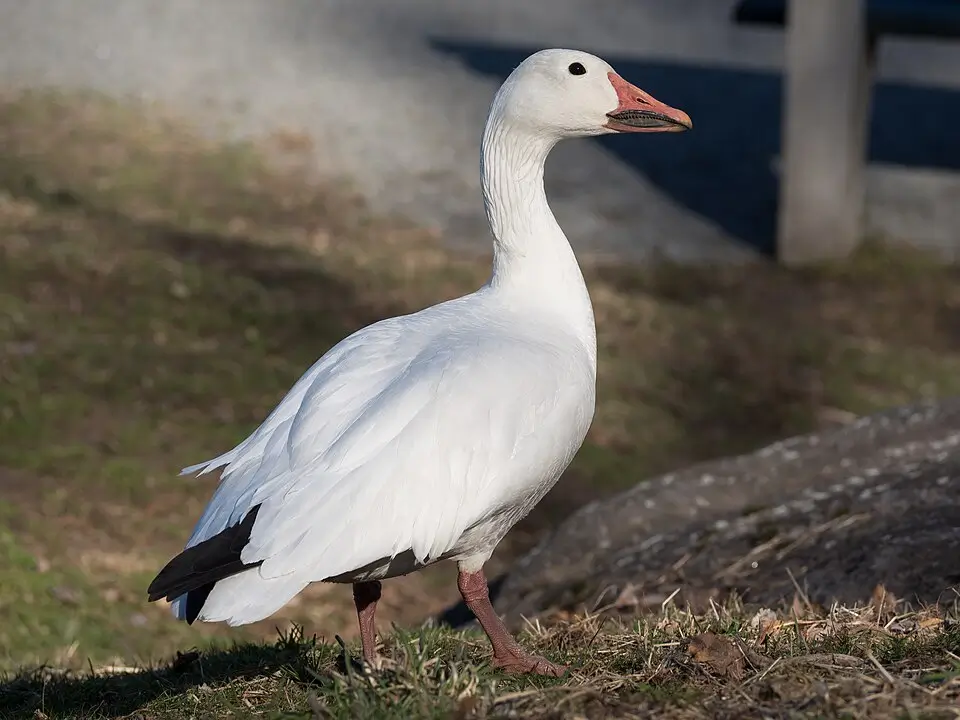
One of the most distinctive and scientifically interesting aspects of the snow goose is its color polymorphism — the existence of two color morphs within the same species. The white morph, as the name suggests, features predominantly white plumage with striking black wingtips. The blue morph (historically called the "blue goose" and once considered a separate species) displays a dark bluish-gray body with a white head and neck. Both morphs occur within the same flocks and can interbreed freely, producing offspring of varying intermediate appearances. The ratio of white to blue morphs varies geographically, with blue morphs being more common in central flyway populations.
Snow geese are medium to large birds. Adults have pink-orange bills with a characteristic "grinning patch" — a dark line along the edge of the bill — which is a useful field identification feature. Their legs and feet are also pink to orange in color. Juveniles display grayish-brown plumage in their first year before molting into adult coloration.
These birds are highly social animals, traveling, feeding, and roosting in enormous flocks that can number in the tens of thousands or even hundreds of thousands. This gregarious nature is one of the defining characteristics of the species and contributes to both their ecological impact and their popularity among hunters and wildlife observers. Snow geese are also notably vocal, producing a constant, high-pitched barking or honking that can be heard from considerable distances when a large flock is overhead.
Snow geese are primarily herbivores, feeding on grasses, sedges, roots, rhizomes, and agricultural crops such as corn, wheat, and rice. Their feeding behavior — particularly their habit of "grubbing" or pulling up plant roots — has significant implications for Arctic vegetation and has become a central topic in conservation discussions.
Like most waterfowl, snow geese form long-term pair bonds. They typically mate for life, though re-pairing does occur if a mate is lost. Nesting occurs on the Arctic tundra, where females lay clutches of three to five eggs. Both parents are involved in raising the young, called goslings, which are precocial — meaning they are mobile and capable of feeding themselves very shortly after hatching. Family groups remain together through the first autumn migration, with young birds learning migration routes from their parents.
Snow geese are long-lived birds, with individuals in the wild known to survive for more than 20 years under favorable conditions.
Habitat & Range
The snow goose occupies a vast geographic range that spans much of North America. Breeding colonies are established along the Arctic and sub-Arctic coasts of Canada, Alaska, and Greenland — remote, treeless tundra environments where the birds nest among sedge meadows and coastal wetlands during the brief Arctic summer. Major breeding colonies exist along Hudson Bay, on Banks Island, Southampton Island, and along the coasts of Baffin Island, among other locations.
Come late summer and early autumn, snow geese begin their southward migration, traveling along established flyways that cross through the heart of the continent. The Central Flyway and Mississippi Flyway are particularly important corridors for lesser snow geese, funneling millions of birds through the prairies and wetlands of the Great Plains and Midwest. This migration route passes directly through North Dakota, making the state a critical stopover and staging area for these birds.
North Dakota's position in the Upper Midwest, straddling the Great Plains and characterized by broad prairies, wetlands, and extensive agricultural land, makes it an ideal habitat for migrating snow geese. The state's pothole lakes, river systems, and grain fields provide both the roosting areas and the food resources that snow geese depend on during their long journeys. Hundreds of thousands of birds can be present in the state at peak migration periods, creating extraordinary wildlife viewing and hunting opportunities.
Wintering grounds for lesser snow geese are found along the Gulf Coast of Louisiana and Texas, as well as in parts of Mexico. Greater snow geese, the larger subspecies, winter primarily along the Atlantic Coast from New Jersey to the Carolinas, with their migration corridor running along the eastern seaboard rather than through the interior.
Hunting Information
Snow goose hunting is a beloved tradition in North America, particularly across the Central and Mississippi Flyways where the birds are most abundant during migration. In North Dakota, waterfowl hunting — including goose hunting — is a significant part of the state's outdoor heritage and economy. The North Dakota Game and Fish Department oversees hunting regulations, licensing, and conservation efforts related to migratory game birds including snow geese.
Hunters interested in pursuing snow geese in North Dakota should consult the North Dakota Game and Fish Department's official resources for current season dates, licensing requirements, and regulations, as these can change from year to year based on population assessments and federal management decisions. The Game and Fish Department provides comprehensive hunting information organized by species, including waterfowl, through its official website and printed regulation booklets.
Snow goose hunting is widely regarded as one of the most challenging and exciting forms of waterfowl hunting. The birds are famously wary, with sharp eyesight and a strong instinct to avoid danger honed by generations of hunting pressure. Successful hunters typically employ very large decoy spreads — sometimes numbering in the thousands of decoys — combined with electronic callers (permitted during Conservation Order seasons), flags, and wind socks to simulate the appearance and sound of a feeding or resting flock. Layout blinds or white camouflage are commonly used to conceal hunters in open fields.
The spring Conservation Order season, established by the U.S. Fish and Wildlife Service in response to snow goose population concerns, allows hunters to use methods not permitted during standard waterfowl seasons, including electronic calls and unplugged shotguns. This extended hunting opportunity gives sportsmen additional time afield and provides an important management tool for wildlife managers.
North Dakota's expansive agricultural landscape — vast fields of grain, combined with accessible wetlands and public hunting areas — makes it an outstanding destination for snow goose hunters. Public lands, including Wildlife Management Areas (WMAs) and PLOTS (Private Land Open To Sportsmen) areas, provide access opportunities for hunters who may not have private land connections. The state's Game and Fish Department maintains detailed information about these public hunting access programs.
Whether hunting from layout blinds in a harvested cornfield or watching a massive flock spiral down from a grey October sky, the snow goose experience in North Dakota is one that stays with hunters for a lifetime.
Conservation
The conservation story of the snow goose is a nuanced and evolving one. Unlike many wildlife species that face population decline, lesser snow geese have experienced a dramatic population explosion over the past several decades. This increase has been attributed to a combination of factors, including abundant food resources on wintering grounds and agricultural areas, reduced hunting pressure over certain periods, and protection under the Migratory Bird Treaty Act.
While this population growth may initially seem like a conservation success story, the sheer scale of snow goose numbers has created significant ecological challenges. In their Arctic and sub-Arctic breeding habitats, overabundant snow goose populations have caused widespread destruction of coastal marshes and tundra vegetation through intensive feeding and grubbing behavior. This phenomenon, sometimes referred to as "eat-outs," has resulted in the conversion of productive wetland and tundra habitat into barren mudflats, with cascading consequences for other species that depend on these ecosystems.
In response to this situation, wildlife managers in the United States and Canada implemented the Light Goose Conservation Order in 2000 under the Migratory Bird Treaty Reform Act. This management action authorized special hunting seasons and relaxed methods during spring migration to increase harvest and help reduce snow goose populations to levels compatible with healthy Arctic ecosystems. Hunters have become important partners in this ongoing conservation effort, with their participation in spring Conservation Order seasons contributing directly to population management goals.
The snow goose situation illustrates the complexity of modern wildlife management and the interconnectedness of ecosystems across vast geographic distances. It also underscores the important role that hunters play not just as participants in a sporting tradition, but as active contributors to wildlife conservation.