Overview
Few sights in the natural world rival the spectacle of thousands of Sandhill cranes sweeping across an open sky, their haunting, rattling calls echoing across the landscape like something out of prehistory. That impression is not far from the truth. The Sandhill crane (Grus canadensis) is one of the oldest living bird species on Earth, with fossil records suggesting that cranes closely resembling the modern Sandhill crane walked — and flew — across North America more than two million years ago. Today, these magnificent birds remain a vibrant and iconic part of the American wilderness, drawing birdwatchers, photographers, wildlife enthusiasts, and hunters alike to witness their spectacular seasonal migrations.
In North Dakota, the Sandhill crane holds a special place in the natural calendar. As part of the Great Plains region, North Dakota's broad prairies, wetlands, and agricultural fields provide critical stopover and staging habitat for migrating cranes, and the state's outdoor heritage embraces these birds as both a wildlife spectacle and a game species. Understanding the Sandhill crane — its biology, behavior, habitat preferences, and its role in hunting culture — is essential for anyone who wants to fully appreciate one of North America's most remarkable birds.
Biological Traits
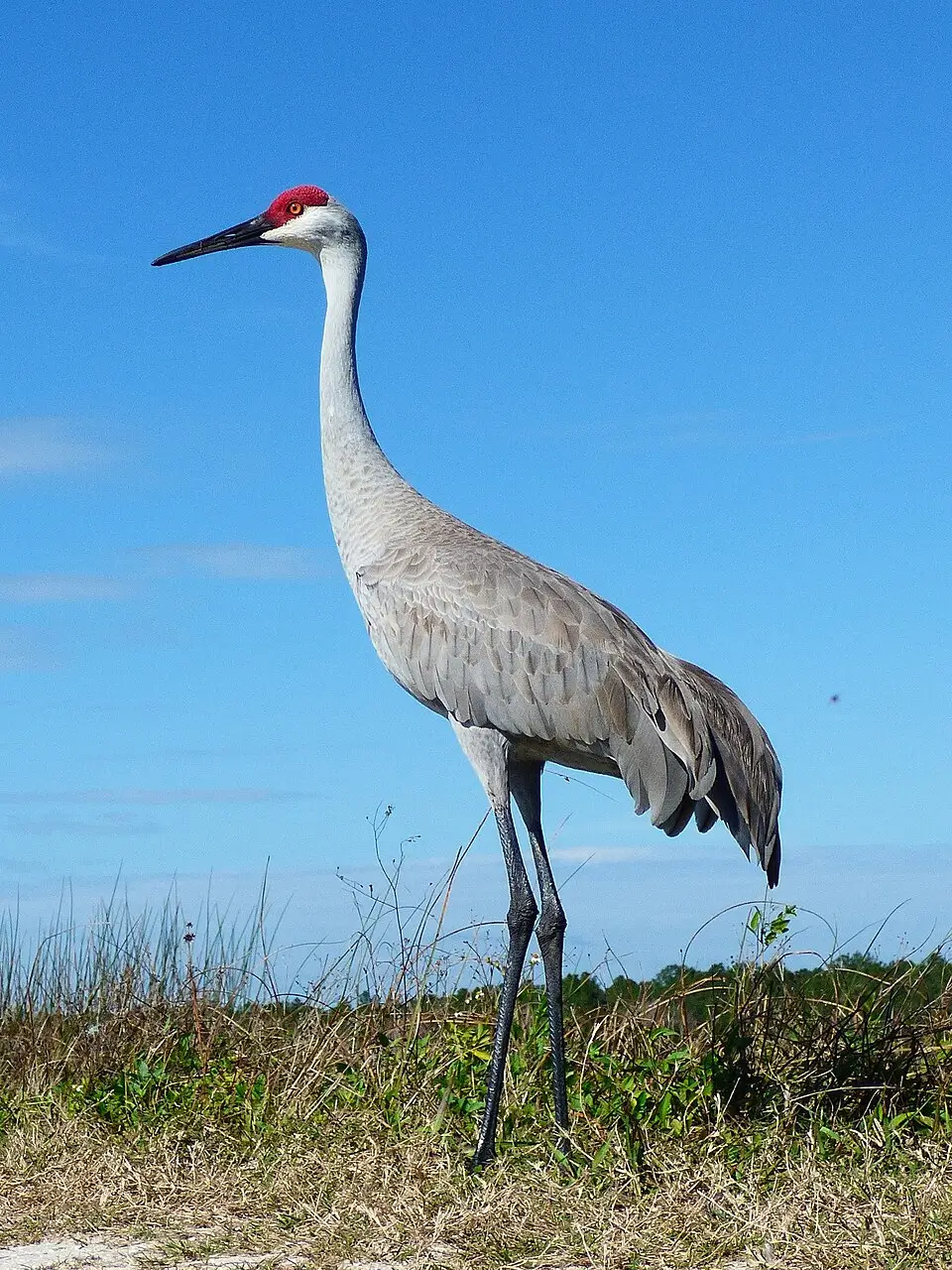
The Sandhill crane is a large wading bird belonging to the family Gruidae, the true cranes. Its scientific name, Grus canadensis, reflects both its genus among the world's crane species and its strong association with the North American continent. Standing roughly three to four feet tall with a wingspan that can stretch to nearly six feet or more, the Sandhill crane is among the tallest birds in North America. Its size alone commands attention, but it is the bird's overall presence — upright posture, deliberate movement, and piercing red crown — that makes it truly unforgettable.
Adult Sandhill cranes are primarily gray in plumage, though their feathers often take on a rusty, reddish-brown tinge during the breeding season. This coloration comes not from pigmentation but from iron-rich mud and vegetation that the birds preen into their feathers, a fascinating behavior that is unique among North American birds. Their long legs and necks are built for life in open terrain, allowing them to scan their surroundings for predators and food alike. The bright red patch of bare skin on the forehead — the "crown" — is one of the crane's most distinctive features, intensifying in color during periods of excitement or courtship.
One of the most celebrated aspects of Sandhill crane biology is their elaborate courtship display. Pairs engage in energetic and visually stunning dances that involve bowing, jumping, wing-spreading, and tossing vegetation or sticks into the air. These dances serve not only to attract mates but also to strengthen the pair bond, as Sandhill cranes are known to mate for life. A bonded pair will return to the same nesting territory year after year, reinforcing their partnership through continued displays throughout each breeding season.
Sandhill cranes are omnivores, consuming a wide variety of food depending on the season and habitat. Their diet includes plant tubers, berries, seeds, grains, insects, small vertebrates, and invertebrates. During migration and in winter, they rely heavily on agricultural fields, feeding on waste grain — particularly corn — which provides the high-energy calories needed to fuel their long journeys. This adaptability in diet has contributed significantly to the species' success and population recovery in recent decades.
The vocalizations of Sandhill cranes are unlike those of almost any other bird. Their loud, rolling, bugling call — often described as a rattling trumpet — can carry for miles across open terrain and serves as one of the most stirring sounds in North American wildlife. These calls are used for communication between mates and family groups, for maintaining flock cohesion during migration, and for territorial advertisement during the breeding season.
Habitat & Range
Sandhill cranes are highly adaptable birds found across a broad swath of North America, from the Arctic tundra of Alaska and Canada south through the Great Plains, the Rocky Mountain region, and into parts of Mexico and Cuba. There are several recognized subspecies of Grus canadensis, which vary in size and range, including the Greater Sandhill crane, the Lesser Sandhill crane, the Canadian Sandhill crane, the Florida Sandhill crane, the Mississippi Sandhill crane, and the Cuban Sandhill crane. Among these, the migratory subspecies — particularly the Lesser and Greater Sandhill cranes — undertake some of the most impressive migrations on the continent.
The species favors open habitats near water. Breeding territory typically includes marshes, wetlands, bogs, wet meadows, and the shores of lakes and rivers. During migration and winter, cranes rely heavily on agricultural landscapes — particularly grain fields — as well as shallow wetlands where they roost communally at night for protection from predators.
North Dakota sits squarely in the heart of the Central Flyway, one of North America's primary migratory corridors. The state's extensive prairie pothole region — a landscape of countless shallow wetlands and ponds formed by glacial activity — provides exceptional roosting and foraging habitat for migrating Sandhill cranes during both the spring and fall migrations. The broad, open farmlands of North Dakota, particularly fields harvested of corn, soybeans, and other grains, serve as prime foraging grounds where cranes can build up the fat reserves necessary for continued migration. The combination of abundant wetland roosting sites and productive agricultural fields makes North Dakota one of the most important states for Sandhill cranes during migration.
In the spring, Sandhill cranes move northward through North Dakota en route to their breeding grounds in Canada and Alaska, while in the fall, the reverse journey brings large flocks back through the state as birds head toward their wintering areas in the southern United States and northern Mexico. During peak migration periods, it is not uncommon to witness flocks numbering in the thousands, spiraling upward on thermals or streaming across the horizon in long, undulating lines.
Hunting Information
Sandhill cranes are classified as migratory game birds under the federal Migratory Bird Treaty Act, meaning their hunting is regulated at both the federal and state levels. In North Dakota, Sandhill crane hunting falls under the oversight of the North Dakota Game and Fish Department, which manages hunting seasons and regulations in accordance with federal guidelines and population assessments.
North Dakota recognizes Sandhill cranes as part of its "Other Migratory Game Birds" category, and the state has a tradition of crane hunting that has grown steadily as populations have remained healthy. Hunters pursuing Sandhill cranes in North Dakota are required to obtain the appropriate state and federal licenses and permits, including compliance with the Harvest Information Program (HIP), which is a mandatory federal survey program that helps wildlife managers monitor migratory bird harvest across the country.
Sandhill crane hunting is a uniquely challenging and rewarding pursuit. Often called the "ribeye of the sky" by hunters who prize the quality of their dark, rich meat, the Sandhill crane offers table fare that sets it apart from most other game birds. Hunting typically involves decoy spreads set in agricultural fields, calling to attract incoming birds, and a good deal of patience — cranes are wary, sharp-eyed birds that can be difficult to fool. Hunters often use full-body or silhouette decoys and electronic or mouth calls to replicate the crane's distinctive bugling call.
For specific season dates, bag limits, license requirements, and any lottery or permit processes that may apply in North Dakota in a given year, hunters are strongly encouraged to consult the North Dakota Game and Fish Department's current regulations, as these details are subject to change annually and must be followed precisely to remain in compliance with state and federal law.
Conservation
The conservation story of the Sandhill crane is one of wildlife management's genuine success stories. Earlier in the twentieth century, several subspecies experienced significant population declines due to hunting pressure, habitat loss, and human disturbance. Through the implementation of protective regulations, habitat conservation efforts, and careful population monitoring, Sandhill crane populations — particularly the migratory subspecies — have rebounded impressively.
Today, the Sandhill crane is listed as a species of Least Concern by the International Union for Conservation of Nature (IUCN), a reflection of the overall health of the migratory populations. However, some subspecies remain of conservation concern. The Florida Sandhill crane, the Mississippi Sandhill crane, and the Cuban Sandhill crane are non-migratory populations with much smaller numbers that require ongoing conservation attention. The Mississippi Sandhill crane, in particular, is listed as endangered and is the subject of active recovery programs.
The broad conservation success of the Sandhill crane underscores the importance of science-based wildlife management, the protection of wetland habitats, and the constructive role that regulated hunting plays in sustainable wildlife management. Hunters, through license fees and excise taxes on sporting equipment paid into programs like the Federal Duck Stamp and the Pittman-Robertson Wildlife Restoration Act, contribute significantly to the funding of the very habitat conservation efforts that benefit cranes and countless other species.
North Dakota's prairie pothole landscape, much of it protected through conservation programs and easements, represents a critical piece of the habitat network that sustains Sandhill crane populations across the Central Flyway. Continued investment in wetland protection and restoration in states like North Dakota will remain essential to the long-term health of Sandhill crane populations for generations to come.