Overview
Few wild animals capture the human imagination quite like the red fox. With its vivid russet coat, bushy white-tipped tail, and sharp, intelligent eyes, Vulpes vulpes is one of the most iconic and widely recognized wildlife species on the planet. Celebrated in folklore, studied by scientists, and pursued by hunters and trappers alike, the red fox occupies a unique place in both the natural world and human culture. In North Dakota — a state defined by sweeping prairies, fertile farmland, and dramatic badlands — the red fox is a familiar and fascinating resident, thriving in the diverse landscapes of the Upper Midwest.
Whether you are a hunter, a wildlife enthusiast, or simply someone who has spotted a flash of orange along a country road at dusk, understanding the red fox more deeply enriches the experience of encountering this remarkable animal. This article explores the biology, habitat, behavior, hunting traditions, and conservation status of the red fox, with a particular focus on its role in North Dakota's outdoor heritage.
Biological Traits
The red fox, Vulpes vulpes, is the largest of the true foxes and belongs to the family Canidae, which also includes wolves, coyotes, and domestic dogs. It is one of the most widely distributed carnivores on Earth, found across the entire Northern Hemisphere and introduced to parts of Australia and other regions.
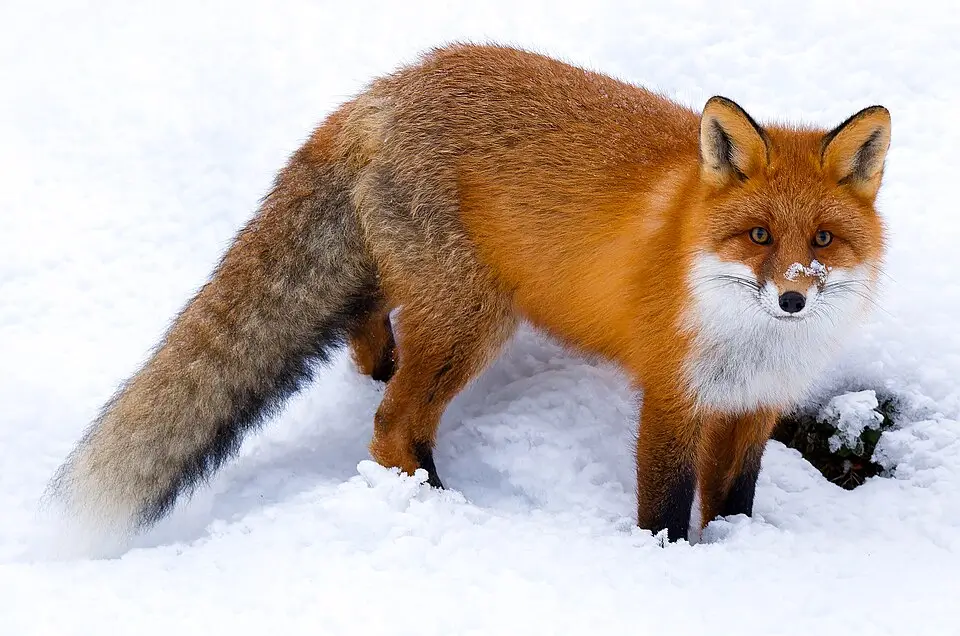
The red fox is immediately recognizable by its striking coloration. The most common coat pattern features a rich reddish-orange upper body, white underparts, dark legs, and the unmistakable bushy tail — known as a "brush" — that is typically tipped in white. However, red foxes actually display considerable color variation within the same species. Color morphs including the "cross fox" (which displays a dark cross pattern across the shoulders), the "silver fox" (a melanistic variant with black and silver fur), and other regional variations are all members of the same species, Vulpes vulpes. This genetic flexibility is part of what makes the red fox such an adaptable and successful animal.
Adult red foxes are medium-sized animals. They have slender, elongated bodies, pointed muzzles, large upright ears that provide exceptional hearing, and vertical-slit pupils — a distinctive trait that sets them apart from many other members of the dog family and aids in low-light hunting. Their senses of hearing and smell are extraordinarily acute, making them formidable and efficient predators despite their relatively modest size.
Red foxes are omnivores with a highly varied diet. They prey on small mammals such as mice, voles, rabbits, and ground squirrels, but they also consume birds, eggs, insects, earthworms, fruits, berries, and carrion. This dietary flexibility is a key reason for the species' remarkable success across so many different environments. They are opportunistic hunters and foragers, capable of adjusting their food sources with the seasons.
One of the most impressive hunting behaviors of the red fox is its characteristic "mousing leap." When a fox detects a small rodent hidden beneath snow or dense grass, it will pause, tilt its head to triangulate the sound, and then launch itself high into the air before plunging nose-first toward its prey. This behavior is visually spectacular and speaks to the fox's keen sensory abilities and athletic agility.
Red foxes are primarily solitary animals outside of the breeding season. They are most active during dawn, dusk, and nighttime hours, though daytime activity is not uncommon, particularly in areas where human disturbance is minimal. Breeding typically occurs in winter, and after a gestation period of roughly 52 days, a vixen (female fox) gives birth to a litter of pups, commonly called "kits" or "cubs." Litters typically range from four to six young, though larger litters are possible. Pups are born blind and helpless and are raised in underground dens, often excavated by the foxes themselves or taken over from other burrowing animals such as badgers or groundhogs. Both parents participate in raising the young, with the male providing food for the nursing female and growing pups.
Foxes are known for their intelligence and cunning — qualities that have earned them a starring role in the folklore and literature of cultures around the world. They are quick learners and demonstrate problem-solving abilities that allow them to exploit new food sources and evade predators and hunters.
Habitat & Range
Vulpes vulpes boasts one of the widest natural ranges of any terrestrial mammal. The species is native to most of North America, Europe, Asia, and North Africa, and has been introduced to Australia, where it has become a significant invasive species. In North America, red foxes are found from the Arctic tundra to the southern United States, demonstrating extraordinary ecological versatility.
In North Dakota, the red fox is well at home. The state's geography — characterized by broad prairies, agricultural fields, river valleys, shelterbelts, wetlands, and the rugged Badlands of the southwest — provides a mosaic of habitats that suits the red fox's adaptable lifestyle. Red foxes tend to favor edge habitats, areas where different types of terrain or vegetation meet, such as the boundary between a crop field and a wooded draw or the transition zone between grassland and wetland. These edges provide both cover for denning and resting, and open areas for hunting small mammals.
North Dakota's abundant agricultural land is particularly attractive to red foxes. Farm fields support large populations of mice, voles, and rabbits — all preferred prey items — and the grain crops, hay fields, and shelterbelts offer ideal denning cover. The state's many prairie potholes and wetlands further enrich the habitat by supporting diverse bird and small mammal communities that supplement the fox's diet.
Red foxes are highly adaptable to human presence and are often found living in close proximity to rural communities, farmsteads, and even the edges of urban areas. Their ability to exploit human-modified landscapes has contributed to their success as a species even as other wildlife has faced pressures from habitat change.
Hunting Information
The red fox has a long and respected tradition as a quarry species for hunters and trappers in North Dakota and across North America. Hunting and trapping red foxes is a legitimate and valued part of the state's outdoor culture, contributing to wildlife management and providing opportunities for sportsmen and sportswomen to engage with the land during the winter months.
In North Dakota, the red fox is classified among the state's furbearers and other game species, as recognized by the North Dakota Game and Fish Department. Hunters and trappers interested in pursuing red fox should consult the North Dakota Game and Fish Department's current regulations, which outline the applicable rules for seasons, methods, and any licensing requirements. The department's official resources provide detailed and up-to-date guidance for all hunting and trapping activities in the state, and it is always the hunter's responsibility to be familiar with and comply with current regulations before taking to the field.
Fox hunting in North Dakota is typically a winter pursuit. The colder months bring foxes into more predictable patterns as they concentrate their hunting activity around areas with good prey populations, and the sparse winter vegetation makes spotting and calling foxes more effective. Predator calling — using electronic or mouth-blown calls that imitate the sounds of distressed prey animals such as rabbits — is a popular and effective technique for bringing red foxes into range. Hunters often set up near known fox travel corridors, such as field edges, fence lines, and creek bottoms, to maximize their chances.
Trapping also has a deep heritage in North Dakota, and the red fox is a traditional target for trappers who value the animal's beautiful fur. Responsibly practiced trapping plays a role in wildlife population management and provides a meaningful connection to the state's frontier heritage.
Regardless of the method pursued, ethical hunting and trapping of red foxes demands careful attention to regulations, respect for private and public land access rules, and a commitment to fair chase and humane practices. Hunters are encouraged to reach out to the North Dakota Game and Fish Department for the most current season information and licensing details.
Conservation
The red fox is currently listed as a species of Least Concern by the International Union for Conservation of Nature (IUCN), reflecting its wide distribution, large global population, and strong adaptability to changing environments. Unlike many wildlife species that have struggled in the face of habitat loss and human expansion, the red fox has in many cases thrived alongside human development, taking advantage of agricultural landscapes and suburban environments.
In North Dakota and across the Great Plains, red fox populations remain healthy and stable. Regulated hunting and trapping, overseen by state wildlife agencies, helps to maintain balanced predator-prey relationships and supports the overall health of wildlife communities. The North Dakota Game and Fish Department plays a vital role in monitoring furbearer populations and adjusting regulations as needed to ensure sustainable harvest levels.
The red fox also plays an important ecological role as a mesopredator — a medium-sized predator that helps regulate populations of small mammals and ground-nesting birds. By keeping rodent populations in check, foxes contribute to the health of agricultural lands and natural ecosystems alike. At the same time, foxes serve as prey for larger predators such as coyotes, eagles, and great horned owls, making them an integral part of the food web.
Conservation of red fox habitat — particularly the preservation of grassland edges, shelterbelts, and wetland margins — benefits not only foxes but the broader community of wildlife that depends on North Dakota's diverse landscapes. Supporting land conservation programs, respecting wildlife during sensitive periods such as the denning and pup-rearing season, and participating in ethical, regulated hunting and trapping all contribute to the long-term well-being of this remarkable species.
Conclusion
The red fox is far more than a flash of color at the edge of a winter field. It is a species of extraordinary intelligence, adaptability, and ecological importance — a true symbol of wild North America and a proud part of North Dakota's natural heritage. Whether encountered in the golden light of a prairie sunrise, glimpsed bounding through a snow-covered field, or pursued during the crisp days of a winter predator season, Vulpes vulpes never fails to inspire wonder and respect. For hunters, wildlife watchers, and conservationists alike, the red fox is a species well worth knowing, protecting, and celebrating.