Overview
Few birds are as universally recognized across North America as the mourning dove. Its soft, mournful cooing — the sound from which it draws its evocative name — drifts across backyards, farm fields, open woodlands, and prairies from coast to coast. Whether you hear it at dawn from a suburban fence post or spot its sleek silhouette winging swiftly over a sunflower field in the Great Plains, the mourning dove (Zenaida macroura) is a constant and beloved presence in the American landscape.
For hunters, the mourning dove holds a special distinction: it is the most harvested migratory game bird in North America. Millions of dove hunters take to the field each season, drawn by the bird's challenging, darting flight pattern, the social tradition of the dove hunt, and the excellent table fare the bird provides. For wildlife enthusiasts and casual observers, the mourning dove is a symbol of gentle resilience — a species that thrives alongside human activity while maintaining its wild, graceful character.
This article explores the biology, habitat, behavior, hunting traditions, and conservation status of the mourning dove, with particular attention to its presence and significance in North Dakota's rich outdoor sporting culture.
Biological Traits
The mourning dove belongs to the family Columbidae, the large and diverse family of pigeons and doves found on every continent except Antarctica. Its scientific name, Zenaida macroura, pays homage to Princess Zénaïde of France and references the bird's notably long tail — macroura derives from Greek meaning "long-tailed." It is closely related to other New World doves, including the passenger pigeon, now extinct, and the Inca dove.
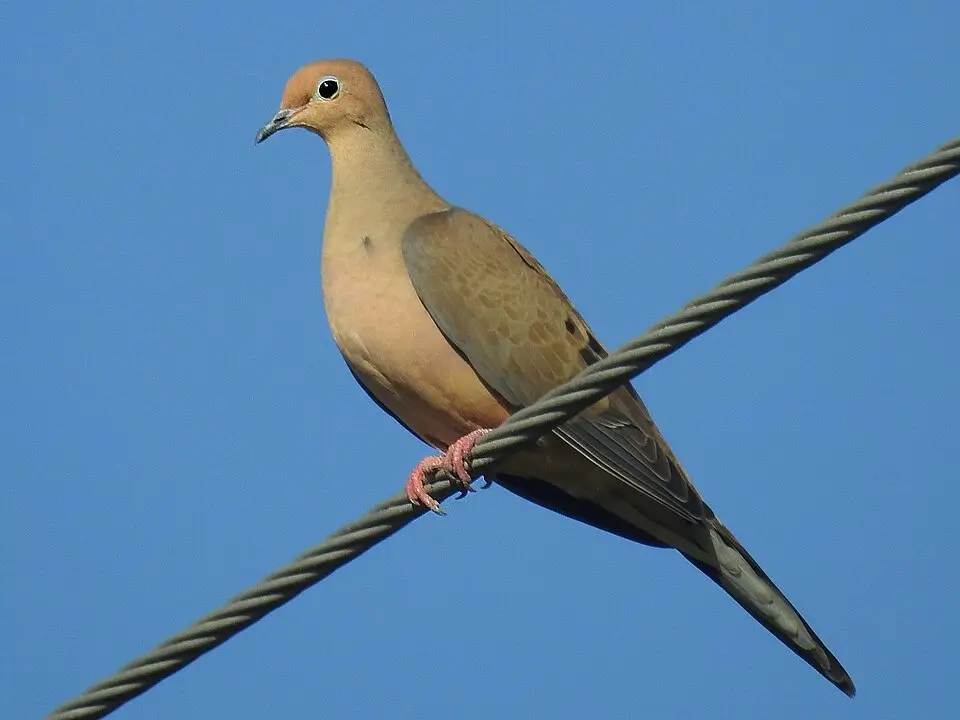
In terms of physical appearance, the mourning dove is a medium-sized bird with a slender, streamlined body perfectly adapted for fast, agile flight. Adults typically display soft brownish-tan plumage on the back and wings, with a pale pinkish-buff wash across the breast. The wings are marked with distinctive black spots, and the long, pointed tail — a signature feature — is edged with white tips that flash distinctively in flight. The bird's small head, short bill, and large, dark eyes give it a gentle, almost contemplative expression.
One of the most remarkable aspects of mourning dove biology is the bird's reproductive capacity. Mourning doves are prolific breeders, capable of raising multiple clutches of young — called squabs — within a single breeding season. A mated pair typically produces two eggs per clutch, and under favorable conditions, a pair may successfully raise several broods between early spring and late summer or early fall. This high reproductive rate is a key reason why the species remains abundant despite being intensively hunted.
Mourning dove nests are notably simple — loosely constructed platforms of sticks and twigs placed in trees, shrubs, on ledges, or sometimes on the ground. Both parents share incubation duties, and both produce "crop milk," a nutritious secretion from the crop lining that feeds the hatchlings during the first days of life. This shared parental investment, combined with the species' prolific breeding behavior, ensures robust population replenishment year after year.
In terms of diet, mourning doves are granivores, feeding almost exclusively on seeds. They are ground feeders, walking methodically across open ground to pick up seeds of grasses, agricultural crops, and wild plants. Sunflower seeds, corn, millet, wheat, and various weed seeds are among their preferred foods. This seed-based diet makes agricultural landscapes particularly attractive to the species and explains why dove populations thrive in farming regions like North Dakota's broad prairies and croplands.
The mourning dove is also well known for its distinctive vocalizations. The familiar "coo-OO-oo, oo, oo" call is produced by males as part of courtship behavior and territorial advertisement. The sound carries surprisingly far across open landscapes and is one of the most commonly heard bird sounds in rural and suburban North America. Additionally, mourning doves produce a distinctive whistling sound with their wings during takeoff — a result of the unique structure of their primary feathers — which serves as an alarm signal to nearby birds.
Habitat & Range
The mourning dove is one of the most widely distributed birds in North America. Its breeding range extends from southern Canada throughout the continental United States and into Mexico and Central America. In winter, the northern portions of the population migrate southward, while birds in warmer southern states may remain year-round residents.
The species demonstrates remarkable habitat flexibility. Mourning doves are equally at home in open woodlands, forest edges, grasslands, deserts, agricultural fields, suburban neighborhoods, and urban parks. The common thread across all preferred habitats is open ground for foraging and access to reliable water sources. Doves are known to travel considerable distances daily between feeding areas and water.
In North Dakota, the mourning dove is a familiar summer resident. The state's landscape — characterized by expansive prairies, vast agricultural fields, rolling grasslands, river breaks, shelterbelts, and the iconic Badlands — provides excellent habitat for the species throughout the warmer months. Doves arrive in North Dakota during spring migration and take up residence across the state, nesting in shelterbelts, along waterways, and in areas where cropland and open ground provide abundant foraging opportunities.
The Great Plains region, of which North Dakota is a prominent part, represents some of the most productive mourning dove habitat in the country. The combination of grain agriculture — sunflowers, wheat, corn, and soybeans are major North Dakota crops — with grassland habitat and reliable water creates ideal conditions for large dove populations to build through the summer breeding season.
Hunting Information
The mourning dove occupies a unique place in American hunting culture. Dove hunting is widely considered one of the most social and accessible forms of wing shooting, often serving as an introduction for new hunters and a beloved tradition for experienced sportsmen alike. The dove's swift, erratic flight makes it a genuinely challenging target, demanding quick reflexes and sharp shooting skills.
In North Dakota, mourning doves are classified as migratory game birds and fall under both federal and state regulations. Because they are migratory birds, mourning dove hunting in North Dakota is governed by the framework established by the U.S. Fish and Wildlife Service in coordination with the North Dakota Game and Fish Department. Hunters interested in pursuing mourning doves in North Dakota should consult the North Dakota Game and Fish Department's official resources for current season dates, bag limits, and licensing requirements, as these details are subject to change on an annual basis.
The North Dakota Game and Fish Department provides comprehensive hunting information organized by species, including specific guidance for upland game, waterfowl, and other migratory game birds — a category under which the mourning dove falls. Hunters are encouraged to review the current regulations index, which covers a broad range of topics including licensing, Wildlife Management Areas (WMAs), and PLOTS (Private Land Open To Sportsmen) access program lands. These public and private access programs can be particularly valuable for dove hunters seeking quality fields and open terrain.
Effective dove hunting typically involves identifying fields where birds are actively feeding — harvested grain fields, sunflower fields, and areas with abundant weed seeds are top choices in North Dakota — as well as water sources and flyways that doves use to travel between feeding and roosting areas. Hunters typically set up along field edges, near water, or under known flight paths and pass-shoot birds as they move through the area. Decoys can be used effectively to attract doves to a specific location.
Shotguns in 12, 20, or 28 gauge loaded with target or field loads are standard equipment for dove hunting. Because the birds are relatively small and fast, shell selection and choke choice matter, but perhaps nothing matters more than practice and patience. Dove hunts are frequently communal affairs, with groups of hunters spread across a field, and they have a long tradition of being festive social gatherings in many parts of the country.
Conservation
Despite being the most heavily harvested migratory bird in North America, the mourning dove maintains healthy and robust population numbers across its range. This population resilience is largely attributable to the bird's exceptional reproductive capacity, which allows populations to absorb hunting pressure and natural mortality while remaining stable or even increasing.
Wildlife managers across the continent monitor mourning dove populations closely through annual Breeding Bird Surveys, Call Count Surveys, and harvest data collected through the Harvest Information Program (HIP) — a mandatory reporting system that hunters must register with before pursuing any migratory game bird. This careful scientific oversight ensures that seasons and bag limits are set at sustainable levels.
The mourning dove also benefits significantly from human-altered landscapes. Agricultural development, suburban sprawl, and land management practices that create open ground and edge habitat have, in many respects, expanded the dove's range and increased available food resources. While habitat loss remains a conservation concern for many species, the adaptable mourning dove has largely thrived alongside modern land use patterns.
Conservation-minded hunters and land managers can support mourning dove populations by maintaining shelterbelts, hedgerows, and brushy cover near agricultural fields, ensuring access to clean water sources, and managing weedy areas that provide abundant natural seed food. These practices benefit not only doves but a wide variety of grassland and farmland wildlife species.