Overview
Few birds in North America are as instantly recognizable as the Mallard (Anas platyrhynchos). With its iridescent emerald-green head, bright yellow bill, and chestnut-brown breast, the drake Mallard has become the quintessential image of waterfowl across the continent — and indeed, around much of the world. Whether gliding serenely across a quiet farm pond, feeding in the shallows of a wetland marsh, or flushing dramatically from a cattail-lined slough with a rattling call, the Mallard occupies a special place in the hearts of wildlife enthusiasts, birdwatchers, and hunters alike.
The Mallard is not just a beloved symbol of wild places — it is also the most widely hunted waterfowl species in North America and one of the most studied birds on Earth. Its adaptability, abundance, and remarkable range make it a cornerstone species in wetland ecosystems, while its sporting qualities and table fare have made it a prized quarry for generations of waterfowl hunters. In North Dakota, one of the continent's premier waterfowl hunting destinations, the Mallard holds a place of particular importance, both ecologically and recreationally.
This article explores the biology, habitat, behavior, and hunting traditions surrounding this extraordinary bird, with a focus on the unique landscape of North Dakota and its role in the annual cycle of one of America's most celebrated ducks.
Biological Traits
The Mallard (Anas platyrhynchos) belongs to the family Anatidae and is classified within the genus Anas, which encompasses a diverse group of dabbling ducks found throughout the world. The species name platyrhynchos is derived from Greek, meaning "flat-billed," a fitting reference to the broad, spatula-shaped bill that is a hallmark of dabbling ducks.
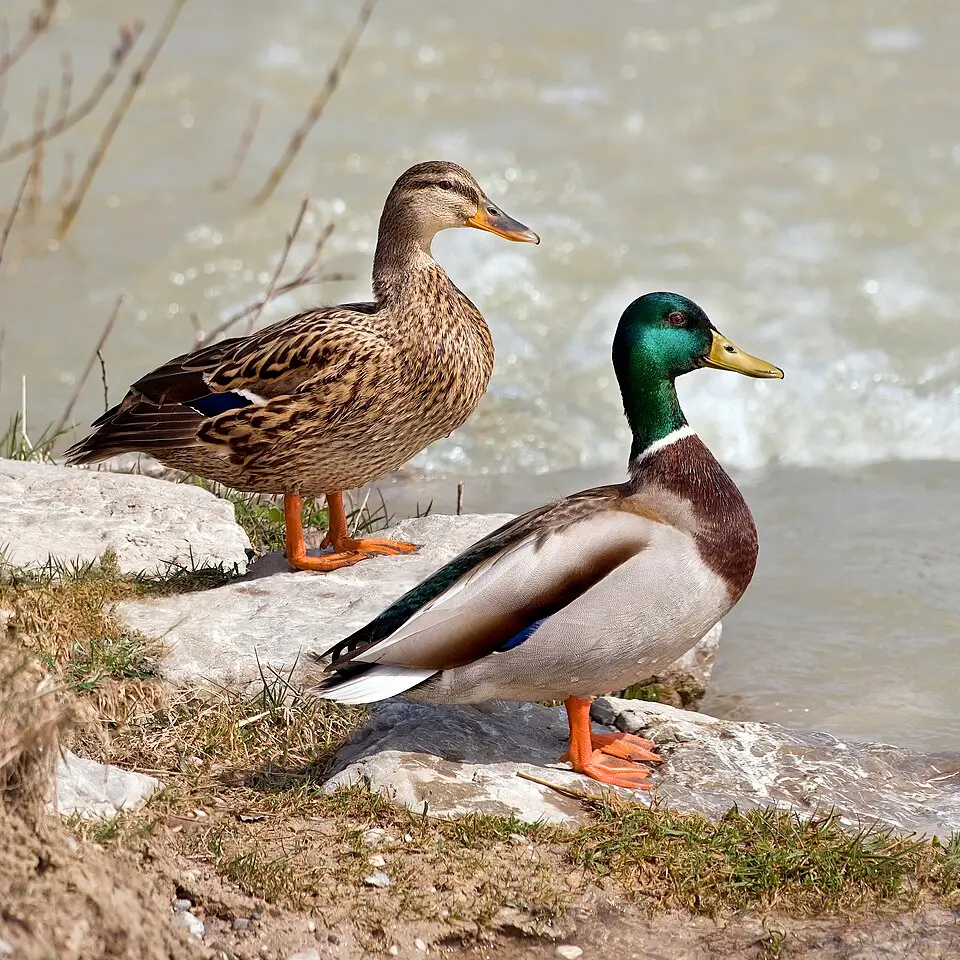
The Mallard is a sexually dimorphic species, meaning males and females display distinctly different plumage. The drake, or male, is among the most striking of all waterfowl. In breeding plumage, he sports a glossy, iridescent green head separated from his rich chestnut breast by a narrow white neck ring. His body is largely gray, his tail coverts curl upward in a distinctive curl, and his bill is a vivid yellow-orange. The speculum — the wing patch — is a brilliant blue-purple bordered by white, visible in flight in both sexes.
The hen, or female, is clothed in mottled brown and buff tones that provide exceptional camouflage during nesting. Her bill is orange with dark splotches, and she shares the same colorful speculum as the male. This cryptic coloring is essential during incubation, when the hen must remain motionless on the nest to avoid predators.
Mallards are large ducks by dabbling standards, typically weighing between two and nearly four pounds, with a wingspan that can reach nearly three feet. They are robust, strong fliers capable of traveling hundreds of miles during migration. Their call is equally distinctive — the familiar, resonant "quack" that most people associate with ducks is, in fact, the call of the female Mallard. Males produce a softer, raspy sound.
Like all dabbling ducks, Mallards feed primarily by tipping forward in shallow water to reach aquatic vegetation, invertebrates, seeds, and grains on the bottom — rather than diving beneath the surface. This feeding strategy makes them highly dependent on shallow wetlands, ponds, marshes, and flooded agricultural fields. They are also known to feed heavily in harvested grain fields, particularly corn and wheat, a behavior that makes agricultural landscapes especially important during fall migration.
Mallards are among the earliest-nesting waterfowl in North America. Pair bonds typically form in late fall and winter, and hens begin nesting in early spring. Nests are built on the ground, often concealed in dense vegetation near water. The average clutch consists of around eight to thirteen eggs, which the hen incubates for approximately 28 days. Ducklings are precocial — hatching fully covered in down and capable of leaving the nest within hours to follow their mother to water.
Habitat & Range
The Mallard enjoys one of the most expansive ranges of any waterfowl species on the planet. Breeding populations are found across North America, Europe, Asia, and parts of North Africa, with introduced populations established in Australia, New Zealand, and South America. In North America, Mallards breed from Alaska and northern Canada south through the contiguous United States, with particularly dense breeding populations concentrated in the Prairie Pothole Region.
The Prairie Pothole Region — a vast landscape of glacially formed wetlands stretching from central Canada southward through parts of Montana, the Dakotas, and Minnesota — is the single most important waterfowl breeding habitat in North America. North Dakota sits at the very heart of this region, making the state a critical hub for Mallard production. The countless potholes, sloughs, seasonal wetlands, and permanent lakes dotting the North Dakota landscape provide ideal nesting cover, brood-rearing habitat, and food resources for breeding Mallards each spring and summer.
In addition to its breeding importance, North Dakota also serves as a major staging area for Mallards during fall migration. As birds from breeding grounds across Canada and the northern United States funnel southward, North Dakota's wetlands and grain fields provide critical stopover habitat where ducks can rest and refuel before continuing to wintering grounds further south. Wintering Mallards are found across the southern United States, Mexico, and along the Gulf Coast, wherever open water and food resources remain accessible through the colder months.
Mallards are remarkably adaptable in their habitat selection. While they favor shallow, vegetated wetlands, they readily utilize farm ponds, rivers, reservoirs, city park lakes, and flooded agricultural fields. This flexibility has contributed enormously to the species' success and abundance across diverse landscapes.
Hunting Information
The Mallard is the most sought-after duck species among waterfowl hunters throughout North America, and North Dakota is widely recognized as one of the finest Mallard hunting destinations on the continent. The state's combination of abundant wetlands, expansive grain fields, and its position along the Central Flyway creates a convergence of birds and habitat that attracts hunters from across the region each autumn.
Waterfowl hunting in North Dakota is managed through a cooperative framework involving the U.S. Fish and Wildlife Service and the North Dakota Game and Fish Department. The North Dakota Game and Fish Department provides comprehensive hunting information by species, including waterfowl, through its official resources. Hunters pursuing Mallards in North Dakota should consult the North Dakota Game and Fish Department for current season dates, bag limits, license requirements, and applicable regulations, as these details are set annually based on population surveys and habitat assessments.
Licensing requirements and regulations for hunting in North Dakota, including waterfowl, are outlined through the state's official Regulations Index, which covers hunting, Wildlife Management Areas (WMAs), and PLOTS (Private Land Open To Sportsmen) access programs. Hunters are also required to be enrolled in the Harvest Information Program (HIP), a federal requirement for all migratory bird hunters in the United States.
Traditionally, Mallard hunting in North Dakota takes several popular forms. Jump shooting along wetland edges and river corridors, decoying birds into flooded grain fields or marsh blinds with spreads of realistic decoys, and pass shooting along known flight corridors are all effective and widely practiced methods. The use of calls — particularly the hen Mallard's signature series of quacks — is a time-honored technique for drawing birds within range.
Hunters pursuing Mallards should be aware of all applicable federal regulations under the Migratory Bird Treaty Act, which governs hunting seasons, bag limits, and legal equipment for all migratory waterfowl. Steel shot and other non-toxic shot types are required for all waterfowl hunting in the United States, a regulation that has been in place for decades to protect waterfowl and other wildlife from lead ingestion.
Conservation
The Mallard's conservation story is, in many respects, a success story for science-based wildlife management. While individual populations fluctuate with habitat conditions — particularly the availability of wetlands in the Prairie Pothole Region — overall Mallard populations have remained robust, supported by decades of investment in wetland conservation, agricultural conservation programs, and carefully managed hunting seasons.
Organizations such as Ducks Unlimited, the Delta Waterfowl Foundation, and the U.S. Fish and Wildlife Service have invested heavily in protecting and restoring wetland habitats across the breeding and wintering range of the Mallard. The Conservation Reserve Program (CRP) and Wetlands Reserve Program have helped preserve millions of acres of critical grassland and wetland habitat across North Dakota and the broader Prairie Pothole Region, directly benefiting nesting Mallards and other waterfowl.
Annual breeding population surveys conducted by the U.S. Fish and Wildlife Service and the Canadian Wildlife Service provide the scientific foundation for setting sustainable hunting regulations each year, ensuring that harvest levels remain compatible with long-term population health. This adaptive management approach — combining rigorous biological monitoring with flexible regulatory frameworks — has been central to maintaining healthy Mallard populations for future generations of hunters and wildlife enthusiasts.
North Dakota's diverse landscapes, expansive wetland systems, and the dedication of its conservation community ensure that the Mallard will remain a defining feature of the state's natural heritage for generations to come.