Overview
Few birds capture the spirit of upland hunting quite like the grey partridge (Perdix perdix). Known affectionately by hunters as the "Hungarian partridge" or simply "Hun," this compact, beautifully patterned gamebird has earned a devoted following among wingshooters across North America and Europe alike. In states like North Dakota — where the sweeping prairies and agricultural landscapes mirror the bird's native Eurasian grasslands — the grey partridge occupies a special place in both the ecological community and the hunting tradition.
Though it originated far from the American heartland, the grey partridge has adapted remarkably well to life on the Great Plains. It is a bird that rewards patience, sharp shooting, and a well-trained pointing dog. Whether you encounter a covey exploding from a brushy fence line on a frost-covered October morning or simply observe a small family group foraging along a golden wheat stubble field, the grey partridge is an experience that stays with you. This article explores the biology, habitat, hunting heritage, and conservation story of this remarkable upland bird.
Biological Traits
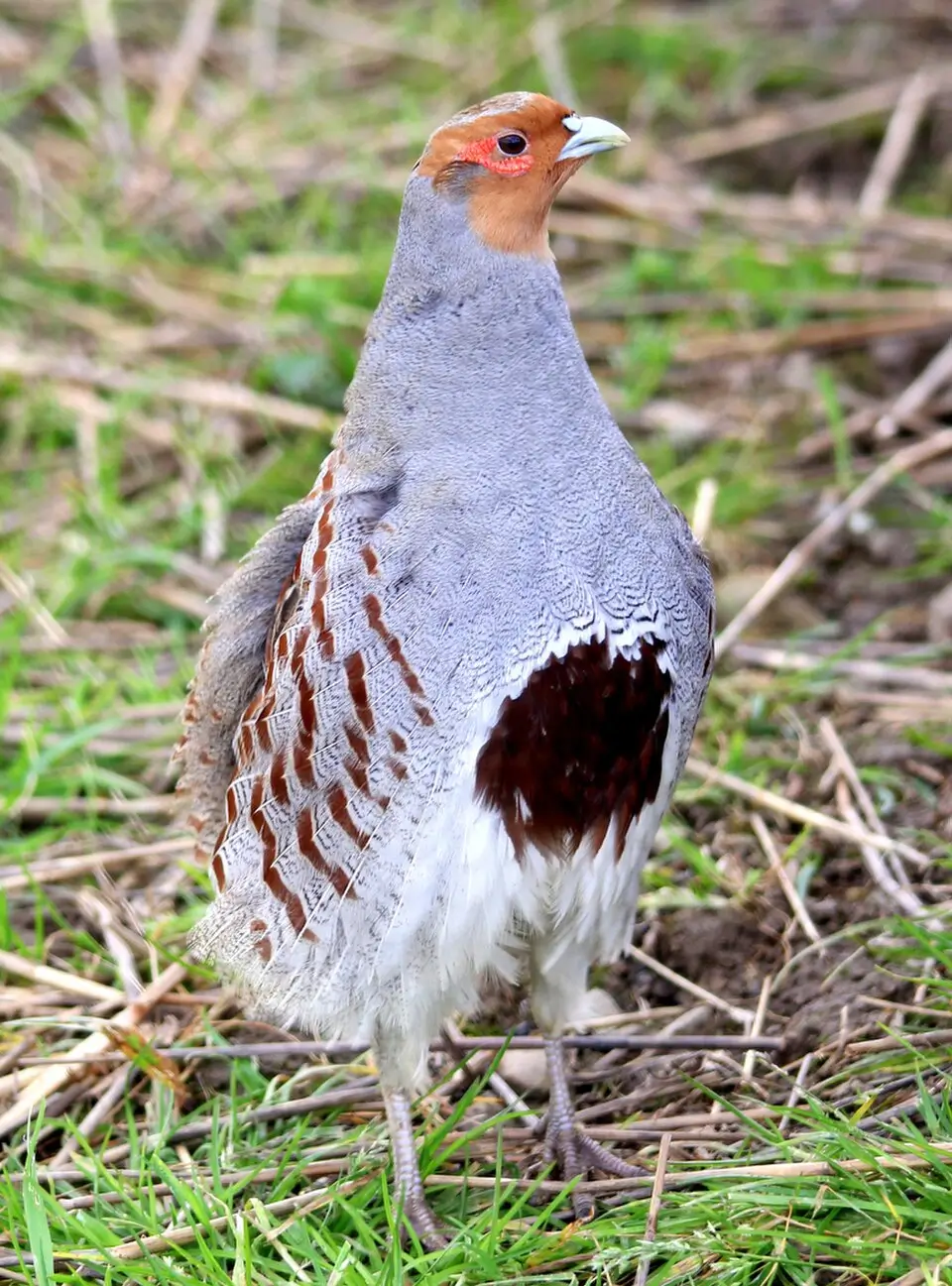
The grey partridge (Perdix perdix) belongs to the family Phasianidae, which includes pheasants, quail, turkeys, and other gamebirds. It is a relatively small, rotund bird, well-suited for life in open country. The species displays a warm palette of earthy tones — rusty-orange facial markings, intricately barred flanks, and a distinctive chestnut horseshoe-shaped patch on the lower breast of adult males. Females are similar in appearance but typically show a less prominent breast patch, making careful observation necessary for those wishing to identify the sexes in the field.
One of the most striking behavioral characteristics of the grey partridge is its tendency to live in tight family groups called coveys. These coveys typically form in late summer and autumn as the year's brood comes together with the parent birds, and they remain intact through the winter months. This social structure serves important survival functions: a covey of birds huddled together on a cold night retains body heat more efficiently, and multiple pairs of eyes are far more effective at detecting approaching predators than a lone bird could ever be.
Grey partridges are ground-dwelling birds that prefer to walk and run rather than take to the air. When threatened, they will often crouch and rely on their cryptic plumage to avoid detection — a strategy that makes them exceptionally challenging to flush without the assistance of a trained bird dog. When they do flush, they do so explosively and in multiple directions, a defensive behavior that can momentarily overwhelm both hunters and predators alike. Their flight is characterized by rapid wingbeats interspersed with brief glides, and they rarely travel great distances before setting back down.
The diet of the grey partridge shifts with the seasons. Adult birds are largely omnivorous, consuming seeds, grain, green plant material, and invertebrates. Chicks, however, are almost entirely dependent on insects during their first weeks of life — a dietary requirement that makes the abundance of invertebrates in agricultural environments critically important to successful reproduction. Nesting occurs on the ground, typically in dense vegetation near field edges, hedgerows, or grass waterways.
Clutch sizes in grey partridges tend to be notably large compared to many other bird species, with hens commonly laying more than a dozen eggs in a single nest. This high reproductive potential is one of the grey partridge's most important ecological traits, allowing populations to recover relatively quickly from difficult winters or poor nesting seasons — provided that habitat conditions are adequate.
Habitat & Range
The grey partridge is native to a broad swath of Eurasia, ranging from the United Kingdom and Western Europe east through Central Asia. Over the centuries, it became deeply associated with the agricultural landscapes of Europe — particularly the grain-growing regions of England, France, Germany, Poland, and Hungary — earning the common nickname "Hungarian partridge" in North America, a nod to the country from which many of the birds used in early American introduction efforts were sourced.
In North America, grey partridges were introduced beginning in the late 19th and early 20th centuries, and they established self-sustaining wild populations across a remarkably large portion of the northern United States and southern Canada. The species found the agricultural prairies of the Upper Midwest and the northern Great Plains to be highly suitable habitat, mirroring in many ways the grain-growing landscapes of their native range.
North Dakota, in particular, has proven to be excellent grey partridge country. The state's broad prairies, expansive grain fields, and interspersed grasslands, shelterbelts, and wetland edges provide the diverse mosaic of habitats that grey partridges require. They are most commonly found in areas where cultivated cropland — especially small grain crops such as wheat, barley, and oats — is interspersed with native or introduced grasses, brushy cover, and fence lines. Shelterbelts, those rows of trees and shrubs planted across the plains to reduce wind erosion and provide wildlife habitat, are particularly valuable to grey partridges as winter refuges.
The birds are year-round residents wherever they are found; they do not migrate. Instead, they rely on their ability to find food in agricultural fields and on the protective cover provided by shelterbelts and dense grass to survive the region's famously harsh winters. Snow depth and crust conditions can be significant limiting factors for wintering grey partridges, as deep or crusted snow can make foraging difficult and leave the birds more vulnerable to predation.
Hunting Information
The grey partridge is one of North Dakota's most prized upland game birds, pursued by hunters throughout the state's agricultural regions. Hunting for grey partridges in North Dakota falls under the state's upland game regulations administered by the North Dakota Game and Fish Department. Hunters interested in pursuing grey partridge should consult the current North Dakota Game and Fish upland game regulations for specific season dates, bag limits, and licensing requirements, as these details are subject to change from year to year.
North Dakota's hunting landscape offers exceptional access to grey partridge habitat. The state's expansive public hunting areas — including Walk-In Access areas, Wildlife Management Areas (WMAs), and the sprawling PLOTS (Private Land Open To Sportsmen) program — provide hunters with significant opportunities to access prime agricultural and grassland habitats where grey partridges are likely to be found.
Successfully hunting grey partridges typically requires a well-trained pointing or flushing dog. Because the birds hold tightly in cover and prefer to run rather than flush, a dog with the nose to locate scent and the steadiness to work a covey carefully is an enormous asset. Many seasoned partridge hunters consider the grey partridge the ultimate test of a pointing dog's abilities, as the birds' running tendencies and explosive flushes demand both athleticism and discipline from canine partners.
Shot selection on grey partridges demands quick reflexes. When a covey erupts — often with little warning and in all directions simultaneously — hunters must make rapid decisions and maintain safe shooting awareness at all times. The birds are fast and direct in their flight, and shots are often taken at moderate to close range given the nature of the habitat.
The grey partridge hunting tradition is deeply woven into the culture of upland hunting in North Dakota and across the northern plains, attracting both local hunters and visitors who travel specifically to experience the region's renowned Hun hunting. The combination of spectacular prairie scenery, crisp autumn weather, and the challenge of finding and flushing coveys makes grey partridge hunting one of the defining upland experiences of the American West.
Conservation
The grey partridge has faced significant population challenges in parts of its range, particularly in Europe, where agricultural intensification has reduced the availability of insect-rich foraging habitat and nesting cover. Across its introduced North American range, populations have generally fared better, though habitat quality remains the primary driver of local abundance.
Conservation efforts focused on the grey partridge typically emphasize habitat management practices that benefit both the birds and the broader agricultural ecosystem. Maintaining diverse field margins, reducing pesticide inputs that diminish invertebrate populations, preserving and restoring shelterbelts, and encouraging the use of cover crops and grass waterways all contribute to supporting healthy grey partridge populations. Many agricultural conservation programs in states like North Dakota actively promote practices that benefit upland birds, including grey partridges, as part of broader landscape-level wildlife management strategies.
The North Dakota Game and Fish Department monitors upland bird populations, including grey partridges, and adjusts hunting regulations accordingly to ensure sustainable harvest levels. Hunters themselves play an important role in conservation through license purchases, participation in surveys, and voluntary reporting of harvest data that helps wildlife managers make informed decisions.