Overview
Few birds capture the wild spirit of the American Great Plains quite like the Greater prairie-chicken (Tympanuchus cupido). This distinctive upland game bird has roamed the expansive grasslands of North America for thousands of years, its booming calls echoing across the open prairie at dawn and serving as one of the most remarkable wildlife spectacles the continent has to offer. Once abundant across a vast swath of central North America, the Greater prairie-chicken has become both a symbol of the untamed prairie and a reminder of the importance of grassland conservation. For hunters, birders, and wildlife enthusiasts alike, encountering this bird in its natural habitat is an experience that leaves a lasting impression.
States like North Dakota — with its sweeping prairies, native grasslands, and agricultural patchwork — represent some of the remaining strongholds for this species. The Greater Prairie Plains region that defines much of North Dakota's landscape is precisely the kind of terrain this bird calls home, and the state has long been associated with efforts to manage and celebrate this iconic upland species. Whether you're a seasoned hunter pursuing Greater prairie-chickens through the frosty grasses of a North Dakota autumn, or a wildlife observer hoping to witness the legendary booming grounds in spring, understanding this bird's biology, behavior, and habitat needs is the first step toward truly appreciating one of America's most fascinating game birds.
Biological Traits
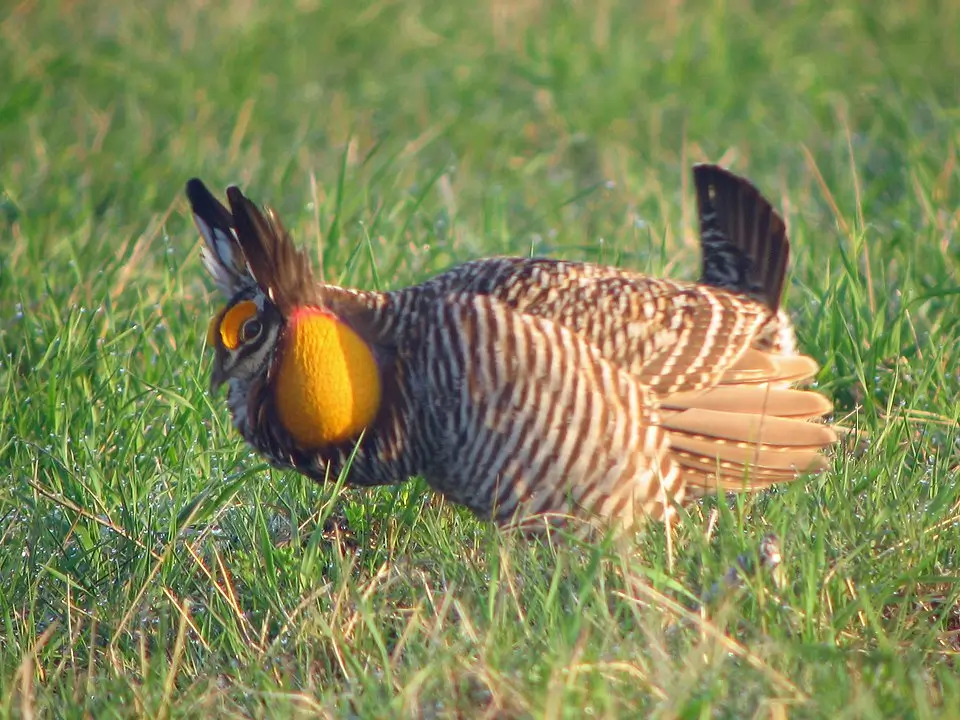
The Greater prairie-chicken is a medium-to-large member of the grouse family (Phasianidae) and the genus Tympanuchus, which it shares with the Lesser prairie-chicken and the Sharp-tailed grouse. Adult birds are stocky and well-built, with heavily barred brown, buff, and white plumage that provides exceptional camouflage against the dried grasses and crop stubble of their native range. Males are particularly striking, featuring elongated feathers on the neck known as pinnae — a characteristic feature that distinguishes the species — along with brightly colored orange-yellow air sacs (tympani) on the sides of the neck and vivid orange-yellow combs above the eyes.
The most celebrated behavior of the Greater prairie-chicken is undoubtedly the spring mating ritual performed on traditional display grounds known as "leks" or "booming grounds." Each spring, male prairie-chickens gather on these open, elevated areas before dawn to perform elaborate courtship displays. They stomp their feet rapidly, inflate their bright neck sacs, raise their pinnae feathers into striking vertical positions, and produce a resonant, hollow booming sound by forcing air through their inflated tympani. This haunting call — often described as sounding like someone blowing across the top of an empty bottle — can carry for considerable distances across the flat prairie landscape. Multiple males compete on the lek simultaneously, with dominant males typically occupying central positions and securing most of the matings with visiting females.
Females, called hens, are generally smaller and less colorful than males, sporting the same cryptic barred pattern but lacking the dramatic pinnae and orange neck sacs. After mating, hens nest on the ground in dense grassland cover, laying clutches that typically number around a dozen eggs. The chicks, called poults, are precocial — meaning they are mobile and capable of feeding themselves very shortly after hatching, though they remain with the hen for protection and guidance through their early weeks of life.
Greater prairie-chickens are omnivores, with a diet that shifts seasonally based on availability. During warmer months, they consume a wide variety of insects, seeds, berries, and green plant material. As winter sets in, their diet shifts more heavily toward agricultural grains, seeds, and the buds of woody plants. This dietary flexibility has allowed the species to persist in landscapes that include a mix of native grassland and agricultural fields, though it remains dependent on sufficient native prairie for nesting and brood-rearing.
Habitat & Range
Historically, the Greater prairie-chicken occupied a sweeping range that extended from the Atlantic coast of New England southward through the eastern states and westward across the Great Plains. The species was once extraordinarily abundant, with flocks reportedly numbering in the millions during the peak of European settlement. However, as forests were cleared and grasslands were converted to intensive agriculture, habitat loss dramatically reduced both the range and population of the Greater prairie-chicken.
Today, the species primarily occupies the central and northern Great Plains, with significant populations found in states such as Kansas, Nebraska, South Dakota, North Dakota, Minnesota, and parts of Oklahoma and Texas. Within this range, the bird is closely tied to large, contiguous tracts of native grassland, mixed-grass prairie, and areas where native habitat is interspersed with agricultural fields. The bird thrives in areas where it can find a mosaic of dense nesting cover, open lekking grounds, and accessible food sources throughout the year.
North Dakota sits squarely within this core range. The state's character as part of the Great Plains region — defined by broad prairies, steppe, temperate savanna, and farmland — makes it well-suited habitat for Greater prairie-chickens. The state's native grasslands, rangelands, and agricultural areas provide the complex habitat structure that this species requires across different seasons of its life cycle.
Hunting Information
The Greater prairie-chicken holds a cherished place in the tradition of upland game bird hunting across the Great Plains. Hunters who pursue this species often describe the experience in almost reverential terms — the vast, open landscapes, the exhilarating flushes, and the challenge of working a good bird dog through native grasses and crop edges all combine to make Greater prairie-chicken hunting a uniquely memorable pursuit.
In North Dakota, upland game bird hunting — including prairie grouse species — falls under the management authority of the North Dakota Game and Fish Department. The state offers hunting opportunities for upland game birds, with specific regulations, season dates, and licensing requirements governed by the Game and Fish Department. Hunters planning to pursue Greater prairie-chickens in North Dakota should consult the current North Dakota Game and Fish Department regulations, as season dates and bag limits may vary from year to year based on population assessments and management goals.
As with all hunting in North Dakota, proper licensing is required. The state has established a comprehensive framework for hunting licenses and regulations, and hunters are encouraged to visit the official North Dakota Game and Fish Department website or contact the department directly to obtain the most current and accurate information about seasons, licenses, and any applicable rules for hunting upland game birds including prairie grouse.
Access to hunting land in North Dakota is facilitated in part through programs like the PLOTS (Private Land Open To Sportsmen) program, which provides public hunting access on enrolled private lands. The state also maintains numerous Wildlife Management Areas (WMAs) that can provide quality habitat and public access for hunters. Planning a Greater prairie-chicken hunt in North Dakota often involves scouting these areas in advance, locating active birds during the season, and working with a well-trained pointing or flushing dog capable of handling the wide-open terrain.
Hunters pursuing prairie grouse on the northern Great Plains should be prepared for potentially challenging conditions. Early season hunts in September and October can feature warm weather and lush grass that makes birds harder to find and dogs harder to handle, while late-season hunts may involve frigid temperatures and snow. Dressing appropriately in layers, carrying sufficient water for both hunter and dog, and being prepared for long walks across open country are all hallmarks of a successful prairie grouse hunt.
Conservation
The conservation story of the Greater prairie-chicken is one of the most compelling in North American wildlife management. The species' dramatic decline from its historic abundance stands as a powerful lesson in the ecological importance of native grasslands, and ongoing conservation efforts represent some of the most significant landscape-level work being done for any North American bird.
The primary driver of Greater prairie-chicken population decline has been the loss and fragmentation of native grassland habitat. The conversion of prairies to cropland, fire suppression, overgrazing in some areas, and the encroachment of woody vegetation have all reduced the availability of suitable habitat across the species' range. Additionally, energy infrastructure such as power lines and wind turbines can present hazards and behavioral barriers in some portions of the range.
Conservation organizations, state wildlife agencies, and federal programs have worked collaboratively to address these threats. Efforts to restore and protect native grasslands, manage prescribed fire to maintain grassland structure, and incentivize landowners to maintain prairie habitat on their properties have all contributed to stabilizing or improving populations in certain areas. The Conservation Reserve Program (CRP) administered by the USDA has been particularly significant in providing grassland cover in agricultural landscapes, benefiting prairie grouse and a host of other grassland-dependent wildlife.
In North Dakota, conservation of the Greater prairie-chicken is intertwined with the state's broader commitment to its natural grassland heritage. The state's Game and Fish Department actively manages wildlife populations and habitats, and hunters themselves play an important role in conservation through license fees and excise taxes on sporting equipment that fund wildlife management programs.
The future of the Greater prairie-chicken will depend on the ongoing commitment of landowners, hunters, conservationists, and wildlife managers to safeguarding the native grasslands of the Great Plains. For those who have ever watched the sun rise over a booming ground, or flushed a covey of prairie-chickens from the tall grass of a North Dakota autumn morning, the value of that commitment is self-evident.