Overview
Among the many fascinating wildlife species that roam the diverse landscapes of North America, the gray fox (Urocyon cinereoargenteus) stands out as a particularly remarkable and often underappreciated animal. Sleek, adaptable, and possessing a set of skills that seem almost out of place for a member of the dog family, the gray fox has carved out a successful existence across a vast swath of the continent — from the dense hardwood forests of the Eastern Seaboard to the brushy draws and river bottoms of the Great Plains states like North Dakota. Whether you are a seasoned hunter, a wildlife enthusiast, or simply someone with a curiosity about the natural world, the gray fox offers a compelling story of survival, adaptability, and ecological importance.
Often overshadowed in popular culture by its red cousin, the red fox (Vulpes vulpes), the gray fox deserves recognition in its own right. It is one of the oldest members of the dog family found in North America, with fossil records suggesting its lineage stretches back millions of years. It is classified within the genus Urocyon, which separates it genetically and behaviorally from most other foxes in the world. Understanding this animal — its biology, its habits, its range, and its role in the ecosystem — enriches our appreciation for the incredible biodiversity that exists across North America, including in the wide-open prairies and rugged badlands of North Dakota.
Biological Traits
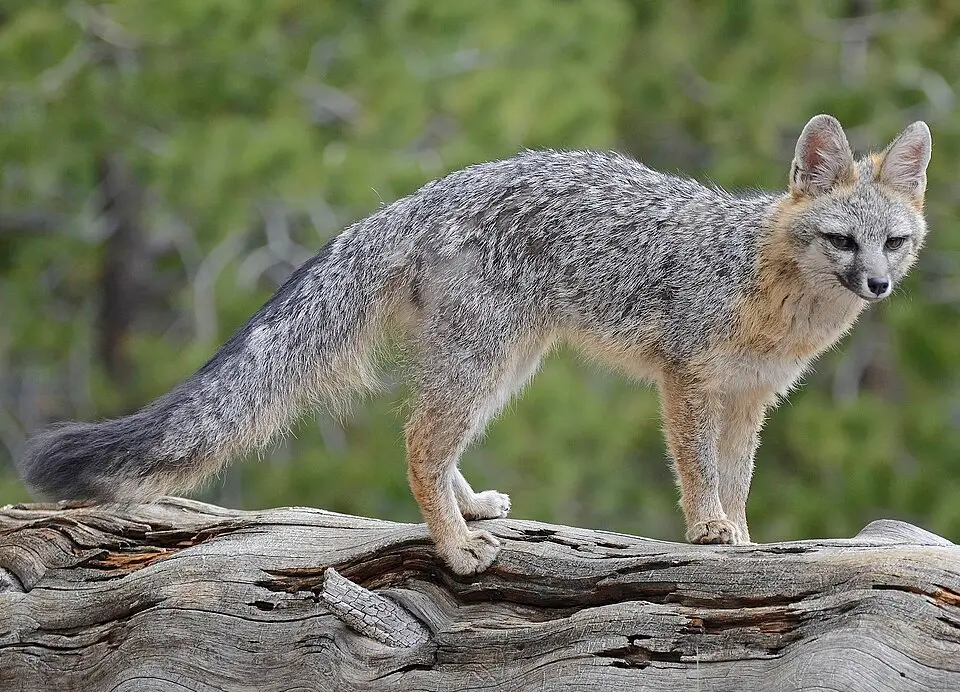
The gray fox is a medium-sized canid, recognizable by its distinctive salt-and-pepper grizzled coat that gives the species its common name. The upperparts of the body display a coarse mixture of gray and black-tipped guard hairs, while the sides of the neck, flanks, and the underside of the tail often show warm rufous or reddish-orange tones. The muzzle typically features a dark stripe running along the top, and a black-tipped tail provides a reliable field identification mark that distinguishes it from the red fox, which has a white-tipped tail.
One of the most extraordinary biological traits of the gray fox — and the characteristic that most sets it apart from nearly every other member of the family Canidae — is its remarkable ability to climb trees. The gray fox possesses strong, hooked claws and the muscular flexibility to scramble up vertical tree trunks with surprising speed and agility. This tree-climbing behavior is not merely a curiosity; it serves critical functions in the animal's daily life. Gray foxes will climb trees to escape predators such as coyotes or domestic dogs, to access fruit and bird eggs located in elevated branches, and even to rest and sleep off the ground in the safety of a high perch.
The gray fox is primarily nocturnal and crepuscular, meaning it is most active during the twilight hours of dawn and dusk, as well as throughout the night. It is an omnivore with a highly flexible diet that shifts seasonally based on what is available. Small mammals such as cottontail rabbits, mice, and voles form a significant portion of its diet, but the gray fox also consumes birds, insects, carrion, berries, nuts, and agricultural crops when opportunities arise. This dietary flexibility is a key factor in the species' widespread success across such diverse habitat types.
Gray foxes are generally monogamous and form bonded pairs during the breeding season, which typically occurs in late winter. Litters of pups, usually ranging from two to seven in number, are born in spring after a gestation period of approximately 53 days. Both parents participate in raising the young, and the pups typically disperse by autumn to establish their own home ranges. Home ranges vary significantly depending on habitat quality and food availability but generally span from one to several square miles.
The lifespan of a wild gray fox averages around six to eight years, though many individuals do not survive their first year due to predation, disease, harsh weather, and other mortality factors. The species is susceptible to rabies and canine distemper, diseases that can periodically affect local populations.
Habitat & Range
The gray fox boasts one of the most extensive ranges of any wild canid in North America. Its distribution stretches from southern Canada southward through most of the contiguous United States, continuing through Mexico and into Central America and parts of South America. Within the United States, the species is found in an impressive variety of environments, from the humid bottomland hardwoods of the Southeast to the chaparral-covered hillsides of California, and from the Appalachian Mountains to the agricultural plains of the Midwest.
The gray fox shows a strong preference for brushy, mixed woodland environments that offer both cover and a diverse food supply. Dense thickets, forest edges, rocky outcrops, and areas near water sources are favored haunts. Unlike the red fox, which thrives in open agricultural land and has benefited greatly from human landscape modification, the gray fox tends to prefer areas with more structural complexity — places where tangled brush, hollow logs, and rock piles provide denning sites and escape cover.
In North Dakota, the gray fox represents a less commonly encountered species compared to the red fox or coyote, but it is present in suitable habitat across portions of the state. North Dakota's diverse landscape — which includes the rugged and broken terrain of the Badlands in the southwestern part of the state, wooded river corridors along the Missouri, Heart, and Little Missouri rivers, and brushy draws scattered throughout the prairies — provides pockets of suitable habitat for gray foxes. The species tends to concentrate in these more wooded or brushy areas rather than in the wide-open cropland and prairie that dominates much of the state's geography.
Hunting Information
The gray fox has a long tradition as a furbearer species in North America, valued both for its pelt and for the challenging and engaging hunting experience it provides. In North Dakota, furbearers including foxes fall under the regulatory oversight of the North Dakota Game and Fish Department. Hunters and trappers interested in pursuing gray fox in North Dakota should consult the North Dakota Game and Fish Department's official regulations, as season dates, licensing requirements, and other specifics are subject to change and are best verified directly through official channels at the time of planning a hunt.
Generally speaking, fox hunting and trapping in the Great Plains states is pursued through several methods. Calling — using electronic or mouth-blown predator calls that mimic the sounds of distressed rabbits or rodents — is a highly effective and popular technique for bringing gray foxes within range. Because gray foxes are primarily nocturnal, hunters in states where legal may pursue them at night using lights or night-vision equipment, though regulations governing such practices vary by state and should always be confirmed before heading afield.
Trapping remains a traditional and widely practiced method for taking furbearers like the gray fox. Foothold traps, cage traps, and other approved devices are used by licensed trappers to harvest gray foxes as part of regulated furbearer management programs. The gray fox's pelt, while not always commanding the highest prices on the fur market, is prized for its attractive coloration and texture.
Hunters pursuing gray fox in North Dakota would do well to focus their efforts in the wooded draws, brushy coulees, and river-bottom habitats where the species is most likely to be found. Scout for tracks, scat, and other sign to identify active areas before setting up a calling stand. Gray foxes tend to approach calls more cautiously than coyotes, often hanging up in cover before committing to a shot, which makes the hunt both challenging and rewarding.
Conservation
The gray fox is currently listed as a species of Least Concern by the International Union for Conservation of Nature (IUCN), reflecting its broad distribution and generally stable populations across most of its range. While localized declines have been observed in some areas — particularly in regions where habitat loss, fragmentation, and competition from the expanding coyote population have created challenges — the species as a whole remains abundant and well-distributed.
Regulated hunting and trapping, conducted under the oversight of professional wildlife managers in state agencies like the North Dakota Game and Fish Department, play an important role in maintaining healthy, balanced furbearer populations. The North Dakota Game and Fish Department's comprehensive approach to wildlife management ensures that species like the gray fox continue to thrive as a part of the state's rich natural heritage.
Habitat conservation efforts that protect wooded riparian corridors, brushy draws, and mixed-cover landscapes directly benefit gray fox populations. Landowners, conservation organizations, and state and federal agencies all contribute to maintaining the diverse habitats that this adaptable but cover-dependent species requires.