Overview
Few wildlife species are as instantly recognizable across North America as the Eastern gray squirrel (Sciurus carolinensis). Whether darting across a city park, leaping between the branches of a mature hardwood forest, or industriously burying acorns in a suburban backyard, this charismatic rodent has made itself at home in an extraordinary range of environments. Beloved by casual wildlife watchers and pursued by hunters who appreciate both the challenge and the table fare, the Eastern gray squirrel occupies a unique space in American outdoor culture. From the dense deciduous forests of the East Coast to unexpected pockets of habitat across the Upper Midwest, this species continues to thrive as one of the continent's most adaptable and ecologically important small mammals.
For outdoor enthusiasts in North Dakota and beyond, understanding the Eastern gray squirrel — its biology, behavior, preferred habitats, and role in the ecosystem — opens the door to richer experiences in the field, whether you are carrying a .22 rifle, a small-bore shotgun, or simply a pair of binoculars.
Biological Traits
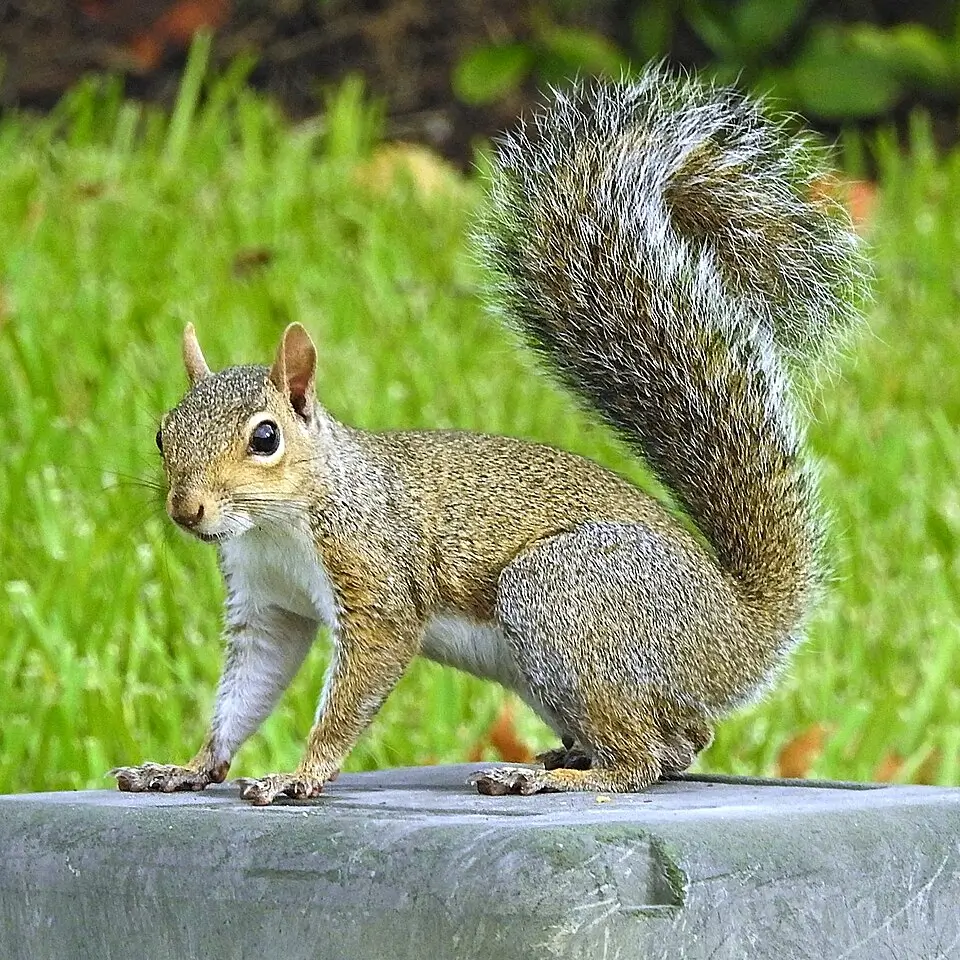
The Eastern gray squirrel belongs to the family Sciuridae, which encompasses all squirrels, chipmunks, marmots, and prairie dogs. Within this large family, Sciurus carolinensis is a medium-sized tree squirrel, instantly identified by its grizzled gray fur, bushy tail, and quick, alert movements. Its coat is predominantly gray on the back and sides, often with subtle brownish tones, while the underside is typically white or pale gray. The iconic bushy tail serves multiple purposes — it helps the animal balance during acrobatic tree climbing, acts as a rudder during jumps, provides warmth in cold weather, and even serves as a signaling device during social interactions.
Like all members of the order Rodentia, Eastern gray squirrels possess a pair of large, continuously growing incisors that are kept sharp through constant gnawing. These teeth allow squirrels to crack open hard-shelled nuts that would defeat many other animals. Their eyes are positioned on the sides of their head, providing a wide field of vision that helps them detect predators from nearly any direction — an essential adaptation for a species that faces threats from hawks, owls, foxes, coyotes, and domestic cats and dogs.
One of the most celebrated behavioral traits of the Eastern gray squirrel is its extraordinary habit of scatter-hoarding food. Rather than storing all of its food in a single central cache, a squirrel will bury individual nuts and seeds across a wide area, creating hundreds or even thousands of small caches throughout the autumn months. The animal relies on a combination of spatial memory and smell to relocate these buried treasures during winter and early spring when food is scarce. Remarkably, squirrels do not always recover every cache they create, and the forgotten caches often germinate into new trees — making the Eastern gray squirrel one of nature's most effective unintentional foresters and a key agent of forest regeneration.
Eastern gray squirrels are also known for their impressive agility and athleticism. They are capable of leaping distances of up to several feet between branches and can descend a tree headfirst, a skill made possible by rotating hind feet that allow a strong grip in any orientation. Their communication repertoire includes a variety of vocalizations — sharp barks, chattering, and tail-flicking that convey alarm, territorial warnings, or social signals.
The species is not a true hibernator. Unlike woodchucks or ground squirrels, Eastern gray squirrels remain active throughout the year, though they may spend extended periods in their nests — called dreys — during the coldest and most severe winter weather. Dreys are typically constructed of leaves, twigs, and bark, wedged securely into the forks of tree branches. Squirrels may also use natural tree cavities as dens, which provide superior insulation compared to leaf nests.
Reproduction occurs twice annually in many parts of the range, with litters typically born in late winter or early spring and again in midsummer. Litters generally consist of two to four young, which are born blind and hairless. The young develop quickly, leaving the nest at approximately six to eight weeks of age. Eastern gray squirrels can live for several years in the wild, though most individuals do not survive beyond their second year due to predation and environmental pressures.
Habitat & Range
As its common name suggests, the Eastern gray squirrel is native to the eastern portion of North America. Its historical range encompasses the eastern United States and southeastern Canada, extending from the Atlantic coast westward through the Great Plains transition zone, and from southern Canada southward into the Gulf Coast states. The species has also been introduced, sometimes controversially, to parts of western North America and even to parts of Europe and South Africa.
The Eastern gray squirrel's preferred habitat is mature deciduous and mixed deciduous-coniferous forest, particularly forest types dominated by mast-producing trees such as oaks, hickories, beeches, and walnuts. Mast — the collective term for the hard-shelled nuts and seeds produced by these trees — forms the cornerstone of the squirrel's diet, and the presence or absence of good mast-producing trees is the single greatest factor determining local squirrel population density.
In North Dakota, the Eastern gray squirrel occupies a somewhat peripheral but meaningful part of the state's wildlife tapestry. North Dakota is predominantly characterized by expansive prairies, agricultural lands, and the dramatic landscapes of the Badlands, but it also harbors river-bottom forests, shelterbelts, and wooded river corridors that provide suitable habitat for tree squirrels. The wooded areas along the Red River Valley in the eastern part of the state, as well as forested riparian zones along other major river systems, can support populations of Eastern gray squirrels. North Dakota is part of the broader Great Plains region, and while tree squirrels are not as abundant here as in the heavily forested states farther east, they are present and huntable in appropriate habitats.
Hunting Information
Squirrel hunting is one of the oldest and most storied traditions in American outdoor culture. Long before deer hunting became the dominant small-game pursuit, generations of American hunters — from colonial frontiersmen to Depression-era farm families — relied on squirrels for both sport and sustenance. Today, squirrel hunting remains a beloved tradition that serves as an excellent entry point for new hunters while also offering seasoned sportsmen a challenging and rewarding pursuit.
Eastern gray squirrels are legal game in North Dakota, which classifies them under its "other game species" category. The North Dakota Game and Fish Department manages hunting regulations for squirrels and other small game species across the state. Hunters interested in pursuing Eastern gray squirrels in North Dakota should consult the official North Dakota Game and Fish Department resources for the most current and accurate season dates, bag limits, and licensing requirements, as these regulations are subject to change and are updated regularly.
Common approaches to squirrel hunting include still-hunting along wooded creek bottoms and river corridors, sitting quietly near mast-producing trees and waiting for squirrel activity, and spot-and-stalk methods in open timber. Early morning and late afternoon are typically the most productive times, as squirrels are most active during these periods. Hunters frequently use .22 rimfire rifles for clean, precise shots, or small-bore shotguns loaded with small shot for a more forgiving experience in dense cover. A well-trained squirrel dog — typically a breed like the Feist or Mountain Cur — can add tremendous enjoyment and effectiveness to a squirrel hunt.
Because squirrel populations in North Dakota are concentrated in specific wooded habitats rather than distributed broadly across the landscape, scouting is especially important. River bottoms, wooded shelterbelts, and any stand of mature hardwoods are the logical starting points for scouting trips. Signs of squirrel activity include freshly cut nut shells, digging in soft soil where caches have been buried or retrieved, and the characteristic leaf-and-twig dreys visible in the upper branches of trees.
Squirrel hunting is also rightly recognized as an exceptional training ground for young hunters. The seasons are often long, licenses are typically affordable, and the learning curve for basic woodsmanship skills is both gentle and deeply rewarding.
Conservation
The Eastern gray squirrel is currently listed as a species of least concern from a conservation standpoint, reflecting its adaptability and broad distribution across a wide range of habitats. Unlike many wildlife species that have suffered from habitat loss, the Eastern gray squirrel has in many respects benefited from human land-use changes, finding new opportunities in suburban and urban green spaces, city parks, and landscaped areas with abundant food provided by bird feeders and ornamental nut-bearing trees.
That said, healthy squirrel populations ultimately depend on the health of the forested ecosystems they inhabit. Conservation of riparian woodlands, river-bottom forests, and shelterbelts in states like North Dakota is therefore important not only for squirrels but for the entire suite of wildlife species that depend on these habitats. Responsible hunting, regulated through science-based management by agencies such as the North Dakota Game and Fish Department, plays a constructive role in maintaining healthy wildlife populations while ensuring sustainable outdoor recreation opportunities for future generations.
The Eastern gray squirrel's role as a seed disperser also gives it outsized ecological importance relative to its modest size. By planting thousands of seeds each year through its scatter-hoarding behavior, the species actively contributes to forest renewal and the long-term health of the woodland ecosystems upon which so many other species depend. In this sense, every squirrel hunter who steps into a North Dakota river-bottom forest is participating in a management system connected to the larger ecological story of North American forests.