A Complete Guide to Canis latrans — With a Focus on North Dakota
Few animals embody the spirit of the American wilderness quite like the coyote. Known scientifically as Canis latrans — a Latin phrase meaning "barking dog" — the coyote is one of North America's most recognizable, resilient, and ecologically important wild canids. From the sun-scorched deserts of the Southwest to the frozen prairies of the Northern Plains, the coyote has carved out a niche in virtually every landscape the continent has to offer. Its distinctive yipping howl, often heard at dusk or just before dawn, is one of the most evocative sounds in the natural world and has been woven into the folklore and mythology of indigenous peoples for countless generations.
In North Dakota, the coyote is a constant and familiar presence. Across the sweeping grasslands, rolling badlands, and agricultural fields that define the Peace Garden State, coyotes move with a quiet intelligence that has earned them both admiration and respect. For hunters, wildlife observers, and conservationists alike, understanding this remarkable animal is essential — not only to appreciate its place in the ecosystem but also to engage with it responsibly and ethically in the field.
This article explores the biology, habitat, behavior, and hunting traditions surrounding the coyote, with particular attention to North Dakota's unique landscape and the opportunities it presents for sportsmen and wildlife enthusiasts.
Biological Traits
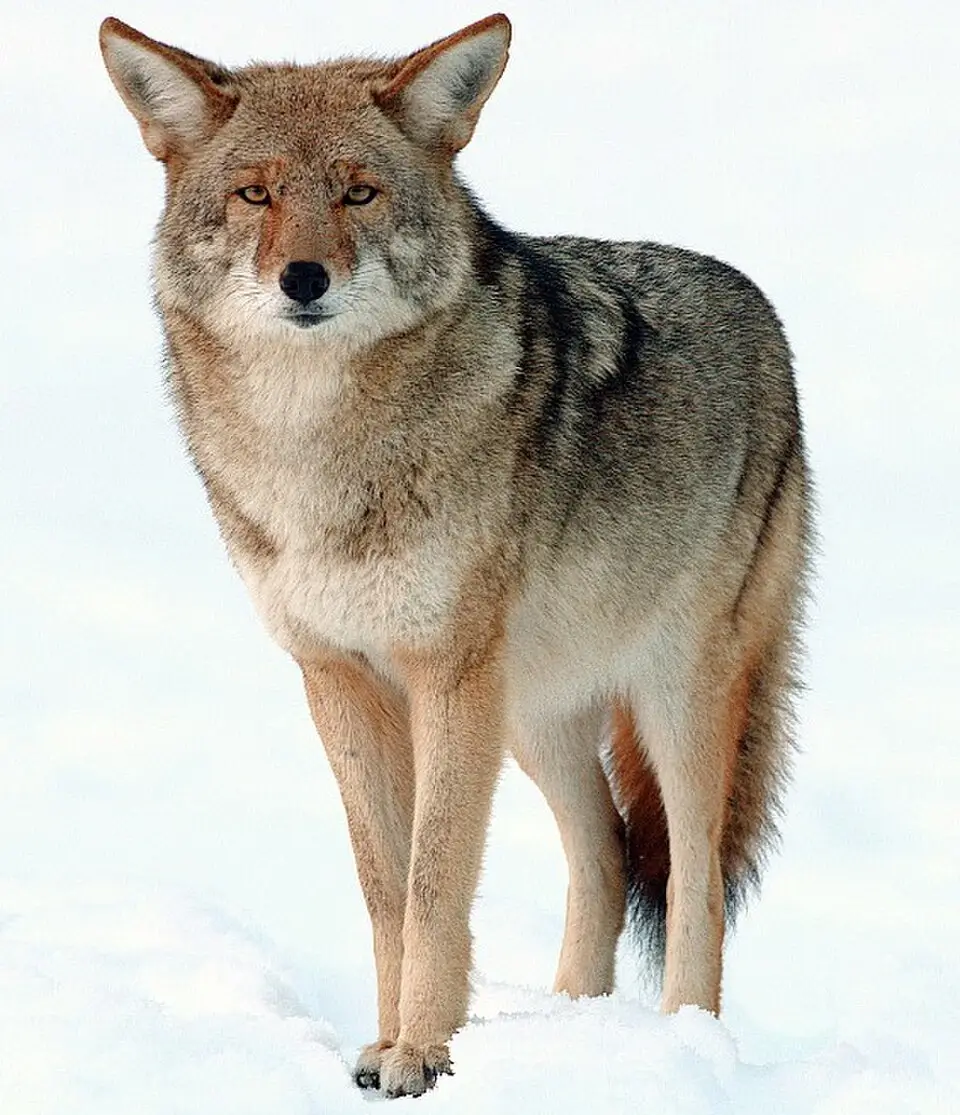
The coyote, Canis latrans, is a member of the family Canidae and is closely related to the domestic dog (Canis lupus familiaris) and the gray wolf (Canis lupus). It is a medium-sized canid, typically weighing between 20 and 50 pounds, though individuals in northern states like North Dakota often trend toward the heavier end of that range due to Bergmann's Rule — the biological tendency for animals in colder climates to be larger bodied. Adults stand roughly 20 to 22 inches at the shoulder and measure between 3.5 and 4.5 feet in total body length, including the tail.
The coyote's coat is one of its most striking features. Its coloration is highly variable but typically consists of a grizzled gray or reddish-brown along the back, with a paler, often cream-colored underside. The legs, muzzle, and ears often carry a more reddish or tawny hue. During winter, particularly in northern states, the coat thickens considerably, giving the animal a fuller, more wolf-like appearance. This seasonal adaptation is critical for survival in the harsh Plains winters that North Dakota regularly delivers.
Coyotes are highly intelligent animals with a complex social structure. They are generally monogamous, forming pair bonds that can last for multiple years or even for life. Breeding season typically occurs in late winter, between January and March, with litters of pups — usually numbering between four and seven — born after a gestation period of approximately 63 days. Pups are born blind and helpless but develop rapidly, often beginning to explore outside the den by three to four weeks of age. By late summer and fall, young coyotes are largely independent and may disperse over vast distances to establish new territories.
Coyotes are opportunistic omnivores with a remarkably diverse diet. They will eat small mammals such as rabbits, voles, and mice, as well as birds, reptiles, insects, fruits, berries, and carrion. In agricultural areas, they may also consume crop residue and garden produce. This dietary flexibility is one of the key reasons the coyote has thrived even as other large predators have declined across North America.
Their senses are acute across the board. Coyotes possess exceptional hearing, capable of detecting the faint rustling of a mouse beneath a snow pack. Their sense of smell is highly developed, and their eyesight is sharp enough to detect movement at considerable distances. These sensory capabilities make them exceptionally wary and difficult to approach in the wild — qualities that both challenge and reward hunters.
Habitat and Range
The coyote's original range was concentrated in the open grasslands and arid plains of central and western North America, but over the past century, the species has undergone one of the most dramatic range expansions of any wild mammal in the Western Hemisphere. Today, coyotes can be found from the northernmost reaches of Alaska and Canada all the way south through Central America, and from the Pacific Coast to the Atlantic Seaboard. They have colonized suburban and even urban environments, demonstrating a level of adaptability that is virtually unmatched among wild canids.
North Dakota sits squarely within the coyote's historic core range. The state's geography — characterized by vast mixed-grass prairies, the Missouri River Coteau, the Drift Prairie, the Dissected Till Plains, and the rugged badlands of the western region — provides an ideal mosaic of habitats for coyotes. Open grasslands offer prime hunting grounds for rodents and rabbits, while brush-choked draws, shelterbelts, and riparian corridors provide denning and escape cover. Agricultural fields, which dominate much of North Dakota's landscape, attract coyotes year-round, particularly during harvest seasons when rodent activity is high and prey is concentrated.
Coyotes in North Dakota are present in all 53 counties and are active throughout the year. They do not hibernate and remain fully mobile during the winter months, often increasing their daily movement ranges in response to prey scarcity and deep snow conditions. In winter, their tracks are commonly spotted crossing frozen wetlands, farm fields, and roadways — a testament to their tireless wandering nature.
Population densities can vary considerably depending on prey availability, land use, and hunting pressure, but coyotes are generally considered abundant throughout the state. Their ability to compensate for increased mortality by producing larger litters and recruiting younger animals into the breeding population has made them extraordinarily resilient to population-level pressures.
Hunting Information
Coyote hunting holds a well-established and honored place in North Dakota's outdoor heritage. For many hunters, pursuing coyotes during the cold winter months offers an exciting and challenging experience that keeps them afield long after deer and upland bird seasons have closed. The combination of open terrain, calling techniques, and the coyote's sharp senses makes this a pursuit that demands skill, patience, and woodsmanship.
North Dakota Game and Fish oversees the regulation of coyote hunting, as it does for all furbearers and other game species within the state. Hunters seeking specific season dates, license requirements, and any applicable regulations should consult the North Dakota Game and Fish Department directly, as rules and frameworks are subject to change and must be verified through official channels at the time of hunting. The Department's official resources provide comprehensive and up-to-date regulatory information for all species, including coyotes, within the "Furbearers" and "Other Game Species" categories.
Coyote hunting in North Dakota is particularly popular during the winter months, when the animals' fur is at its prime and the leafless, snow-covered landscape improves visibility. Electronic and mouth-operated predator calls are widely used, with sounds mimicking distressed rabbits, rodents, or even coyote vocalizations being among the most effective. Hunters typically set up downwind of likely travel corridors — draws, creek bottoms, field edges — and call coyotes in from considerable distances.
Firearms commonly used for coyote hunting in North Dakota include flat-shooting centerfire rifles chambered in calibers well-suited to the open Plains terrain, where shots can be taken at extended ranges. Shotguns loaded with heavy shot are favored for closer-range calling setups, particularly in thicker cover. Many predator hunters also incorporate camouflage clothing, ground blinds, and decoys to complete the illusion and increase their chances of success.
Coyote hunting serves a practical function as well. As a species that can impact livestock operations — particularly sheep and poultry producers — and that exerts predation pressure on deer fawns and game birds such as pheasants and prairie chickens, coyotes are managed in part through regulated harvest. Hunters play an important role in helping to maintain balanced predator-prey dynamics across the state's agricultural and wildlife landscapes.
Conservation
Despite being one of the most hunted and trapped predators in North America, the coyote remains one of the continent's great conservation success stories. The species is currently classified as a species of least concern by the International Union for Conservation of Nature (IUCN), reflecting its broad distribution, large population size, and exceptional adaptability.
Coyotes occupy a meaningful ecological role as mesopredators. By controlling populations of rodents, rabbits, and other small mammals, they contribute to the health and balance of grassland and agricultural ecosystems. Their presence can influence the behavior and distribution of prey species in ways that cascade through the food web, a phenomenon ecologists refer to as a "trophic cascade."
In North Dakota, coyotes interact with a rich community of wildlife that includes white-tailed deer, pronghorn, ring-necked pheasants, sharp-tailed grouse, Canada geese, and numerous species of waterfowl and shorebirds. Managing coyote populations as part of a broader, science-based approach to wildlife management ensures that both predator and prey species can thrive in balance.
The North Dakota Game and Fish Department is the state agency responsible for managing coyotes and all other wildlife within the state, working within a framework that emphasizes sustainable use, habitat conservation, and sound biological science. Hunters, landowners, and wildlife managers all play collaborative roles in stewardship of this iconic species.
For anyone who has heard the chorus of coyotes singing across a moonlit North Dakota prairie, there is no question that this animal holds a special and irreplaceable place in the natural and cultural heritage of the Northern Plains. Whether encountered at the end of a rifle scope on a winter morning or simply observed trotting across a stubble field at sunset, the coyote commands a respect that is entirely well deserved.