Overview
Few animals in North America are as instantly recognizable — or as widely beloved — as the cottontail rabbit. With its soft, rounded body, large expressive eyes, and that distinctive fluffy white tail that gives the creature its common name, the cottontail has earned a permanent place in the hearts of wildlife enthusiasts, backyard birdwatchers, and hunters alike. Whether darting through a brushy hedgerow at dusk, nibbling clover at the edge of a meadow, or bounding across a frost-covered field in the early morning light, the cottontail is a quintessential piece of the North American landscape.
Belonging to the genus Sylvilagus, cottontail rabbits represent one of the most ecologically important and widely distributed groups of small mammals on the continent. They serve as a critical food source for dozens of predator species, help shape vegetation through their browsing habits, and provide hunters with one of the most accessible and rewarding small game experiences available. In states like North Dakota — where the sweeping Great Plains, rolling prairies, and patchwork of farmland and brushy cover create ideal conditions — the cottontail holds a special place in the tradition of small game hunting.
This article explores the biology, habitat preferences, and hunting traditions surrounding the cottontail rabbit, with a particular focus on what makes North Dakota such a compelling destination for those who pursue this nimble and rewarding quarry.
Biological Traits
Cottontail rabbits belong to the genus Sylvilagus, which is part of the family Leporidae — the same family that includes hares and the domestic rabbit. There are multiple species within the Sylvilagus genus found across North America, Central America, and parts of South America, making it one of the most diverse rabbit genera in the world.
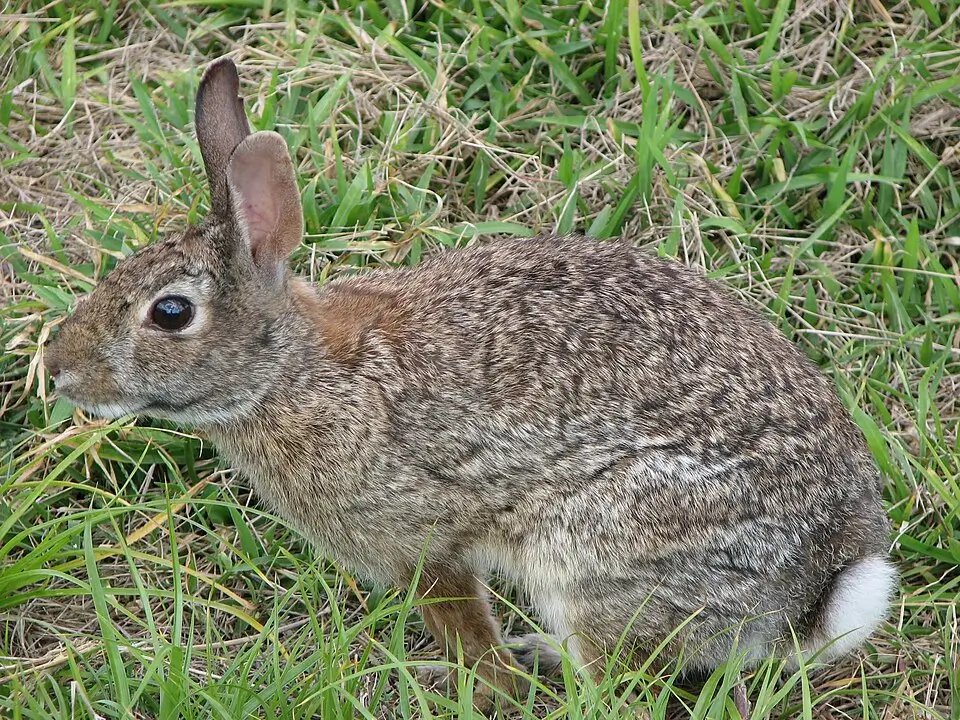
The most recognizable physical feature of any cottontail is, of course, its tail. The underside of the tail is bright white and fluffy, resembling a small cotton ball — a feature that stands out sharply when the animal is in motion and is thought to play a role in predator confusion. When a cottontail bolts from cover, the flashing white tail can momentarily disorient a pursuing predator, giving the rabbit precious extra seconds to escape.
Cottontails are medium-sized rabbits, compact and muscular, with long hind legs built for explosive bursts of speed and agile maneuvering. Their large, rounded ears serve a vital function: they provide exceptional hearing, allowing the animal to detect the approach of predators from a considerable distance. These ears also help regulate body temperature, as blood vessels near the surface can radiate excess heat on warm days.
The fur of a cottontail is typically a brownish-gray on the back and sides, providing excellent camouflage against a backdrop of dried grasses, leaf litter, and brushy undergrowth. The belly fur is typically lighter or white. This cryptic coloration makes a sitting or crouching cottontail remarkably difficult to spot, even at close range — a fact well known to hunters who have walked past a perfectly motionless rabbit without ever realizing it was there.
Cottontails are herbivores, feeding on a wide variety of plant material. In warmer months, their diet consists largely of grasses, clover, wildflowers, and leafy garden plants. In winter, they shift to woody plant material, gnawing on bark, twigs, and dried stems to sustain themselves through the cold months. This dietary flexibility is one of the keys to their widespread success as a species.
Reproduction is another area where cottontails excel. They are well known for their prolific breeding, capable of producing multiple litters per year depending on climate and food availability. Females, known as does, give birth to small, blind, and hairless young called kittens. The young develop rapidly and are weaned within a few weeks, after which they begin to fend for themselves. This high reproductive rate helps cottontail populations recover quickly from predation pressure and harsh winters — a critical adaptation for a species that sits near the bottom of many food chains.
Cottontails are primarily crepuscular and nocturnal, meaning they are most active at dawn, dusk, and during the night. During the day, they typically rest in sheltered locations such as dense brush piles, tall grass clumps, or shallow depressions in the ground called "forms." Their daily routine is governed by the need to balance feeding with avoiding the many predators — including foxes, coyotes, hawks, owls, and snakes — that depend on them as a food source.
Habitat and Range
The genus Sylvilagus encompasses a remarkable range of habitat types, from dense eastern forests and brushy meadows to desert scrublands and high mountain meadows. This ecological versatility is a hallmark of the group and explains why cottontails are found across such a wide swath of the Americas.
In North Dakota, cottontail rabbits thrive in the diverse landscapes that define the state. North Dakota sits within the Great Plains region, characterized by broad prairies, steppe, temperate savanna, badlands, and a significant amount of agricultural farmland. This mosaic of habitats — particularly areas where open land meets brushy cover, such as shelterbelts, creek bottoms, brushy draws, and the edges of agricultural fields — provides ideal conditions for cottontail populations to flourish.
Shelterbelts, the rows of trees and shrubs planted across the Great Plains to protect fields from wind erosion, are particularly important habitat features for cottontails in North Dakota. These linear strips of woody cover provide shelter from extreme weather, protection from aerial predators, and reliable food sources in the form of shrubs and woody browse. Coulees, brushy ravines, overgrown fence lines, and riparian areas along rivers and streams similarly attract and support cottontail populations throughout the state.
Seasonal shifts in habitat use are common. In summer, cottontails may range more widely across open grasslands and agricultural margins where food is plentiful. As winter approaches and snow covers the ground, they concentrate in areas with reliable woody cover and food sources, making shelterbelts and brushy draws even more critical during the cold months.
Hunting Information
Small game hunting has a deep and cherished tradition across North America, and cottontail rabbit hunting represents one of its most accessible and enjoyable expressions. For beginning hunters, the cottontail offers an ideal entry point: licenses are widely available, equipment requirements are minimal, and the hunting itself can be done on foot across a wide variety of landscapes without the need for specialized gear or extended travel.
In North Dakota, the state's Game and Fish Department oversees hunting regulations and licensing for all game species, including small game such as cottontail rabbits. The North Dakota Game and Fish Department provides detailed information on licensing, seasons, and regulations for hunters. Those interested in pursuing cottontails in North Dakota are encouraged to consult the official North Dakota Game and Fish website and current regulation publications for up-to-date season dates, bag limits, and licensing requirements, as these details can change from year to year.
North Dakota's landscape lends itself beautifully to cottontail hunting. The state's shelterbelts, brushy creek bottoms, badlands draws, and agricultural edges all provide productive cover where rabbits can be found throughout the season. Many hunters pursue cottontails on foot, walking slowly through likely cover and watching for the telltale bolt of a flushing rabbit. Dogs — particularly beagles, whose keen noses and melodious voices are legendary in rabbit hunting circles — add another dimension to the pursuit, as they can work heavy cover, push rabbits out into the open, and circle them back toward waiting hunters.
Small-caliber rimfire rifles, such as the classic .22 LR, and small-gauge shotguns are the traditional tools of the cottontail hunter. Shotguns loaded with small shot are particularly effective for the fast, twisting shots that a flushing cottontail presents, while a .22 rifle rewards the patient hunter who can spot a sitting rabbit and make a careful, precise shot.
Beyond the hunt itself, cottontail rabbits are excellent table fare. The meat is mild, lean, and versatile — suitable for a wide range of preparations from simple pan frying to slow-braised stews. For many hunters, the culinary reward is as much a part of the appeal as the hunt itself, connecting them to a tradition of living off the land that stretches back generations.
Conservation
Cottontail rabbits, as a genus, are not currently considered threatened or endangered across most of their range. Their high reproductive rate, dietary flexibility, and adaptability to human-altered landscapes have allowed many populations to remain stable or even thrive alongside expanding human development.
That said, habitat quality remains the single most important factor in the long-term health of cottontail populations. The loss of brushy edge habitat — through the removal of shelterbelts, the conversion of grasslands to row crops, and the elimination of brushy fence lines — can significantly reduce carrying capacity for rabbits in agricultural landscapes like those of North Dakota.
Conservation efforts that maintain and restore brushy cover, native grasslands, and wildlife-friendly agricultural practices benefit cottontails directly. Programs that support the planting and maintenance of shelterbelts, native grass buffers, and habitat corridors are valuable tools for keeping rabbit populations robust and hunting opportunities plentiful for future generations.
Hunters themselves play an important conservation role through the licenses and fees they purchase, which fund state wildlife management agencies like the North Dakota Game and Fish Department. This funding supports habitat programs, population surveys, and the scientific management that ensures cottontail populations remain healthy for generations to come.